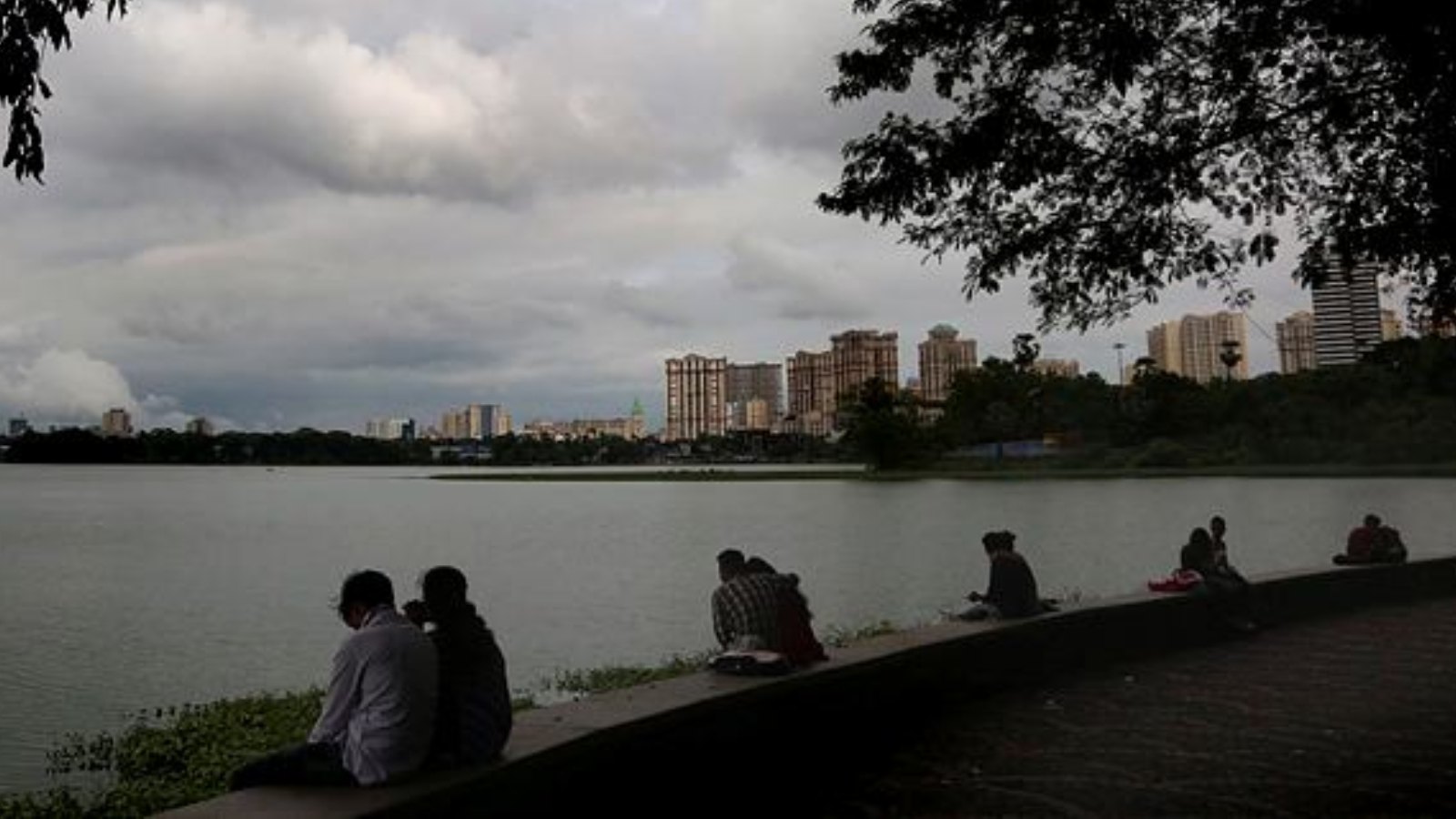
Brihanmumbai Municipal Corporation (BMC) has stopped the cleaning work of Powai lake that it began in March, following an advisory from the Bombay Natural History Society (BNHS) after its experts visited the lake and reviewed the ongoing work last week.
For the last two months, the BMC had been removing water hyacinths and other vegetation from the Powai Lake using JCB machines, under the lake rejuvenation programme. While the cleaning work is undertaken by the BMC every year, BNHS had advised them to stop as the former said it will hamper the breeding process of aquatic birds and animals. Taking note of the same, BMC stopped the work till June 10.

Powai Lake is an artificial lake in the heart of the eastern suburbs and is home to several species of aquatic birds and reptiles such as crocodiles, egrets, jacanas and swamphens among others. Due to an excess of water hyacinths, increased silting, sewage disposal and vegetation, the BMC initiated its rejuvenation drive at the lake. Under this initiative, civic authorities remove floating waste material as well as hyacinths and vegetation by using excavation machines and harvesters.
However, local citizens raised concerns about the appointed contractors using JCB machines inside the lake, which could damage birds’ nests. The BNHS then carried out a site visit on May 18 and submitted a project report to the civic authorities.
“The contractor was only supposed to remove hyacinths and vegetation from the water, for which they are not supposed to use JCB machines. However, since the water of the lake is shallow, one of their machines got damaged and a JCB was used for the job which ran the risk of destroying the nests of birds in the long run. We are not against the removal of hyacinths, just the usage of JCBs in the breeding and nesting sites,” Debi Goenka, member of the governing council of BNHS and executive trustee of Conservation Action Trust, told The Indian Express on Wednesday.
The project report was submitted on May 21, where BNHS experts mentioned that the team visited three locations around the banks of the lake, which included the Pipeline road, Ganesh Ghat as well as IIT Bombay.
“At Pipeline Road, it was observed the harvesting in action and the removal of floating hyacinth was underway. They saw several black-winged stilts, egrets, jacanas, swamphens, lapwings, and over 20 lesser whistling ducks in the lake. MCGM officials could see how the machines might disturb and damage nesting birds,” read the BNHS site report.
Story continues below this ad
“Next, the team visited Ganesh Ghat, where the lake had already been cleared, but the area near the ghat was filled with solid waste. They then proceeded to IIT Bombay, observing a harvester machine being repaired at the lake edge on the way. Inside IIT Bombay, the team observed intact vegetation at the lake’s edge, which is ideal for aquatic bird nesting. The vegetation removed from the lake had piled up at the ramp,” the report further read.
Following this, the experts advised the BMC to remove the floating weed only with the harvester and not to use excavators to remove vegetation from the edges. They also maintained that a black-winged stilt was observed nesting in this area by local bird watchers that same morning, since this was a potential nesting site for aquatic birds.
“Deputy director of BNHS requested the BMC officials to halt JCB work until June 10, 2024, when most breeding activity is expected to be over. He explained that the work must be stopped immediately because birds cannot move their eggs away from the JCB’s reach. However, once the chicks are out, the parents can better lead them away from danger. So, it was suggested resuming the work after June 10, following a reassessment of the situation by BNHS,” the BNHS advisory read.
Issuing a statement, the civic authorities said, “After the process of water hyacinth removal was initiated by us, nature conservers had pointed out it may pose a threat to the aquatic life, following which BNHS was asked to carry out a site visit at the lake and based on their report, the municipal commissioner has instructed to stop usage of JCB in the lake till June 10, which is the peak breeding period for the birds and reptiles.”
Story continues below this ad
The BMC authorities said removing water hyacinths from Powai Lake had been underway since March 8, 2024. As per the mandate, a total of 24,985 metric tonnes of hyacinths are expected to be removed, out of which, 55 per cent have been removed so far. The estimated cost of removing hyacinths from the lake costs BMC around Rs 8 crore.


 5 min read