Journalism of Courage



 The survey, which began in May 2014, had to be stopped during the monsoons. The hiatus lasted four months following which the research team scanned 2,425 km on the boat extending to 17 nautical miles from the shoreline.
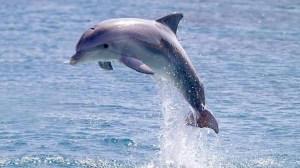
Biologists have discovered a flourishing marine life, identifying 569 dolphins, in Maharashtra’s Sindhudurg district. The number, clarified marine biologist Ketki Jog, is not the estimated population. “It may be higher,” she said.
Jog and her team comprising Mihir Sule, Isha Bopardikar, Vardhan Patankar and Dipani Sutaria, spent nine months scanning the coastline for the elusive creatures. What paved the way for these experts was a collaborative effort of the United Nations Development Programme, the Government of India and international funder Global Environment Facility.
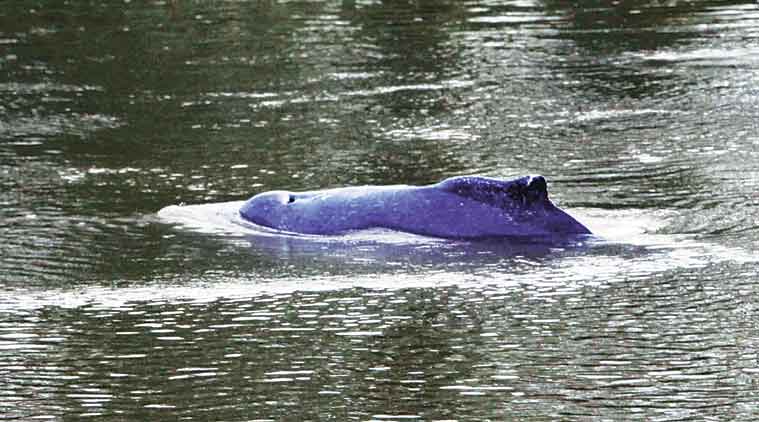
Sule said that the survey was undertaken to assess the diversity of marine mammals along the coast of Maharashtra. Two species-the Indian Ocean Humpback dolphin (sousa plumbea) and Indo-Pacific finless porpoise (neophocaena phocaenoides)-were particularly found in these waters.
The survey, which began in May 2014, had to be stopped during the monsoons. The hiatus lasted four months following which the research team scanned 2,425 km on the boat extending to 17 nautical miles from the shoreline.
Among the many species found in the coastal waters, the team also sighted the blue whale and the Bryde’s whale. “An estimation of their population can only be done after we analyse the data we have,” said Jog.
The project’s nodal officer and Chief Conservator of Forests N Vasudevan is content with the recent findings. “The survey is a first-of-its-kind, perhaps a first in the country. The team will once again return to the waters to assess the population of these cetaceans,” he said.
The marine scientists made use of transect surveys, whereby they photographed the dorsal fins of the mammals. Each Humpback dolphin was identified by analysing a characteristic mark or a nick on its dorsal fin, and given ID numbers. Biologists plan to estimate the population of these marine animals on the basis of these identifications.
The dolphins were sighted near or around estuaries, an indication that they prefer waters within the influence of nutrient inflow of fresh water sources. In its report, the team has identified the coastline between the villages Bhogwe and Mhapan, and Vijaydurg creek as the hotspots of Humpback dolphins. The finless porpoises, meanwhile, were spotted between Bhogwe and Nivati villages, and Khawane to Mochemad villages adjoining coastal waters.
To trace dolphin tourism in Sindhudurg, the team interacted with local fishermen and hotel owners. It also helped the experts understand the need for sensitisation and awareness while working with the fishermen folk.
The biologists took 19 boat rides with different tour operators across locations and found the boatmen to be sensitive to the disturbance caused to dolphins. For better awareness, the team is designing posters for tourists, besides providing guidelines to operators asking tourists to follow certain etiquettes while in dolphin country.
Among the 35 tourism units in the entire district, the report reveals that Devbag and Tarkarli villages see maximum dolphin tourism. In about 15 tourism units here, 300-350 boats ferry tourists, generating a net revenue of roughly Rs 4.5 crore every year.
The biologists said that the nascent industry needs to be regulated to ensure sustainability in the future. Some regulatory measures, they stressed, will have to be put in place to make sure that waters close to the shore are protected. “Growing numbers of high-speed parasailing crafts are a matter of concern,” they said.

 4 min read