


Stay updated with the latest - Click here to follow us on Instagram
Tags:


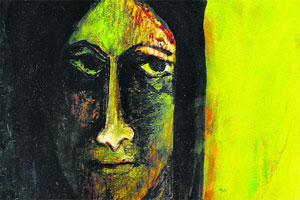
Sometimes,it takes an auction to get the government excited about artwork. In this instance,it is a suite of 12 artwork by Noble Laureate Rabindranath Tagore that has raised the hackles of the West Bengal government. The works are slated to go under the hammer at Sothebys Auction House in the UK on June 15 at a pre-sale estimate of £250,000 (Rs 1.69 crore). The collection belongs to Leonard and Dorothy Elmhirst of Dartington Hall but West Bengal chief minister Buddhadeb Bhattacharjee is seeing red. In an open letter to the Prime Minister,Bhattacharjee has written,This news (of the auction) has deeply disturbed us. These Elmhirst collections of Gurudevs paintings are priceless treasures of Indian culture,we request you to take measures to bring back these paintings to India. Incidentally,this is also the year of Tagores 150th birth anniversary which fell on May 9. The PM has issued a statement: This is a legal issue and will take time to sort out.
The works were gifted to the Elmhirsts in 1939 and hence,rightfully belong to them. But intellectuals are quick to point out that a few years ago,the Indian government had cited the Antiquity Act of 1906 to get back works by Raja Ravi Varma that had been listed in a Bowrings auction. The Act,made by the US Congress,however,pertains only to artwork that are more than 100 years old and considered as national treasures. Intellectuals like art historian Tapati Guha Tirthankar and Sushobhan Adhikary,curator,Kala Bhavana,Visva-Bharati,are debating the importance of Tagores works and whether the Antiquity Laws should be amended to help India retain more of its precious artwork. Instead of 100 years,the Act should be amended to 50 years, Bhattacharjee says in the letter.


The works in the Sothebys auction feature an untitled portrait of a woman,a landscape in shades of green,and a canvas with figures in sepia. The works were made in the 1930s,considered Tagores prime period. Debashish Banerji,a cultural theorist and great grandson of Abanindranath,brother of Rabindranath Tagore,says that the Tagores were not appreciated for their art: We suffer from a hangover of the Colonialist reading of art,so there has always been a preference for a more masculine brand of nationalism. The work of the Tagores was branded as sentimental and revivalist and much of it lies in disrepair in boxes stored at Rabindra Bharatisome of these works will never see the light of day.
Adhikary seconds this view. In the late 1920s Rabindranath had featured and printed some of his art in a magazine in Kolkata. It drew sharp reactions,with some critics dismissing them as bogus. Tagore,was highly influenced by German Expressionists as well as the Post-Impressionists and Cubists in France and admired artists like Wassily Kandinsky and Amedeo Modigliani. His art was vastly different from the Bengal school,especially in its use of colour; he felt it would not be appreciated at home. Tagore packed 400 of his paintings in a suitcase and went to Europe. His first public exhibition,organised by Victoria Ocampo,an Argentine intellectual,was held in Paris in 1930, says Adhikary.
Most of the revenue from the sale of his paintings went towards funding Visva-Bharati. In fact,his first exhibition in India was held at the Town Hall in Calcutta in December 1931,on the occasion of his 70th birthday. If the Indian government wants his work back,they may have to bid like everyone else.


Stay updated with the latest - Click here to follow us on Instagram


