Journalism of Courage



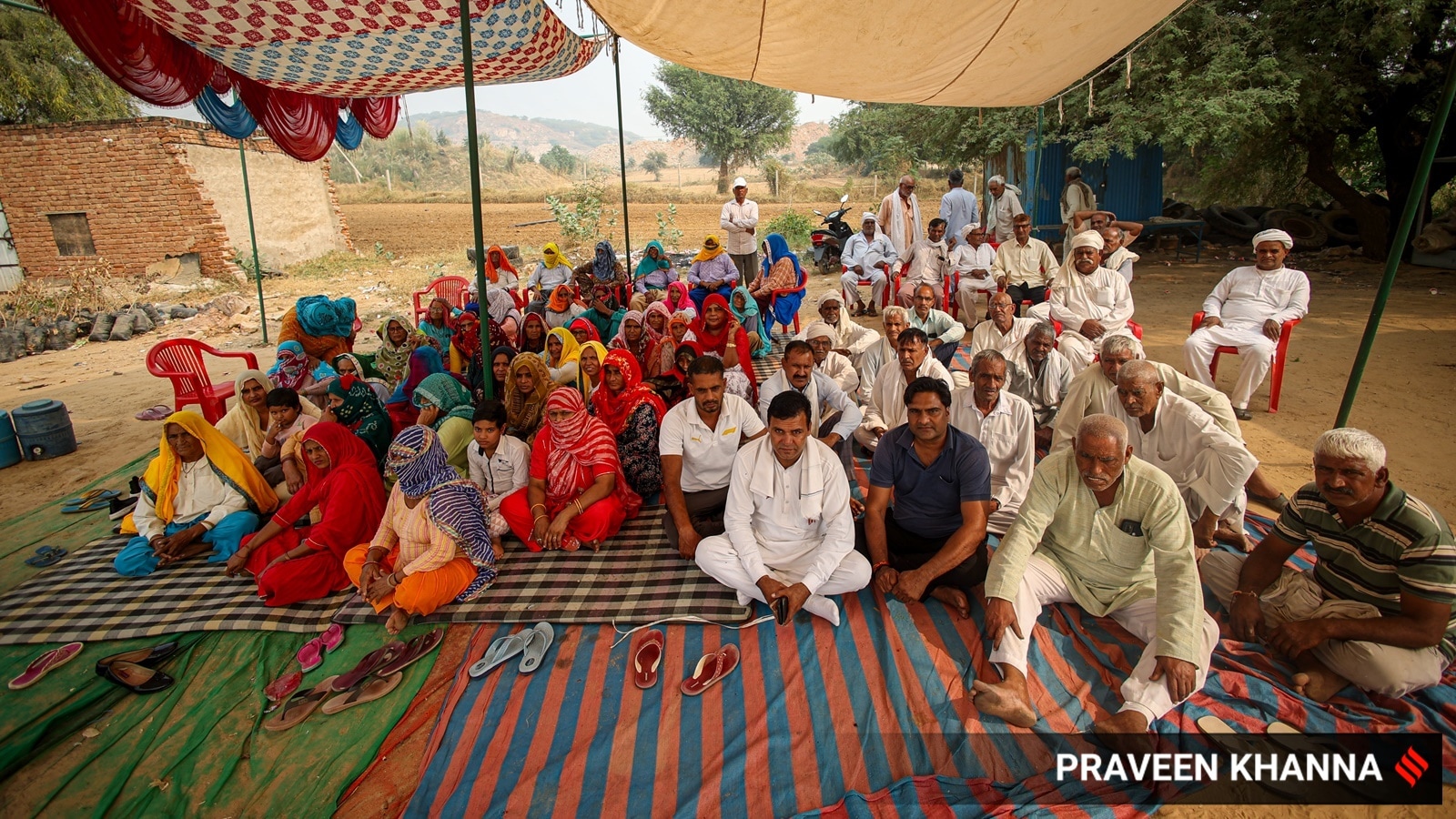 Residents of Village Ramalwas, sit on Dharna against Stone mine company alleging that mine company dig beyond the permitted limits, in Charkhi Dadri, Haryana on Monday. (Express Photo by Praveen Khanna)
At noon on a Monday, more than 100 residents of Charkhi Dadri’s Ramalwas village sit on mattresses and tarpaulin silently. The lull is disrupted by an occasional truck carrying mined material, leaving clouds of dust in its wake. Soon, the silence is broken by long fits of coughing. This has been going on for two months from September 4 — during which they boycotted the assembly polls — when the villagers decided to sit in on a dharna against mining and water extraction in Aravallis.
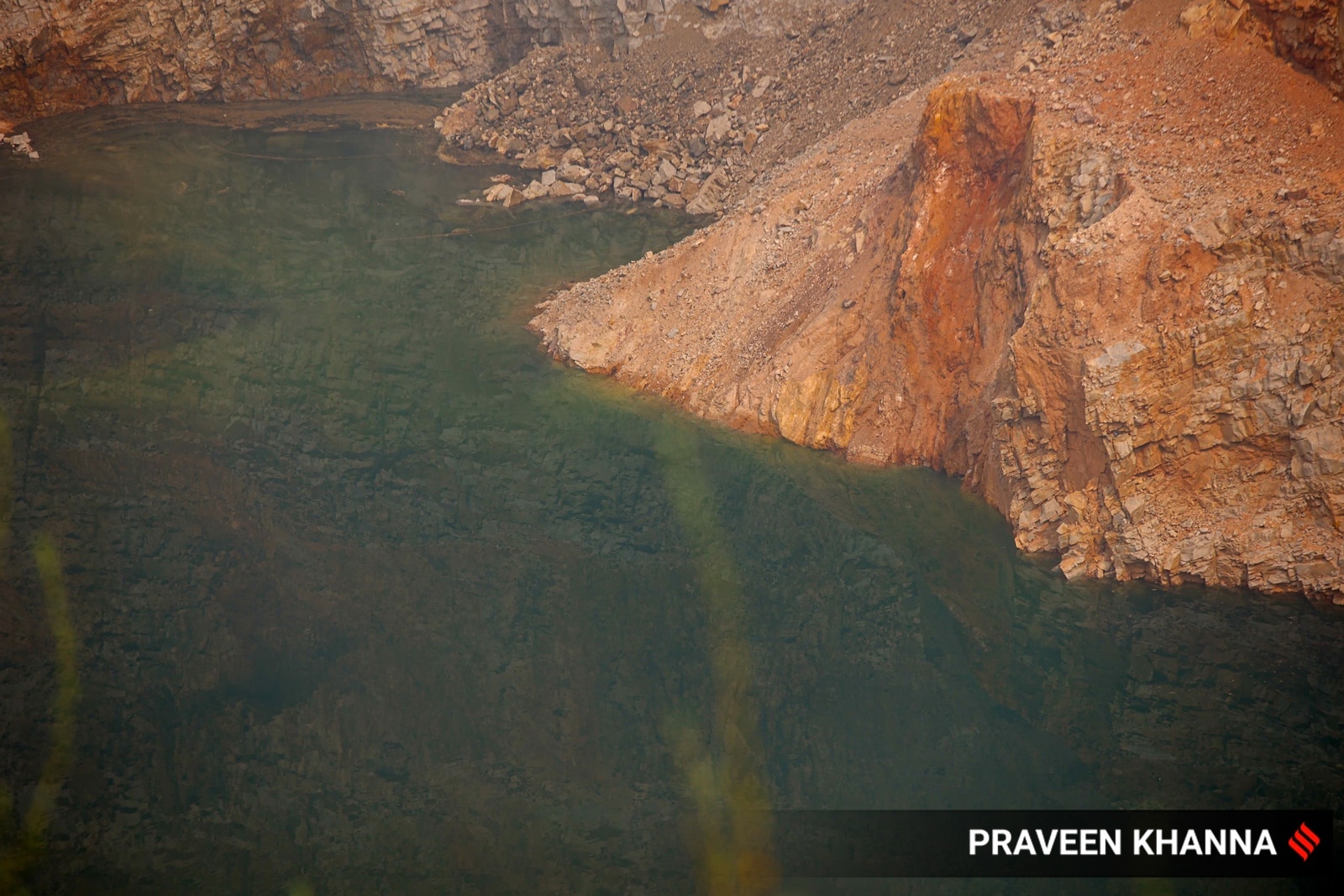
Though mining here is through a lease by the Haryana government which showed the general groundwater level at 100 feet, locals claimed it is as low as 300 feet.
 The protesting villagers demand the permanent closure of the “illegal water extraction”. (Express Photo by Praveen Khanna)
As per a report on the water table by a mining officer and hydrologist from 2020, it has been depleting at a rate of 0.5 metres every year since 2000. The water table in June 2020 was at 74 feet; in 2010, it was at 98 feet; and a decade later, in 2020, it stood at 102 feet. Though a report from this year was published pegging the water table at 150-200 feet, it was revoked later by the Irrigation Department.
M/s Kayden Infrastructure Engineering Pvt Ltd owns the mining lease in an area of 12.25 hectares in Ramalwas, a village of 450 houses, with effect from June 2016. Kayden Group did not respond to calls seeking comment.
The protesting villagers demand the permanent closure of the “illegal water extraction”. Bhagwan Singh (76), a former Armed Forces personnel, says, “When we threatened to boycott polls, officials, including the police, came to the village, inspected water in the mine, and temporarily halted the process. But we will continue the dharna till we get a written submission from the government that operations will be stopped permanently.”
The ecological, physiological, and sociological consequences have been more evident over the last five years, says village sarpanch Sanju Phogat. Her husband, Vinod Kumar, says, “We are not against mining per se… but we are against the reckless mining and water extraction affecting our lives and livelihood. On top of this, we have yet to receive full rent and compensation of 2% of the collectorate rate, too. The government’s revenue has been increasing, but we’ve not gotten our due share.”
 Residents of village Khatoli in Mahendragarh district facing health issues, as a lot of Stone Crushers running next to the village, in Haryana. (Express Photo by Praveen Khanna)
A report submitted during the Central Empowered Committee meeting in March by the state showed the revenue in 2023-24 received from four districts where mining is legal — Rewari, Mahendergarh, Charkhi Dadri and Bhiwani — at Rs 363.5 crore. This stood at Rs 5.15 crore in 2013-14, data showed. There is a blanket ban on mining in the Aravalli hills of Faridabad, Gurgaon, and Nuh districts as per a 2009 order by the Supreme Court.
Kumar claims as a result of the air and water pollution in their village, agriculture and dairy farming have also deteriorated. “In 2018, mustard yield per acre would be eight quintals, now, it has dropped to four. Sometimes, farmers sow seeds twice, but in vain,” he says.
Phogat adds that water contamination has affected cattle rearing as well: “Just last week, three buffaloes died. We have ROs for domestic use, but we give the cattle water from borewells.”
As per another report by Brajesh Chauhan, a hydrologist and superintending engineer, Loharu, 2023, the condition has deteriorated to the extent that in many parts of the village, the table varies between 150-200 feet. Moreover, the hydrologist reports observed that the samples collected have high values for parameters such as Electrical Conductivity (EC), Total Dissolved Solids (TDS), Total Hardness, and Chloride crossing the standard maximum permissible limit.
However, the Office of Mines and Geology Department in the district said in a memo that the Deputy Commissioner, citing an email from the chief engineer of the Irrigation Department in Panchkula in February, had asked to withhold proceedings based on this report till an “enquiry report” of the hydrologist, who prepared the report, was submitted. No enquiry report has been submitted ever since. The survey of the water table has also not been done despite shelving the previous report.
As villagers announced to boycott polls, a meeting was held in August and it was decided that the mining office obtain a report on the depth of the water table. Rajesh Kumar, Mining Officer, Charkhi Dadri, says they have yet to prepare the report: “The report showing the lowering of the water table has been revoked by the hydrology department after officials flagged some errors. We will conduct another survey soon.”
Kumar further says the dharna demanded rent and compensation and a halt to water being pumped by the mining contractor. “We have made the mining contractors stop the pumping of water in the area,” he says.
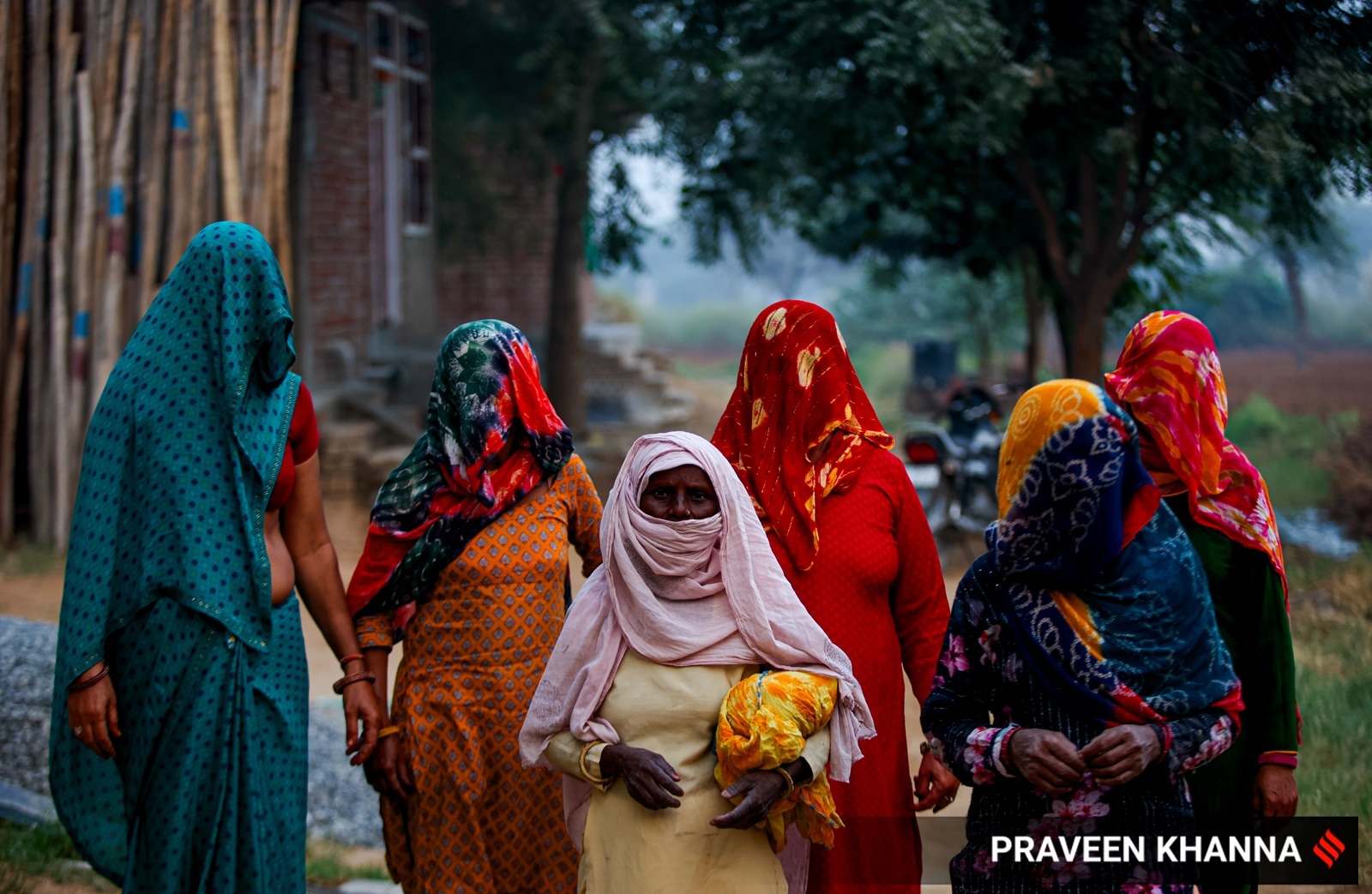
Women, too, are part of the protest. They reach the site around 11.30 am after finishing chores at home and sending their children to school. “We have more work now, but we are ready to put in effort to shut this down. Our lives are nearing their end, but we have to ensure our children don’t suffer,” says Lali (60), who suffers from an atrioventricular block diagnosed three years ago.
 A report from this year was published pegging the water table at 150-200 feet, it was revoked later by the Irrigation Department. (Express Photo by Praveen Khanna)
With a dupatta covering her nose and mouth and palpitating hands, she says she has to take medicines worth Rs 5,000 every month and travel to Hisar, 140 km away, to consult a doctor at a good institute.
Neelam Ahluwalia, Founder Member, People for Aravallis group, says, “The Aravallis are the climate-sensitive region’s biggest water recharge zone as with their natural cracks and fissures, the hills have the potential to put 2 million litres of water per hectare in the ground every year. Blasting and drilling activities result in puncturing the water aquifers that lie beneath the Aravalli hills which results in water shortage for drinking and farming. Several rivers, lakes and streams have dried up and groundwater levels have fallen to 2,000 feet in many villages across the Aravalli belt…”
Around 70 km away from Ramalwas, as the sun goes down in Khatauli Ahir village in Mahendragarh, Manju Devi calls it a day after picking cotton in fields nearby. As she makes her way through the dusty road, trucks zoom past every minute, to and from the 14 stone crushers situated less than a kilometre from the village. The plants on the roadside have layers of dust and roads are riddled with potholes.
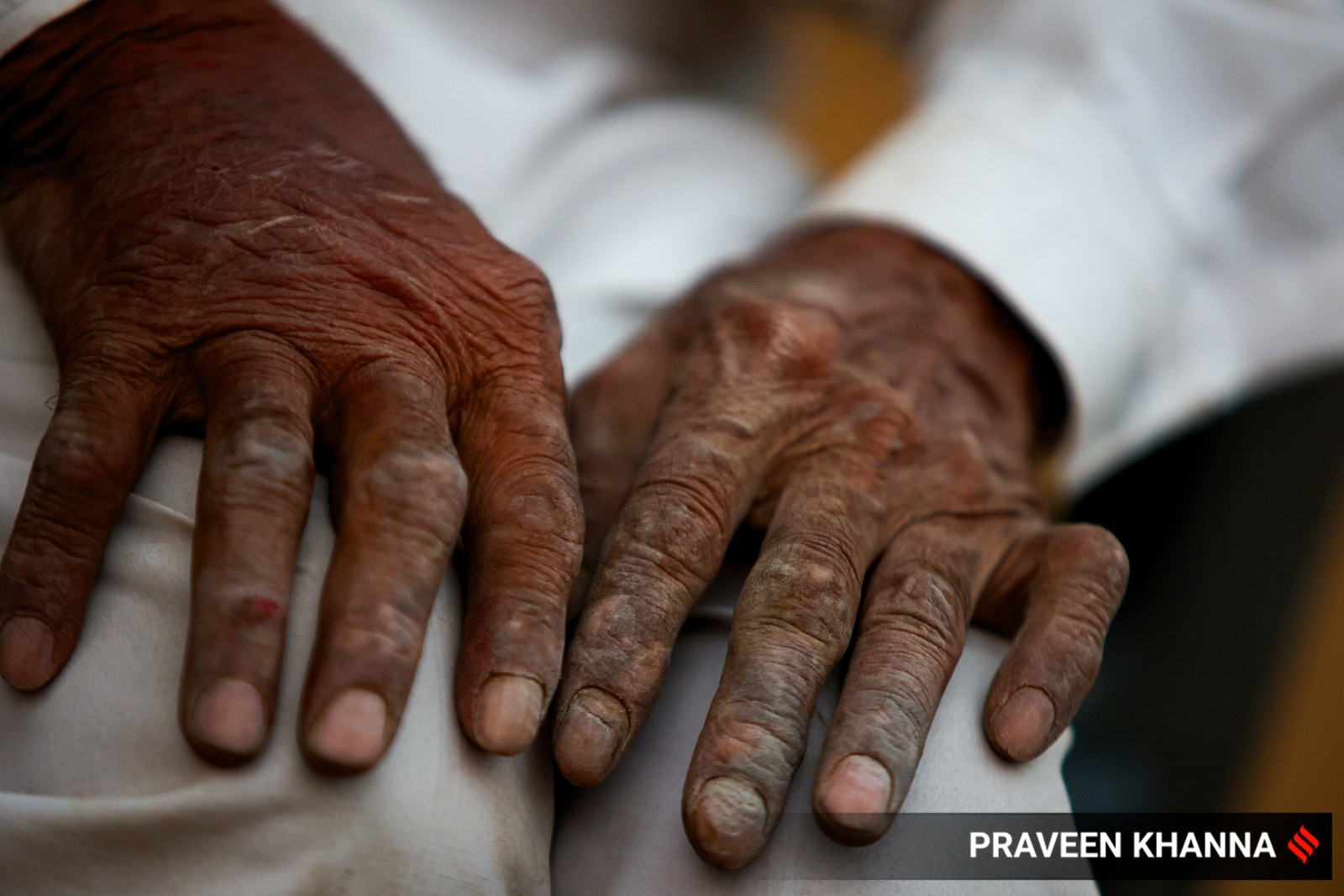
At her home, allotted under the Mahatma Gandhi Awas Yojana in 2012, dust has accumulated an hour after her sister-in-law swept the floor. “The dust is in our food, water, and floor. Every day when we get up, we have a layer on our body. I have been working for 10 years in these cotton fields and I have a perpetual allergy,” she says, showing her shrivelled, dusty palms.
Tehsildar of the area, Nisha, refused to comment on the issue.
The Dalit basti, where Manju lives, has around 300 people in 60 plots, and they reel off the names of diseases they’ve been afflicted with ever since the stone-crushing units came up. “We don’t have money to even go to a hospital. By the time someone falls ill, the disease gets terminal. A man died of Silicosis recently in the village,” says Rambilas, who lives in Khatauli Ahir, less than a kilometre from the basti.
 With a dupatta covering her nose and mouth and palpitating hands, she says she has to take medicines worth Rs 5,000 every month and travel to Hisar, 140 km away, to consult a doctor at a good institute. (Express photo by Praveen Khanna)
Tejpal Singh, a teacher from the village who had approached the National Green Tribunal (NGT) against the functioning of stone crushers in violation of environmental norms, says a probe into the units was initiated by the district administration and the Haryana State Pollution Control Board (HSPCB) in 2018. Based on the findings, in 2019, 72 stone crushers in Mahendragarh were found non-compliant and the NGT ordered the immediate revocation of their NOC.
While 40 closed down, a few went to the Supreme Court for relief. But the case was sent back to NGT and in 2021, an IIT-Delhi study and in-depth investigation was submitted. In 2023, the case of stone crushers of both Charkhi Dadri and Mahendragarh was clubbed and a Rs 20 lakh fine each was imposed on 343 units as per the “polluter pays” principle.
According to an action taken report submitted by the HSPCB to the NGT, which cites an Air Borne Disease Report by the district’s Chief Medical Officer in Mahendergarh from 2011 to 2020, the number of air-borne disease cases was 21,329 in 2011 which increased to 42,309 in 2019, an increase of 100% cases in the span of 8 to 9 years.
“The report, however, has not indicated the cause of air-borne disease as neither has identified any specific reason for increase in the air-borne disease,” the report states.
Singh says one of the reasons why the NOCs of stone crushers in his village were suspended was because of the siting parameters which mandated a 1 km distance from phirni (peripheral part) of the village, Mukandpur, to the stone crushers. “Despite this, 13 crushers appealed to the environment department. The government declared Mukandpur as unregistered and the mandate no longer was applicable, resulting in the crushers getting NOCs,” he claims.
District administration officials say the current stone crushers are operating as per the siting parameters. HSPCB regional officer Krishan Kumar says that after the NGT suspended NOCs of 72 stone crushers, these have remained shut. “There is not a single stone crusher in the district which runs without complying with siting parameters,” he says.
Singh further says the plots under Mahatma Gandhi Awas Yojana are around 400 metres away from the stone crushers.
“They gave the plot and later built stone crushers. Now, we are facing a slow death,” says Manju.

 10 min read