JNUSU polls: ABVP common target, but Left bodies underline ideological divide with NSUI
Unlike in Delhi University, NSUI has never had a strong presence in JNU. With Congress-led UPA in power, the NSUI had positioned itself as a centrist alternative on campus between 2012 and 2014
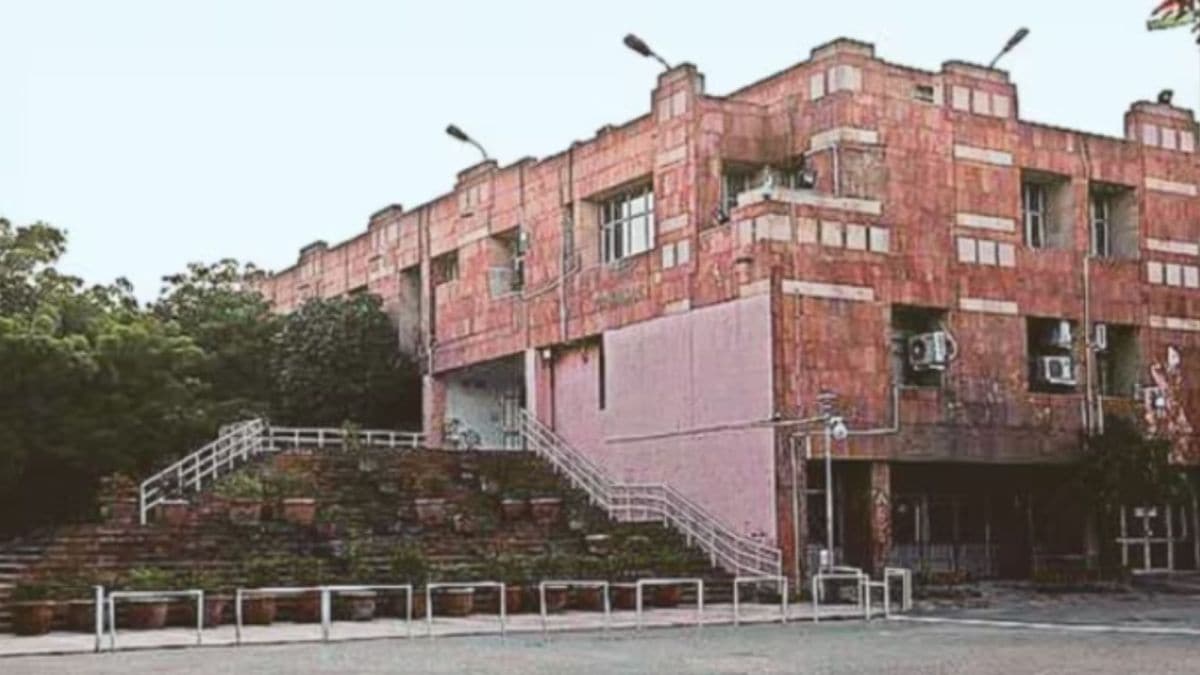
The election, scheduled for November 4, will be a multi-corner contest (File Photo)
Hours before nominations for the 2025-26 JNU Students’ Union (JNUSU) election closed on Monday, the National Students’ Union of India (NSUI), students’ wing of the Congress, confirmed that they will contest for posts in the central panel.
The election, scheduled for November 4, will be a multi-corner contest involving the United Left of the DSF, SFI, and AISA; ABVP, the students’ wing of the RSS; NSUI; and Birsa Ambedkar Phule Students’ Association (BAPSA).
You’ve Read Your Free Stories For Now
Sign up and keep reading more stories that matter to you.
For decades, JNU has been a showcase for Left politics on campus, the slogans of which were sharpened into party manifestos and whose student leaders often took up larger party political roles.
In recent decades though, a different transition has been visible — several prominent faces from the Left student movement in JNU have crossed over to the Congress after leaving the campus. From Syed Naseer Hussain, JNUSU’s SFI president in 1999-2000 who is now a Congress Rajya Sabha member, to Kanhaiya Kumar of AISF, JNUSU president in 2015-16 who is now the AICC incharge for NSUI, several of JNU’s most recognisable student leaders have shifted allegiance.
Prasenjit Bose, Hussain’s contemporary in the JNU SFI and for long a prominent strategist of the CPI(M)’s student wing, joined the Congress last month.
The trend began with D P Tripathi, SFI president of JNUSU in 1975-76, who switched to Congress and then to Nationalist Congress Party (NCP). Five others, besides Hussain and Kanhaiya, followed – Shakeel Ahmad Khan (SFI, 1992-93), Battilal Bairwa (SFI, 1996-98), Sandeep Singh (AISA, 2007-08), Akbar Chaudhary (AISA, 2013-14), and Mohit Pandey (AISA, 2016-17).
While the Congress has traditionally had space for a left wing, and the decline of the Left in India has led to a shrinking of political opportunities, several student leaders in JNU reacted with skepticism to the idea that Congress could be becoming a natural destination for Leftist youth.
Story continues below this ad
“The DSF has never believed that campus politics should be a platform for future careerism,” Danish Tako, a member of the Democratic Students’ Federation (DSF) Secretariat, said. “We do not endorse the shifts of Left student leaders into the Congress.”
The DSF emerged in 2012-13 from what Tako called a “larger ideological rift within the student Left movement” after the CPI(M) decided to support Congress leader Pranab Mukherjee’s candidature for President of India in 2012. “The debates around Singur and Nandigram had already shaken the [Left] movement,” Tako said. “The presidential election was the straw that broke the camel’s back.”
The acquisition of farmland by West Bengal’s then Left Front government for industry had provoked criticism within, and ultimately paved the way for the victory of the Trinamool Congress in the state.
V Lenin Kumar of the DSF became JNUSU president for 2012-13. Last year, the DSF won the central panel posts of general secretary and vice president. “Given the context of the campus, Left unity is essential to defeat the ABVP… There has never been any discussion about collaborating with the NSUI,” Tako said.
Story continues below this ad
Unlike in Delhi University, NSUI has never had a strong presence in JNU. With Congress-led UPA in power, the NSUI had positioned itself as a centrist alternative on campus between 2012 and 2014. But after 2014, the polarisation between the Left and Right pushed the NSUI to the margins.
“Most students who are anti-ABVP trust the Left Unity more than us to stop the ABVP,” an NSUI leader said. “We are working to rebuild that trust, but JNU’s politics is deeply ideological — it rewards consistency, not opportunism.”
Ravi Pandey, chairman of NSUI’s media department, said the NSUI’s campaign for the JNU central panel election will focus on the “core issues facing JNU and the nation — academic freedom, crumbling infrastructure, increased fellowships and scholarships, opposition to education fund cuts, and resistance to RSS influence in recruitments”.
“We are also fighting to protect the Constitution and restore student welfare policies,” Pandey said. On the movement of Left leaders to the Congress, he said: “Our ideology is deeply rooted in democracy, secularism, equality, and social justice.The Congress is the principal force fighting against the BJP-RSS to protect the idea of India. Anyone who believes in these values and wants to pursue constructive and progressive politics naturally finds the Congress the best fit.”
Story continues below this ad
Avijit Ghosh, Delhi State Committee member of the SFI, said the ideological divide between the two sides was difficult to bridge. “There has never been any alliance between the Left and NSUI,” Ghosh said. “There are clear ideological differences. The Left-progressive unity has successfully resisted ABVP on this campus (JNU) for decades.”
Leaders such as Prasenjit Bose had made “individual choices”, Ghosh said; they should not be seen as evidence of a trend.
“Yes, there are leaders from various campuses who later chose to go to the Congress, that’s their personal political decision,” he said. “They’ve chosen their path, but to say this reflects the future of Left politics in India is inaccurate.”
Former JNUSU president N Sai Balaji of AISA, made the point that most of the 200-odd JNUSU office bearers of the past 50 years have been from the Left, and “only a handful have moved to the Congress”.
Vidheesha Kuntamalla is a Senior Correspondent at The Indian Express, based in New Delhi. She is known for her investigative reporting on higher education policy, international student immigration, and academic freedom on university campuses. Her work consistently connects policy decisions with lived realities, foregrounding how administrative actions, political pressure, and global shifts affect students, faculty, and institutions.
Professional Profile
Core Beat
Vidheesha covers education in Delhi and nationally, reporting on major public institutions including the University of Delhi (DU), Jawaharlal Nehru University (JNU), Jamia Millia Islamia, the IITs, and the IIMs. She also reports extensively on private and government schools in the National Capital Region.
Prior to joining The Indian Express, she worked as a freelance journalist in Telangana and Andhra Pradesh for over a year, covering politics, rural issues, women-centric issues, and social justice.
Specialisation
She has developed a strong niche in reporting on the Indian student diaspora, particularly the challenges faced by Indian students and H-1B holders in the United States. Her work examines how geopolitical shifts, immigration policy changes, and campus politics impact global education mobility.
She has also reported widely on:
* Mental health crises and student suicides at IITs
* Policy responses to campus mental health
* Academic freedom and institutional clampdowns at JNU, South Asian University (SAU), and Delhi University
* Curriculum and syllabus changes under the National Education Policy
Her recent reporting has included deeply reported human stories on policy changes during the Trump administration and their consequences for Indian students and researchers in the US.
Reporting Style
Vidheesha is recognised for a human-centric approach to policy reporting, combining investigative depth with intimate storytelling. Her work often highlights the anxieties of students and faculty navigating bureaucratic uncertainty, legal precarity, and institutional pressure. She regularly works with court records, internal documents, official data, and disciplinary frameworks to expose structural challenges to academic freedom.
Recent Notable Articles (Late 2024 & 2025)
1. Express Investigation Series
JNU’s fault lines move from campus to court: University fights students and faculty (November 2025)
An Indian Express investigation found that since 2011, JNU has appeared in over 600 cases before the Delhi High Court, filed by the administration, faculty, staff, students, and contractual workers across the tenures of three Vice-Chancellors.
JNU’s legal wars with students and faculty pile up under 3 V-Cs | Rs 30-lakh fines chill campus dissent (November 2025)
The report traced how steep monetary penalties — now codified in the Chief Proctor’s Office Manual — are reshaping dissent and disciplinary action on campus.
2. International Education & Immigration
‘Free for a day. Then came ICE’: Acquitted after 43 years, Indian-origin man faces deportation — to a country he has never known (October 2025)
H-1B $100,000 entry fee explained: Who pays, who’s exempt, and what’s still unclear? (September 2025)
Khammam to Dallas, Jhansi to Seattle — audacious journeys in pursuit of the American dream after H-1B visa fee hike (September 2025)
What a proposed 15% cap on foreign admissions in the US could mean for Indian students (October 2025)
Anxiety on campus after Trump says visas of pro-Palestinian protesters will be cancelled (January 2025)
‘I couldn’t believe it’: F-1 status of some Indian students restored after US reverses abrupt visa terminations (April 2025)
3. Academic Freedom & Policy
Exclusive: South Asian University fires professor for ‘inciting students’ during stipend protests (September 2025)
Exclusive: Ministry seeks explanation from JNU V-C for skipping Centre’s meet, views absence ‘seriously’ (July 2025)
SAU rows after Noam Chomsky mentions PM Modi, Lankan scholar resigns, PhD student exits SAU
A series of five stories examining shrinking academic freedom at South Asian University after global scholar Noam Chomsky referenced Prime Minister Narendra Modi during an academic interaction, triggering administrative unease and renewed debate over political speech, surveillance, and institutional autonomy on Indian campuses.
4. Mental Health on Campuses
In post-pandemic years, counselling rooms at IITs are busier than ever; IIT-wise data shows why (August 2025)
Campus suicides: IIT-Delhi panel flags toxic competition, caste bias, burnout (April 2025)
5. Delhi Schools
These Delhi government school grads are now success stories. Here’s what worked — and what didn’t (February 2025)
‘Ma’am… may I share something?’ Growing up online and alone, why Delhi’s teens are reaching out (December 2025) ... Read More