


Stay updated with the latest - Click here to follow us on Instagram
Tags:


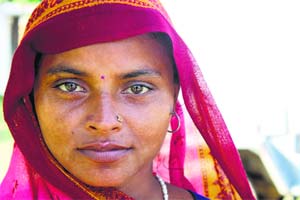
Award-winning British filmmaker Kim Longinotto makes a documentary on the vigilante style of dispensing justice by the Gulabi Gang of Uttar Pradesh
Award-winning British documentary filmmaker Kim Longinotto,58,is known for picking on women-centric issues for her films. So it comes as no surprise when she lets on that in her latest project,Pink Saris,she has focused on Sampat Pal Devi,a strong-willed village woman in Uttar Pradesh and her brigand of lathi wielding,pink-sari clad ladies given to dispensing vigilante justice. “I am looking for strong universal stories each time I set out to make a project. I don’t deliberately seek women-centric issues,” she says brushing aside any suggestions about her bias towards certain subjects. The film made its World Premiere at the ongoing 35 th Toronto Film Festival in the Real to Reel section on Tuesday. “It’s a privilege and I would like to thank Sampat Pal Devi for her graciousness in letting me shoot her for the film,” she says,over phone from her apartment in London.
For the 96-minute feature,Longinotto,a product of the National Film and Television School in Beaconsfield,England,shunned the comforts of an urban existence and travelled to rural Uttar Pradesh to document the daily struggles among the lower caste communities in the Banda district of Bundelkhand,where Sampat Pal Devi hails from. An area notorious for its dominant patriarchal society and feudalistic caste politics,Dalit women here had long been victims of poverty and discrimination. It was left to Pal to take up the cause of women who were mistreated by their husbands and expose the corruption of local officials. Since 2002 Devi and her group of women followers dressed in pink saris (and hence known as the Gulabi Gang),have kept guard over fellow women,soon becoming an authority unto themselves,feared by local law enforcement authorities and revered by fellow women in her native village in Atarra. “She is all about women power and is not afraid of asserting her authority. She even takes her fight to local authorities and the police,” says Longinotto,who spent three months living with Sampat Pal in a guest house within the village,documenting her work as she dispensed matters in her characteristic fashion.


” Even though we faced a language barrier,I felt she sincerely cared for women across the world. Kim was a very nice person,” says Devi,over phone from Atarra.” Atarra was mostly hot and humid and there were many bed bugs. With hardly any electricity at the guest house,we had to use candles at night. But the food was very nice,” recalls Longinotto,describing the warmth of the people.
Though the film shows the plight of Dalit and lower caste women,Longinotto has steered clear of relying on statistics,in her narrative. The stories instead have been told in a ‘human interest manner’ and where necessary,explanations have been provided for terms like untouchability’ and Dalits’. “We picked these five stories as they conveyed universal emotions like love and early pregnancy and domestic violence. We did not want to bombard the viewer with statistics,that is an archaic method,” says Longinotto. The film will also be shown at IFFI,Goa,in November.


Stay updated with the latest - Click here to follow us on Instagram


