Journalism of Courage



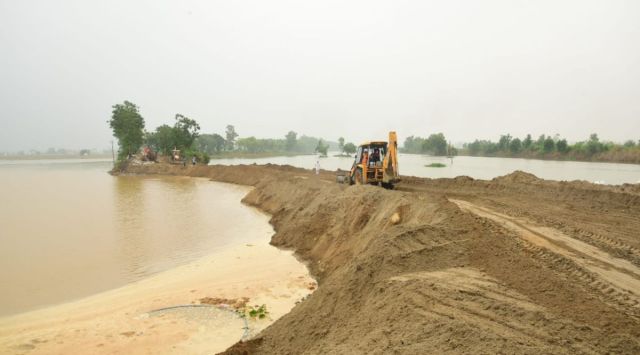 The water levels in major dams of the region have already risen, posing a risk of doubling the floodwater from both potential rainfall and dam water release. (Express Photo)
 After getting its fingers burned in the recent heavy rain-triggered floods, it seems the Punjab government is now taking no chances and is becoming more proactive about flood management in the state.
In the midst of the ongoing rainy season and the threat of extreme weather conditions, the state has identified nearly 100 “vulnerable points” that could give way and cause floods in future and is taking steps to prevent future ‘man-made’ disasters. The majority of the ‘vulnerable points’ are on dhussi bandhs (earthen embankments).
The government plans to strengthen the dhussi bandhs on various rivers and rivulets; to repair spurs and dykes, and canals; and clean water channels before another spell of heavy rain lashes the state. The water levels in major dams of the region have already risen, posing a risk of doubling the floodwater from both potential rainfall and dam water release.
The state had recently witnessed around 100 breaches on dhussi bandhs which resulted in major floods in several parts of 19 districts of the state. At present, the drainage and mining wing under the Water Resources Department of Punjab is actively working on repairing these breaches on dhussi bandhs, with approximately 50% of the repairs focused on Ghaggar river. The estimated loss to the drainage department amounts to around Rs 100 crore, while further assessments are still under way.
To address the issue, the state government has allocated funds to plug the breaches with nearly Rs 50 crore earmarked for the task. Reports from each drainage division of the state have been requested, and drainage divisions have submitted details of the “vulnerable points” under their jurisdiction.
There are 19 drainage divisions in Punjab which include Jalandhar drainage division (Jalandhar), Jalandhar drainage division (Kapurthala), Hoshiarpur drainage division, SBS Nagar DD, Amritsar, Gurdaspur, Tarn Taran, Pathankot, Ludhiana, Patiala, Ferozepur, Faridkot, Sri Muktsar Sahib, Fazilka, Mansa, Ropar, Sri Anantapur Sahib division and Mansa drainage division.
In every division more than five vulnerable points have been identified, said sources. The recent rains have brought to light various flood contributing factors, including breaches on dhussi bandhs, blockages in water channels and rain drains. But the major reason was the breaches on the bandhs exposing the ill-preparedness of the government before the rainy season.
“The urgency to commence strengthening efforts arises from the devastating floods experienced at the beginning of the monsoon season. We need preemptive measures to avoid such man-made disasters, but our government takes post-flood loss measures. Even if the strengthening is done during the rainy season, a huge loss can be prevented,” a senior officer in the drainage division Jalandhar said on the condition of anonymity while speaking to The Indian Express, adding that nearly a dozen weak points have been identified in Jalandhar and Kapurthala districts, but a comprehensive approach is needed to secure the embankments, clean the drains, clear the channels of rivers and canals to prevent future disasters.
“Before every rainy season the estimates for the repair and strengthening are sent by every division so that such works could be completed before the monsoon, but the government lacks funds for such works,” another senior officer in Jalandhar drainage and mining division said on the condition of anonymity. The tragedy is that no-one learns from history, he added.
“Despite the challenges posed by the ongoing rainy season, the government is determined to undertake the necessary strengthening works to avert further floods. The de-silting of Sutlej river is also under way in critical areas,” said a Drainage department official in Ropar.

 4 min read