This is an archive article published on June 25, 2017
Vadodara Airport runway set to be expanded for international operations
According to officials of the Airports Authority of India (AAI), a survey was conducted to explore the feasibility of expanding the airstrip.
Written by Aditi Raja
Vadodara | June 25, 2017 05:53 AM IST
4 min read
Whatsapp
twitter
Facebook
Reddit
The current airstrip is 2600 m, while minimum length required to land international flights is 3350 m. (Express Photo by Bhupendra Rana)
A year after the integrated terminal at Vadodara Airport was inaugurated by Prime Minister Narendra Modi, the authorities are planning to expand the existing runway so that international operations can begin. According to officials of the Airports Authority of India (AAI), a survey was conducted to explore the feasibility of expanding the airstrip.
The current airstrip is about 8000-foot (2600 m) which cannot be used to land large aircrafts, typically used by international carriers. Vadodara Airport Director, Charan Singh said, “The minimum airstrip length required to land international flights is about 11,000-foot (3350 m).To connect Vadodara internationally the airstrip has to be elongated. It is possible to start flights to closer countries like Thailand with aircrafts the size of Airbus 320, but it will be very restricted. For an international flight, any aircraft needs a minimum fuel for six hours, which the airbus cannot contain.”
Vadodara MP, Ranjan Bhatt had written to MoS Civil Aviation, Jayant Sinha requesting him to start the Hub and Spoke facilities at Vadodara airport which allow a local airport to provide immigration services to passengers travelling to international destinations via connecting flights. Bhatt said, “I have been concerned that although we have put in place the best infrastructure to create this terminal, which is also the second green airport in India, we are not able to utilize it to the full capacity due to the absence of the Hub and Spoke services. I have requested Sinhaji to grant me time to discuss this issue and start immigration facilities as soon as we can. I am scheduled to meet him soon.”
In the letter dated April 19, Bhatt wrote, “The Vadodara airport terminal was inaugurated on October 22 and serves about 12 domestic flights everyday. However, we request you to facilitate the Hub and Spoke services to begin customs, immigration and security check facilities for passengers traveling onward to a central airport for international flights, until the time that international flights start from Vadodara.”
Bhatt said that while the authorities were aware that the existing technical restrictions will come in the way of making it an international terminal, the airport was constructed with a futuristic vision. He added, “We are taking one step at a time. I have also had a word with Mansukh Manvadiya MoS for Road, Transport and Highways to understand if we can acquire a patch of the Vadodara-Mumbai highway that intersects the existing airstrip and the surplus land belonging to the airport on the other side of the highway. Mansukhji has very positively responded to our request and told me that while an underpass will not be possible, we could divert the highway to ensure that the run way can be elongated.”
Officials at AAI said that if the government clears the expansion of the runway, they will initiate the process of land acquisition to expand services and hangar space for the airport. Bhatt’s letter to Sinha also adds that currently only Ahmedabad airport in Gujarat serves the entire state as an international terminal and the need to make Vadodara airport functional is “grave”. Ahmedabad airport which has around 20 international flights daily for various countries has a runway length of 3,503 m.
Aditi Raja is an Assistant Editor with The Indian Express, stationed in Vadodara, Gujarat, with over 20 years in the field. She has been reporting from the region of Central Gujarat and Narmada district for this newspaper since 2013, which establishes her as a highly Authoritative and Trustworthy source on regional politics, administration, and critical socio-economic and environmental issues.
Expertise:
Core Authority & Specialization: Her reporting is characterized by a comprehensive grasp of the complex factors shaping Central Gujarat, which comprises a vast tribal population, including:
Politics and Administration: In-depth analysis of dynamics within factions of political parties and how it affects the affairs in the region, visits of national leaders making prominent statements, and government policy decisions impacting the population on ground.
Crucial Regional Projects: She consistently reports on the socio-economic and political impact of infrastructure projects in the region, especially the Statue of Unity, the Sardar Sarovar Project on the Narmada River, the Mumbai-Ahmedabad High Speed Rail bullet train project as well as the National Highway infrastructure.
Social Justice and Human Rights: Her reporting offers deep coverage of sensitive human-interest topics, including gender, crime, and tribal issues. Her reports cover legal proceedings from various district courts as well as the Gujarat High Court (e.g., the Bilkis Bano case remission, POCSO court orders, Public Interest Litigations), the plight of tribal communities, and broader social conflicts (e.g., Kheda flogging case).
Local Impact & Disaster Reporting: Excels in documenting the immediate impact of events on communities, such as the political and civic fallout of the Vadodara floods, the subsequent public anger, and the long-delayed river redevelopment projects, Harni Boat Tragedy, Air India crash, bringing out a blend of stories from the investigations as well as human emotions.
Special Interest Beat: She tracks incidents concerning Non-Resident Gujaratis (NRIs) including crime and legal battles abroad, issues of illegal immigration and deportations, as well as social events connecting the local Gujarati experience to the global diaspora. ... Read More


 4 min read


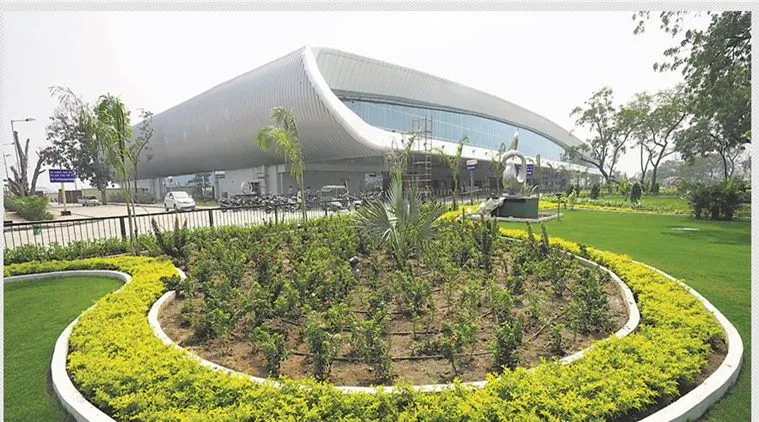 The current airstrip is 2600 m, while minimum length required to land international flights is 3350 m. (Express Photo by Bhupendra Rana)