Journalism of Courage



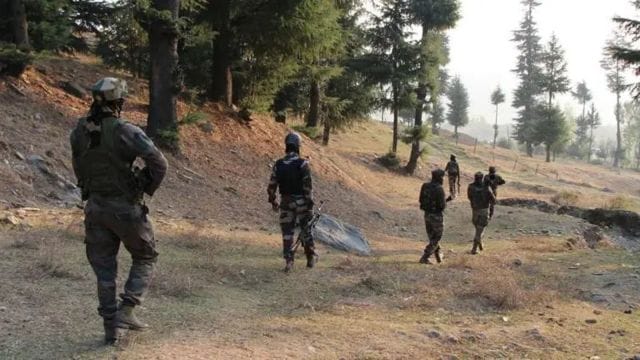 On the night of May 6–7 (2025), India launched a targeted operation against terrorist infrastructure at nine locations in Pakistan and Pakistan-occupied Kashmir (POK). (File Photo)
Operation Sindoor marked the beginning of a new dynamic of escalation management and similar confrontation is not merely a possibility but inevitability, Lieutenant General (retired) and the Director General of New Delhi-based think tank Centre for Land Warfare Studies (CLAWS) Dushyant Singh said on Sunday.
Hailing India’s “success” in Operation Sindoor, Singh said it discarded restraint, exposed Pakistan’s weaknesses and asserted (India’s) dominance under a nuclear threshold.
Singh also highlighted the need to improve narrative-building capabilities by India, which he described as one of the shortcomings during the four-day military operation. Singh also said Pakistan and China were working overtime to propagate certain issues on social media.
Singh was addressing a gathering at the headquarters of the Indian Air Force’s South Western Air Command (SWAC) near Gandhinagar, Gujarat.
His address was part of the ninth edition of the Late Flying Officer Nirmal Jit Singh Sekhon (PVC) Annual Memorial Lectures, organised by the Air Force Association, Gujarat Branch.
Air Vice Marshal (retired) and Director General of Centre for Air Power and Strategic Studies Anil Golani also addressed the gathering on the Operation Sindoor.
Air Officer Commanding-in-Chief, SWAC HQ, Air Marshal Nagesh Kapoor was the chief guest. Air Marshal Kapoor was awarded with ‘Sarvottam Yudh Seva Medal (SYSM) by the President of India for his leadership in south-western front of the country during Operation Sindoor.
On the night of May 6–7 (2025), India launched a targeted operation against terrorist infrastructure at nine locations in Pakistan and Pakistan-occupied Kashmir (POK). The military action, the government said, was a direct response to the April 22 terror attack in Pahalgam in Jammu and Kashmir that left 26 people dead, most of them tourists.
Delivering his speech on ‘Operation Sindoor – Takeaway and Way Forward’ Singh said, “Operation Sindoor was not the end. It was the beginning of a new dynamic escalation management which demands (that) we ask (if) what are the implications and how do we prepare for Sindoor 2.0.”
Talking about the prospects of another conflict with our adversaries, in the historic background with them, Singh said, “This is a strategic reality we must confront and Sindoor 2.0 is not a mere possibility, it is inevitability. In fact, the earlier we prepare for it, the better we are. And based on my little knowledge…the Government of India is very clear on ensuring that we are capable of dealing with any future threat and tremendous powers have been devolved to the ground commander…”
Speaking on the “success” of Operation Sindoor, Air Marshal Nagesh Kapoor too spoke on these lines. “They (Pakistan) are not happy. They are still angry. They want another chance and as you mention Pakistan is very very likely to give us another chance. So, let’s continue to remain prepared,” Kapoor said.
Mentioning international narrative management and counter offensive cyber operations as among some of the shortcomings during the Operation Sindoor, Singh spoke in detail about cyber attacks during the days of the operation. “Cyber attacks on India were heavy yet our counter offensive cyber operations were either not so clearly enunciated or we are not aware of them. The narrative for this warfare was not fully leveraged. This is a gap we cannot afford in future,” he said.
“…Cyber attacks on government networks surged seven times in these four days (of Operation Sindoor). And that’s a huge thing. The power sector saw 2 lakh cyber attacks during these four days. The National Stock Exchange saw 40 crore cyber attacks,” Singh explained. He added that if any one of these cyber attacks had gone through, we would have had a financial crisis.
“So, it is not just one particular domain, land, sea or air. There were wars being fought during those four days in various domains and we need to be cognizant of it and we need to highlight this to the younger generation as well that it is all about multi domain warfare that you are going to see in the future,” he added.
Addressing the issue of information warfare, Singh elaborated how Pakistan and China were working overtime to propagate certain issues on social media. “They actually were working overtime…But somehow we were not that cognizant of it in the initial stages. It is not that everything was wrong…Subsequently, India did respond in time and it was able to stem the rot which was taking place,” he said.
Singh also spoke about how India “succeeded” in Operation Sindoor.
“I will be failing in my duty if I did not tell you the successes which accrued from Operation Sindoor. First was the doctrinal shift. It discarded restraint, exposed Pakistan’s weaknesses and asserted dominance under a nuclear threshold. For the first time since 1971, tri-service synergy was achieved. Political clarity translated into military precision…neutralised aerial threats and surprised the global observers,” he said.
In his speech, Golani gave technical details about Operation Sindoor and how it marked a doctrinal shift in India’s approach. Calling the issue of information warfare, narrative dominance and strategic communication as a very important part, Golani said, “…I am of the opinion that this is not the job of the armed forces. This is the job of the government. And there is a ministry of information and broadcasting which needs to look into this aspect and not leave it to the armed forces because your efforts must be to fight the war effectively rather than to get into this domain…”
Earlier, Singh and Golani interacted with media persons. Replying to a question on Oman’s decision to give spare parts of its Jaguar fleet to India, Golani called it a “good step”. He said that it is necessary to increase serviceability of the current limited fleet of fighter aircraft of the Indian Air Force so that they remain available in bigger numbers.

 6 min read