


© The Indian Express Pvt Ltd
Tags:


Behind Maharashtra’s image as the richest and most progressive state lies a complex web of social groups, some of which are perennially at loggerheads. It is necessary to understand that everyone domiciled in this state could be Marathi but not necessarily a Maratha. Every Maratha is Maharashtrian but the reverse may not be true. Marathas, over 32 per cent of the state’s population, are its most dominant caste group, followed by OBCs at around 27 per cent. According to the 2011 census, Dalit Hindu Mahars, formerly untouchables, comprise over one-third of the state’s Scheduled Caste population. Though the state has around 12 percent Muslims, social friction has largely been among non-minority groups — Brahmins, with just over 3.5 per cent, playing a key role in it.
After the Peshwai — a pejorative term to describe the era under Brahmin Peshwas of Pune — came to an end in 1817, signifying the start of colonial rule, the East India Company recruited Mahars in large numbers for military duties. Fighting on behalf of the Company, they defeated the last of the Peshwas led by Bajirao II in the Battle of Bhima Koregaon, a small village in today’s Pune district, on January 1, 1818. There stands a pillar inscribed with names of a dozen Mahars martyred in the battle. The day is marked as a victory of the downtrodden ‘untouchables’ against the regressive Brahminical order.


Caught between the devil and the deep sea, the BJP, knowingly or unknowingly, overlooked the social context and saw it through a ‘Left-Right’ prism. It dismissed developments at Bhima Koregaon as left-wingers’ attempt to malign the saffron party. Some over-zealots in the BJP, in an effort to undermine developments at Bhima Koregaon, coined the term Urban Naxals.
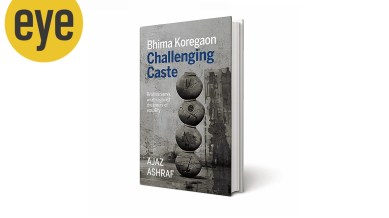
Journalist Ajaf Ashraf’s brilliant book Bhima Koregaon: Challenging Caste explains “Brahminism’s wrath against dreamers of equality”. His reportage-style writing untangles the state agencies’ conspiracy theories with ease. Based on interviews, research and archival material, he narrates the state’s complicated and delicate social underbelly above which is built the facade of a ‘developed state’. The book brings to the fore the reality of caste discrimination prevalent even in the 21st century.
Ashraf gives interesting anecdotes from the Peshwa-Raj, some of which border on hearsay and can be described as propaganda against Brahmins. On the other hand, the state agencies, in an effort to prove Elgar Parishad leaders “Maoist terrorists”, arrested 16 professors and lawyers without any implicating evidence. Some of them were jailed even without trial. Nothing was proved in the court of law. Ashraf exposes the machinations with micro-details.
This book follows Alpa Shah’s The Incarcerations, on the same issue, already a topic of a documentary and soon-to-be-released Hindi film. This shows the importance of Bhima Koregaon in understanding Maharashtra’s social history. Though there is a danger of Ashraf’s book being dismissed as a “left-winger’s” point of view, there is nothing from the ‘other side’ to counter it besides allegations and insinuations.


