New Delhi | Updated: November 25, 2025 08:46 AM IST
4 min read
Whatsapp
twitter
Facebook
Reddit
Li is a Stanford computer science professor and the CEO of AI company World Labs. (Image credit: Yale University)
Dr. Fei-Fei Li is not an ordinary woman. Her academic credentials are par excellence. She is a Stanford professor in the Computer Science Department and now the founder of World Labs, a one-year-old AI startup already valued at over $1 billion. Often called the “Godmother of AI,” Li recently won the Queen Elizabeth Prize for Engineering, perhaps the only woman among seven pioneers in AI to receive the honour.
While Dr. Hinton, Prof. Bengio, and Yann LeCun, Meta’s former chief AI scientist, are known as the “Godfathers of AI,” Li is the only woman recognised as the “Godmother of AI” in the world. However, reaching this stage in her career has been a long journey.
Li was born in China and migrated to the United States when she was just 15. The Stanford professor came from a humble background. As a teenager, she helped her parents run a dry-cleaning business in Parsippany, New Jersey, to make ends meet. She worked at the shop for seven years, continuing through the middle of her graduate studies, until she turned 18.
“We were not financially well off at all. My parents were doing cashier jobs, and I was working in Chinese restaurants,” she told Bloomberg in a Q&A. “My family and I decided to run a little dry-cleaner shop to make some money to survive.”
Li attended Princeton University for her undergraduate studies and later pursued a Ph.D. at Caltech in California. She has also worked at Google, where she served as Chief of AI at Google Cloud until October 2018, when she left following leaked emails related to the controversial Project Maven. She is currently the co-director of Stanford’s Human-Centered AI Institute, which aims to advance AI research, education, policy, and practice to benefit humanity, and she is also the co-founder and CEO of World Labs.
It is her pioneering work on ImageNet, a project started in 2006 that classified millions of digital images and became a training ground for modern AI vision systems, for which she is widely recognised. In fact, it was the ImageNet project that kickstarted the deep learning boom.
“Pre-ImageNet, people did not believe in data,” Li said in an interview at the Computer History Museum in 2024. “Everyone was working on completely different paradigms in AI with a tiny bit of data.”
Story continues below this ad
At World Labs, Li is working on building world models – basically AI systems that leverage spatial intelligence, which Li describes as “the ability for AI to understand, perceive, reason, and interact with the world. It comes from a continuation of visual intelligence.”
Her memoir/technology book, The Worlds I See: Curiosity, Exploration, and Discovery at the Dawn of AI, was released in 2023.
Earlier this month, Li’s startup launched its first commercial world model product, called Marble, which is available via freemium and paid tiers. The Marble model turns text prompts, photos, videos, 3D layouts, or panoramas into editable, downloadable 3D environments, a major step toward what the AI leader calls “spatial intelligence.”
Li sees “spatial intelligence” as the next chapter in artificial intelligence, building on the leap made by large language models (LLMs). She believes it will drive creativity, spatially-aware robotics, and scientific research. While LLMs, trained on language, are powerful, they are limited. True human-like intelligence also requires an understanding of physical space, which can be achieved through “world models” that simulate consistent 3D environments.
Li isn’t the only one backing the idea of so-called “world models.” Many world-renowned AI researchers believe that world models will propel the AI revolution into its next phase, including Meta’s former Chief AI Scientist Yann LeCun, who recently announced he would step down to launch his own world model startup.
Anuj Bhatia is a seasoned personal technology writer at indianexpress.com with a career spanning over a decade. Active in the domain since 2011, he has established himself as a distinct voice in tech journalism, specializing in long-form narratives that bridge the gap between complex innovation and consumer lifestyle.
Experience & Career: Anuj has been a key contributor to The Indian Express since late 2016. Prior to his current tenure, he served as a Senior Tech Writer at My Mobile magazine and held a role as a reviewer and tech writer at Gizbot. His professional trajectory reflects a rigorous commitment to technology reporting, backed by a postgraduate degree from Banaras Hindu University.
Expertise & Focus Areas: Anuj’s reporting covers the spectrum of personal technology, characterized by a unique blend of modern analysis and historical context. His key focus areas include:
Core Technology: Comprehensive coverage of smartphones, personal computers, apps, and lifestyle tech.
Deep-Dive Narratives: Specializes in composing longer-form feature articles and explainers that explore the intersection of history, technology, and popular culture.
Global & Local Scope: Reports extensively on major international product launches from industry titans like Apple and Google, while simultaneously covering the ecosystem of indie and home-grown tech startups.
Niche Interests: A dedicated focus on vintage technology and retro gaming, offering readers a nostalgic yet analytical perspective on the evolution of tech.
Authoritativeness & Trust
Anuj is a trusted voice in the industry, recognized for his ability to de-jargonize trending topics and provide context to rapid technological advancements. His authority is reinforced by his on-ground presence at major international tech conferences and his nuanced approach to product reviews. By balancing coverage of the world's most valuable tech brands with emerging startups, he offers a holistic and objective view of the global technology landscape.
Find all stories by Anuj Bhatia here.
You can find Anuj on Linkedin. ... Read More


 4 min read


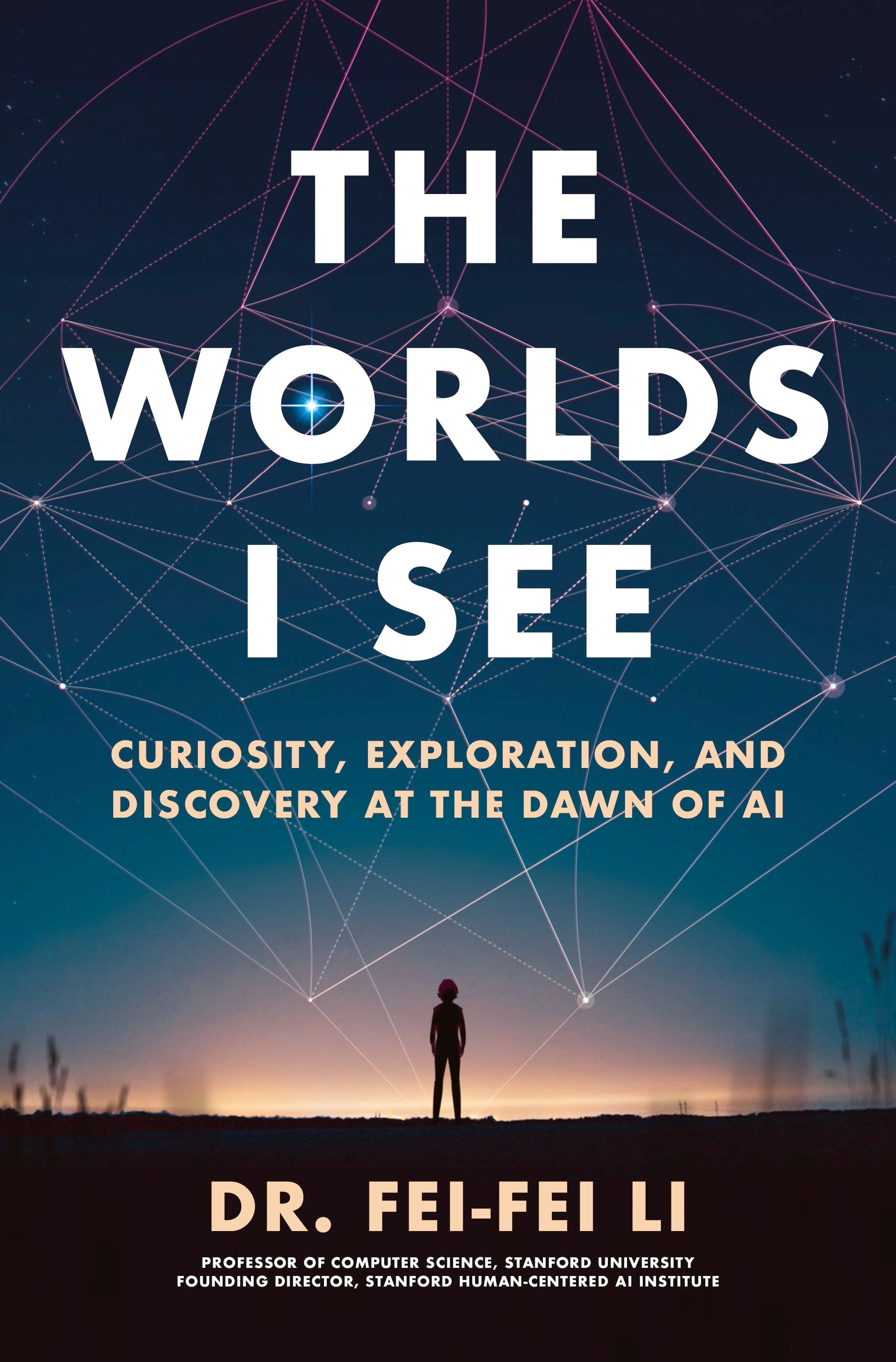 Her memoir/technology book, The Worlds I See: Curiosity, Exploration, and Discovery at the Dawn of AI, was released in 2023.