
A cartoon as a miracle: Dodging censors one pen stroke at a time
Abu's iconic cartoon in The Indian Express, of President Fakhruddin Ahmed signing away ordinances from the presidential bathtub, left us wondering for a moment: Was Emergency revoked? If not, like “good cop, bad cop”, was there “good censor, bad censor”?
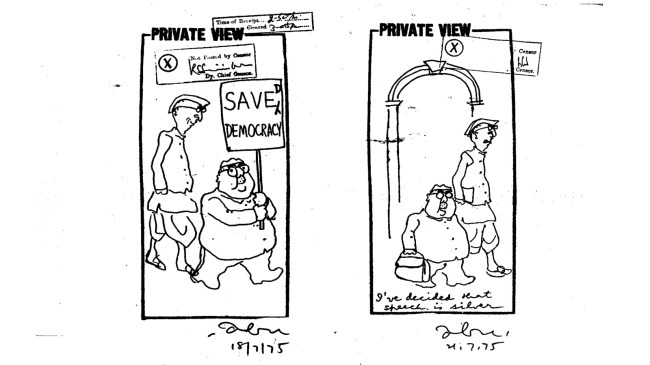 The cartoon’s regular cast of a rotund Congressman and his slim companion exchanged a remark on the day’s news. (Source: Abu Abraham's cartoons for The Indian Express)


Emergency came and ruined our day. Back in the 1970s in Kerala, the morning paper was already a habit and there wasn’t one without a cartoon. The eye went straight to the rectangle.
The frontpage fixture suddenly vanished or worse, wilted. A listless cartoon was unthinkable. From the town’s tea shops to the campus, politics meant protest and nothing captured the surge as well as the cartoon.

There was no dearth of bold writers, public speakers and editors then, but they all had to state their case and make their point. The cartoonist got away with what looked like an off-the-cuff, one-sided quip, making no effort to explain, reason or even sound overly decorous.
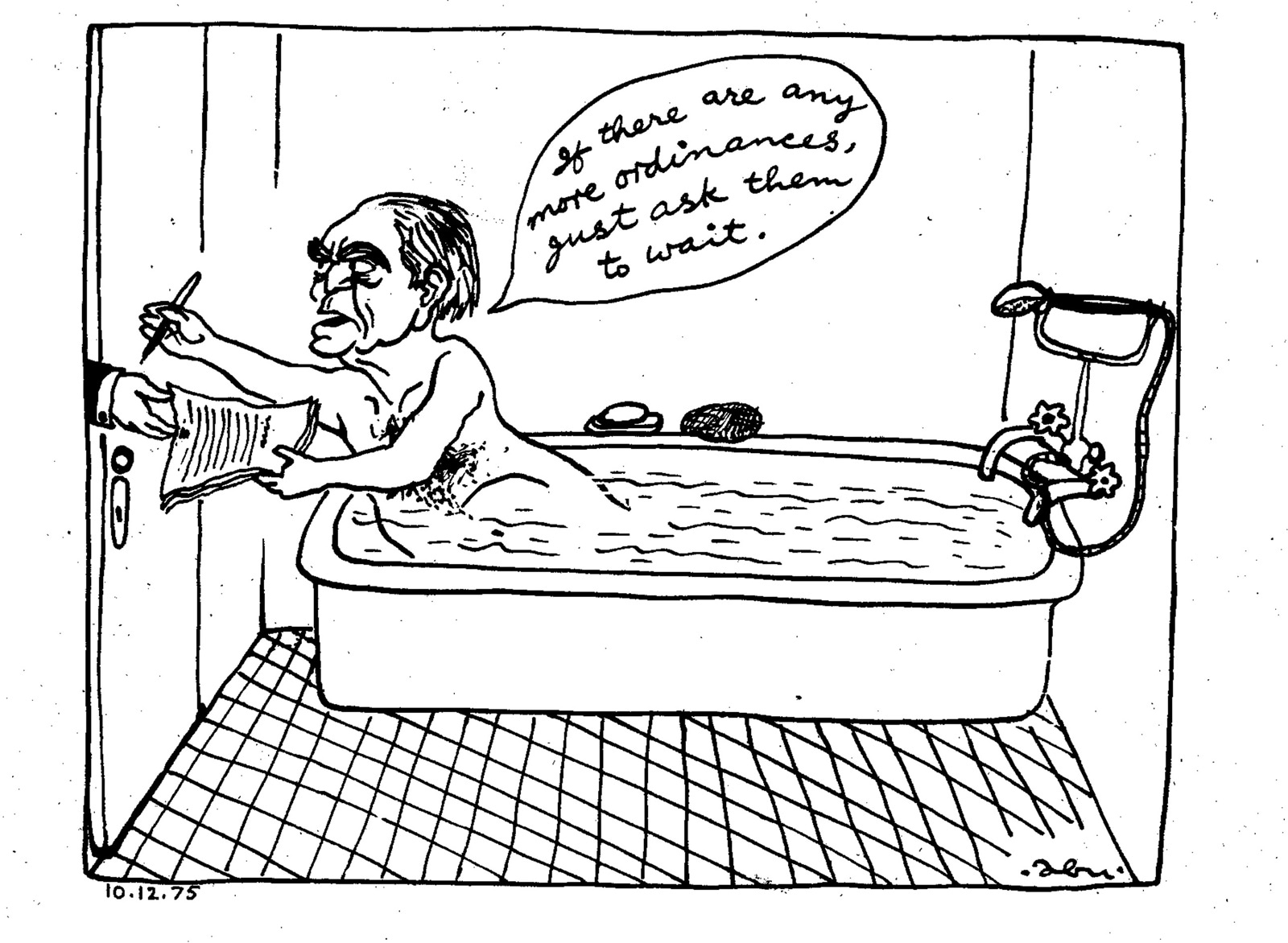 Abu’s iconic cartoon in The Indian Express, of President Fakhruddin Ahmed signing away ordinances from the presidential bathtub, left us wondering for a moment.
Elders approved of it, and we in the college admired the hit-and-run artist. Parents, teachers, doctors, lawyers, officials and even the politicians, who were targeted, saw this fault-finding art as a legitimate work practice. No one then imagined that someday the Indian cartoon would be criminalised enough to attract FIRs at the drop of a hat.
Two of our veteran cartoonists did hint at such an eventuality, though. Even before the Emergency was declared, neither had any illusion on where the State was headed. Also a writer, O V Vijayan had a chapter titled Emergency in a satirical novel he was working on. Similarly, Rajinder Puri, in his book-length account of the Congress’s split, titled India 1969: a Crisis of Conscience, had pointed to an impending constitutional breakdown in the country. Both refused to work under censorship.
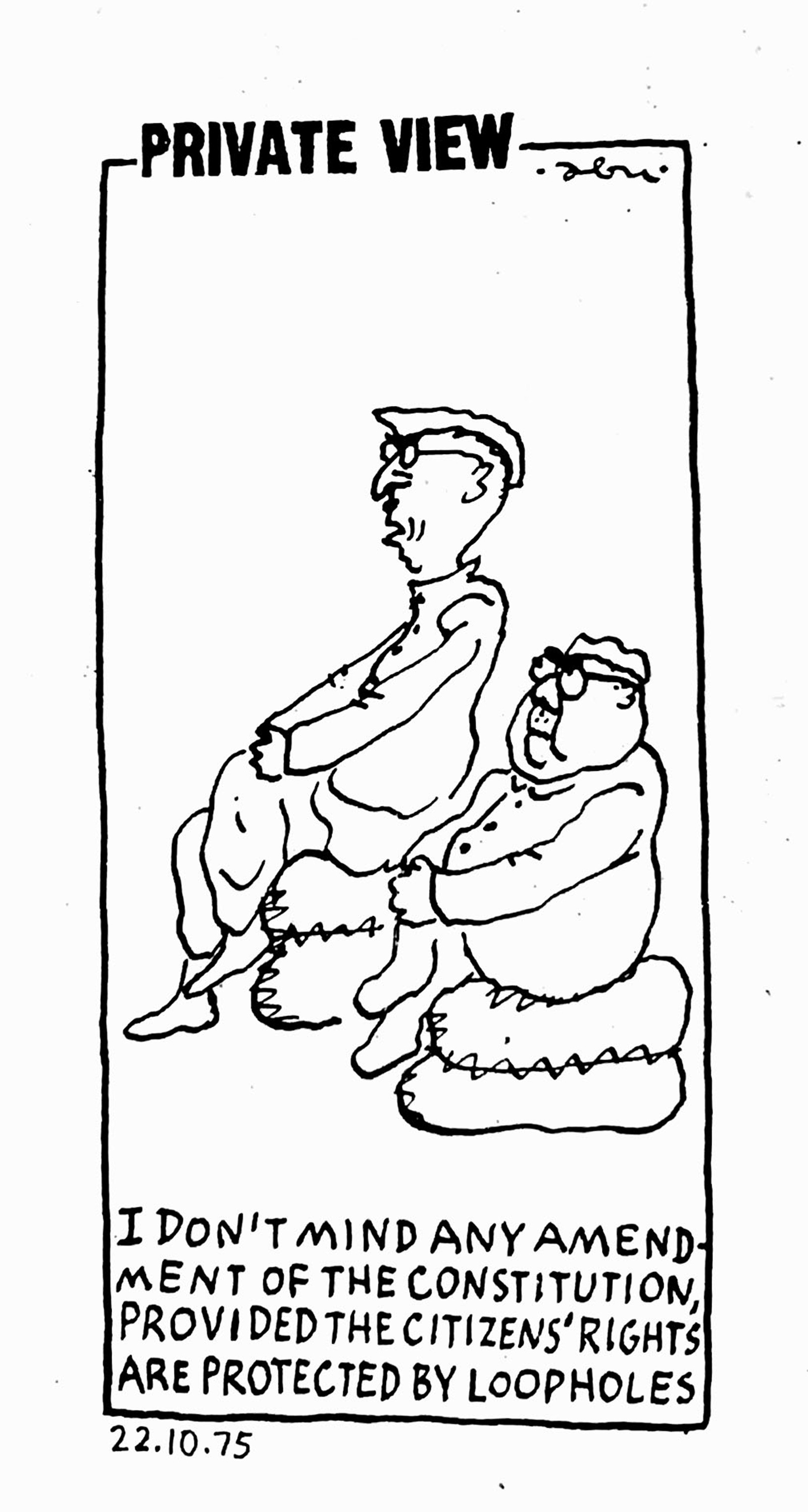 Cartoonist Abu Abraham’s work.
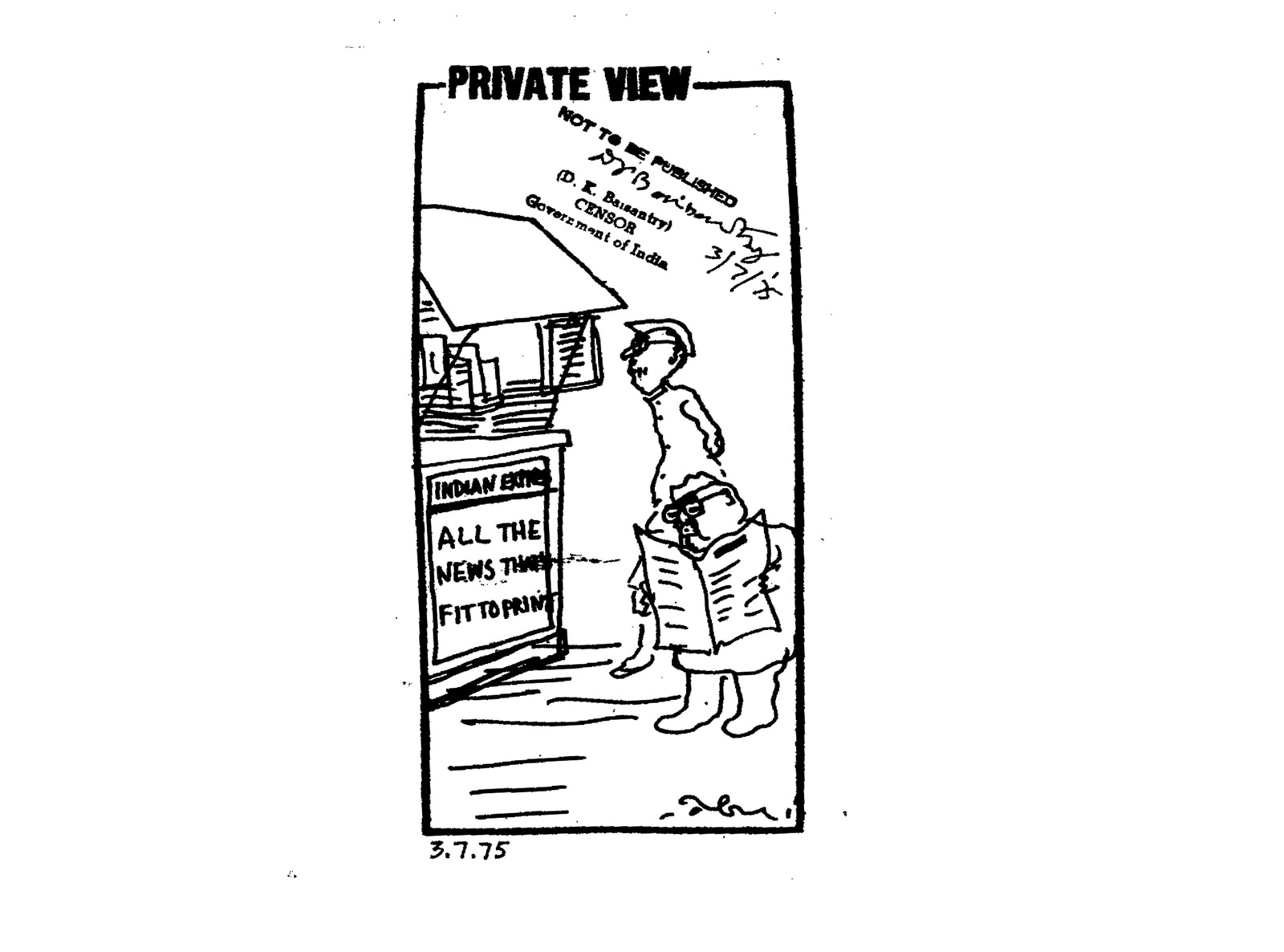
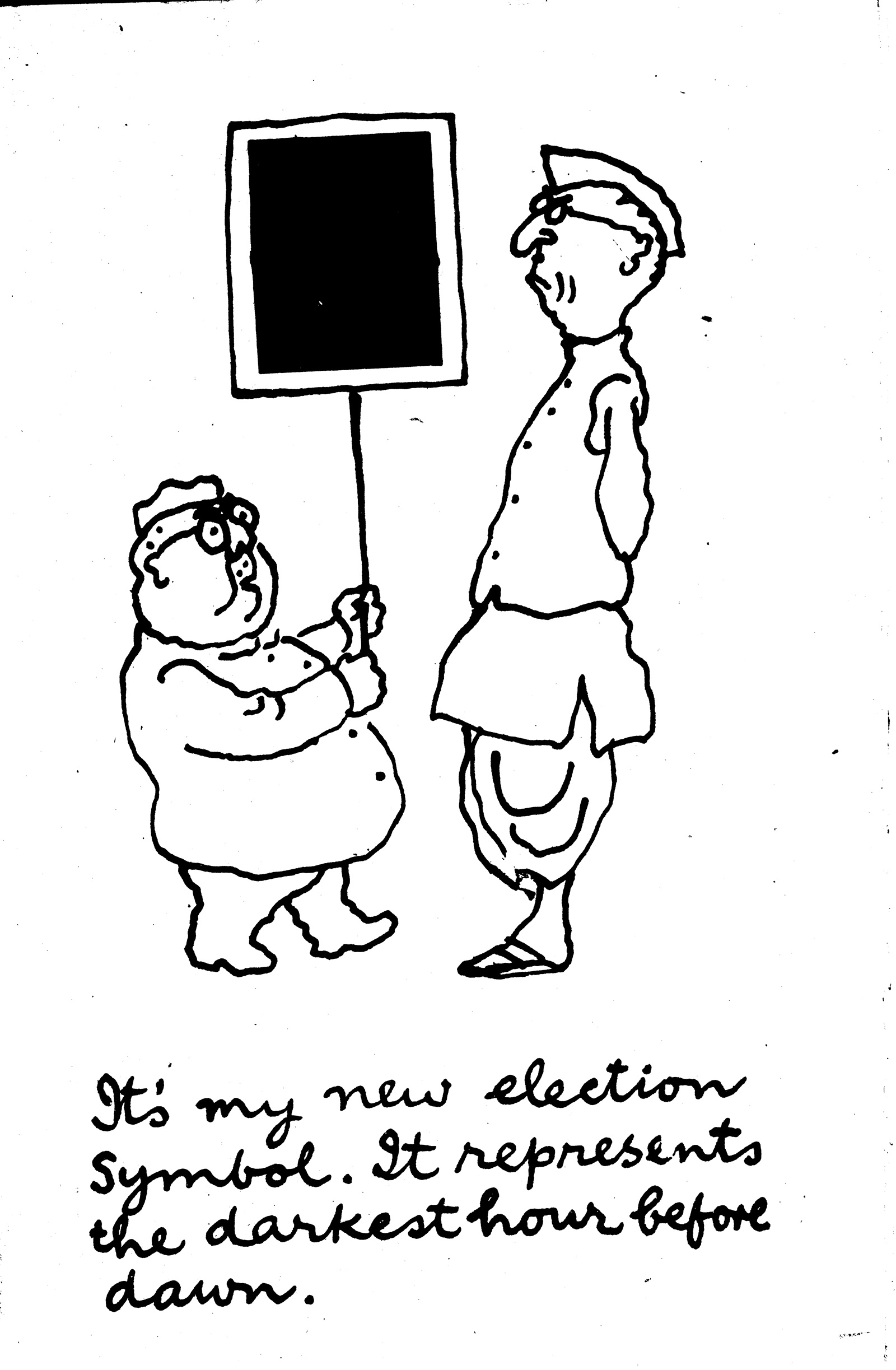
The third leading cartoonist, Abu Abraham, working with The Indian Express, provided the much-needed oxygen to readers. His single column weekday pocket cartoon became our only connect to the national capital that was turning increasingly centralised and opaque. The cartoon’s regular cast of a rotund Congressman and his slim companion exchanged a remark on the day’s news. The punchline stood out like a minor miracle that escaped the censor.
On December 10, 1975, six months into hardening censorship, a full-blown miracle greeted us from The Indian Express front page – Abu’s iconic display cartoon of Fakhruddin Ali Ahmed signing away ordinances from the presidential bathtub. For a moment we wondered whether the Emergency was revoked. If not, like the “good cop, bad cop”, was there the “good censor, bad censor”?
 Abu Abraham’s cartoon.
If so, would the good censor please step up and revive Shankar’s Weekly? Within weeks of the imposition of the Emergency, the country’s best-read satire magazine had folded up. We missed the weekly dose of cartoons and writing that spared nothing – literature, theatre, cinema, radio and politics, from Khrushchev to Karunanidhi and Nixon to Nandini Satpathy. You paid no more than 60 paise for this federal, global package. The 24-page periodical, elegantly laid out in ordinary newsprint, featured the likes of Jules Feiffer who brought the spirit of Woodstock to our small town.
The magazine never surfaced again. It was too much to hope for one more miracle. Then came one we in the South were least prepared for. In the ensuing general elections (in March 1977), the less developed and less literate North India voted out Indira Gandhi’s Emergency regime, while the Southern states endorsed her Congress party and its allies.
 Abu’s iconic cartoon in The Indian Express
After fifty years, the jury is still out on this “anomaly”. In the golden jubilee of the midnight knock, more analyses would be done and more points scored. At the end of the day, every party would like to sound democratic and constitutionalist. In this consensual exuberance they could all get together during the upcoming Monsoon Session of Parliament and give us one more miracle: Restore free speech – under Article 19 (1) and Article 19 (2) – to its original pre-amended 1950 version.

 Share
Share


