This is an archive article published on July 12, 2023
2 Maoist hideouts busted in forested area along Dantewada-Sukma inter-district border
When the forces reached the Simel area of the hills, the last point of their operation, there was an exchange of fire between the forces and around 30 armed Maoists from the Malangir Area Committee.
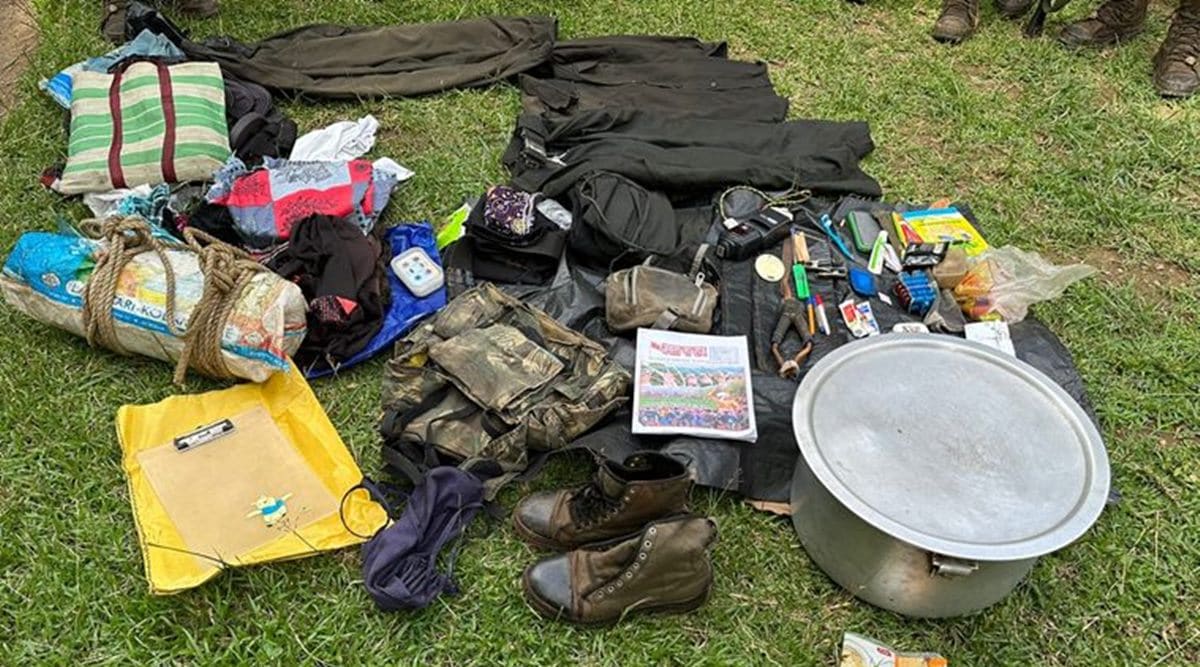
Materials used by Maoists like PGLA uniforms, utensils, solar plates, polythene, large jerkins, medicines, and a large number of daily items were seized during the operation. (Express Photo)
Listen to this article
2 Maoist hideouts busted in forested area along Dantewada-Sukma inter-district border
x
00:00
1x1.5x1.8x
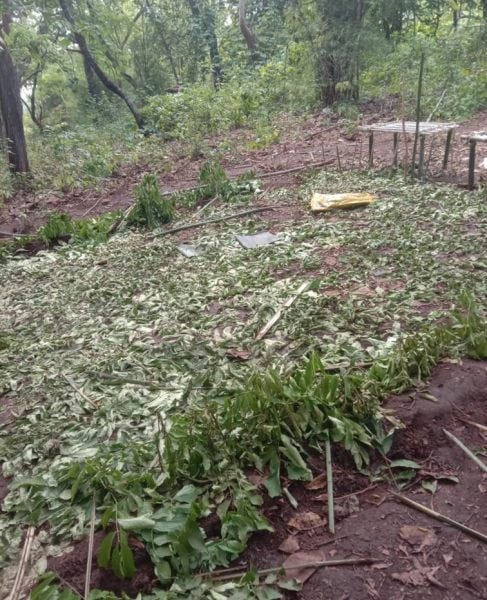
In a joint operation by state and central security forces, two Maoist hideouts inside Gogunda hills in south Chhattisgarh were busted Wednesday. The hideouts were located around 40 kilometre from Sukma district headquarters.
Inspector General of Police (Bastar range) Sundarraj P said, “The camps destroyed were one of few security vacuum areas along interdistrict border areas.”
“The four big Maoist stronghold areas left are in south Sukma, south Bijapur, Indravati National Park area, and Abujhmad area,” added another senior official.
The Maoists retreated and dispersed into the deep forest area. (Express Photo)
A team comprising District Reserve Guards (DRG) from Sukma and Dantewada districts, the state Special Task Force and the Commando Battalion for Resolute Action (COBRA) unit of the Central Reserve Police Force (CRPF) carried out the operation over two days from July 9 to July 11.
The team had received a tip-off that two platoons of the People’s Liberation Guerrilla Army (PLGA) were hiding deep inside Gogunda hills. To avoid coming in contact with improvised explosive devices (IEDs), the members of the joint team walked for over 50 kilometres amid heavy rains.
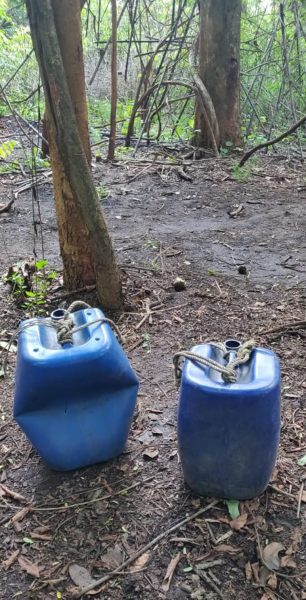
“Our team detected four IEDs and managed to avoid any injury,” said Kiran Chavan, Sukma district superintendent of police.
“Our team detected four IEDs and managed to avoid any injury,” said Kiran Chavan, Sukma district superintendent of police. (Express Photo)
The forces raided hilly places like Gogunda, Simel, Toyapara, Tummapad, Gattapad, Chipalli, Upampalli, Bagdeguda, Nagaram, Nendum, Garum and Khunduspara. These are known as the Gogunda hills on the inter-district border of Sukma and Dantewada.
Story continues below this ad
When the forces reached the Simel area of the hills, the last point of their operation, there was an exchange of fire between the forces and around 30 armed Maoists from the Malangir Area Committee. The Maoists retreated and dispersed into the deep forest area.
“About 80 armed Maoists lived in the two camps in Simel and Tummapad. These Maoists were controlling over 60 villages in and around Gogunda. After the operation, there will be a sense of fear in them and they will be under pressure,” added Chavan.
Materials used by Maoists like PGLA uniforms, utensils, solar plates, polythene, large jerkins, medicines, and a large number of daily items were seized during the operation.
Jayprakash S Naidu is a Principal Correspondent for The Indian Express, currently serving as the state correspondent for Chhattisgarh. With an extensive career in frontline journalism, he reports on the political, security, and humanitarian landscape of Central India.
Expertise and Experience
Specialized Conflict Reporting: Jayprakash is a leading voice on the Maoist/Naxalite conflict in the Bastar region. His reporting provides a critical, ground-level view of:
Internal Security: Tracking high-stakes encounters, surrender programs for senior Maoist leaders, and the establishment of security camps in formerly inaccessible "heartland" villages.
Tribal Rights & Displacement: Investigative reporting on the identity and land struggles of thousands of displaced tribals fleeing conflict zones for neighboring states.
Governance & Bureaucratic Analysis: He consistently monitors the evolution of Chhattisgarh as it marks 25 years of statehood, covering:
Electoral Politics: Analyzing the shift in power between the BJP and Congress and the impact of regional tribal movements.
Public Policy: Reporting on landmark infrastructure projects (e.g., mobile connectivity in remote zones) and judicial interventions, such as High Court rulings on civil and family law.
Diverse Investigative Background: Prior to his current focus on Chhattisgarh, Jayprakash held reported from Maharashtra, where he specialized in:
Crisis & Disaster Management: Notable for his extensive coverage of the Cyclone Tauktae barge tragedy (P-305) and the COVID-19 pandemic’s impact on frontline personnel.
Legal & Human Rights: Investigative pieces for platforms like Article-14, focusing on police accountability and custodial deaths across India.
Environmental & Social Justice: Authoritative reporting on the Hasdeo Aranya forest protests and the approval of major tiger reserves, highlighting the tension between industrial mining and environmental preservation. ... Read More


 3 min read



 The Maoists retreated and dispersed into the deep forest area. (Express Photo)
 “Our team detected four IEDs and managed to avoid any injury,” said Kiran Chavan, Sukma district superintendent of police. (Express Photo)