

Journalism of Courage

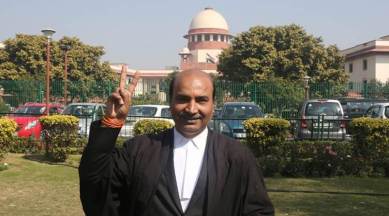
While the political class more or less welcomed the Supreme Court judgment ordering parties to make public “detailed information” regarding their candidates with “pending criminal cases”, including the nature of the offences and whether charges have been framed, its direction to parties, to specify the “reasons” that guided them to give tickets to those with criminal antecedents over others drew criticism.
While former Law Minister Ashwani Kumar questioned the “jurisdiction” of the court to pass such orders saying “credentials about leadership are to be established or negatived in the people’s court and not by judicial diktats”, his colleague and another former Law Minister, Kapil Sibal, welcomed the verdict with a caveat that the direction to parties to assign reasons for selection of candidates with criminal antecedents was a “bit much”.

CPI(M) general secretary Sitaram Yechury said the courts “can’t dictate on the internal affairs of the party… the court has no business to direct the internal affairs of the party on how they should run”.
“The order of the Supreme Court, while actuated by a well-meaning desire to remedy the increasing criminalisation of politics, raises issues of jurisdiction and the use of the court’s powers under Article 142 of the Constitution. Whether legislative lassitude and executive lethargy on such issues can justify the court’s binding policy prescriptions on matters quintessentially political is highly disputable,” Ashwani Kumar told The Indian Express.
Read | Maharashtra: 27 ministers, 172 MLAs face criminal charges
“In fact, the court’s diktat tends to treat individuals with pending criminal cases as those indicted offends against the first principles of criminal jurisprudence. Our jurisprudence does not recognise guilt by accusation. And the accused is presumed to be innocent unless proven to be guilty. Also, credentials about leadership are to be established or negatived in the people’s court and not by judicial diktats,” he said.
Sibal said he finds nothing wrong regarding disclosure of information about criminal cases but “I think for parties to give reasons… that is somewhat a bit much.” He agreed that “parties should disclose what (the candidate) is being prosecuted for… what is wrong with that. I welcome the verdict to this extent that there must be a disclosure. Why should parties not disclose criminal activities of those who they put up in an election? There may be serious cases like 302 (murder).”
He said the voters should know the antecedents of a candidate so that “it will be a disincentive to political parties to put up candidates who have a serious criminal record.”
BJP spokesperson Nalin Kohli said the orders of the top court have to be complied with. “It strengthens the electoral democratic process in enabling the voters to make a choice keeping all factors in mind,” he said.
Union Minister and LJP chief Ram Vilas Paswan said, “The Lok Janshakti Party welcomes the decision of the Supreme Court. LJP has not given a ticket to any criminal. All of our MPs are from a clean background.”
Janata Dal (U) secretary general KC Tyagi demanded that the apex court directive cover economic offenders too. Tyagi said parties should be mandated to put out details about them on their websites also.
Former Chief Election Commissioner S Y Quraishi said: “There is only token benefit from such orders. Despite the 2018 verdict, lawmakers with criminal antecedents rose in the 2019 Lok Sabha elections.”
He compared the court’s intervention to the statutory health warning on cigarette packs. “Whatever be the intention, it will have little impact on those who make the decision,” he said.
Senior advocate Rakesh Dwivedi said courts cannot dictate to political parties how or why they must field candidates for elections. “If the law does not prevent these candidates from contesting elections, then why should the courts dissuade people from voting for them and parties from fielding them. It is an exercise in futility,” Dwivedi said.
While both Dwivedi and Quraishi agreed that the apex court has brought significant reform to elections, they said it is only Parliament that can ensure those with criminal antecedents do not contest elections.
“Apart from a law, the courts can perhaps work to strengthen NOTA and give people the right to reject a candidate. That will disincentivise political parties since it will put a question on the winnability of a candidate,” Quraishi said.
Former Delhi High Court judge and former Law Commission chairperson A P Shah too said the court’s intervention was laudable but expressed doubts on the implementation of the order.


