Journalism of Courage



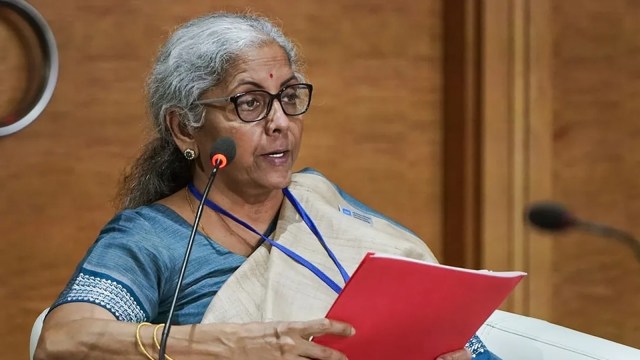 Finance Minister Nirmala Sitharaman
Countering the charge of the Opposition, Finance Minister Nirmala Sitharaman on Wednesday said that India is the fastest-growing major economy in the world. She said while the workforce has gone up which is evident from the substantial increase in the number of people enrolled with the EPFO, the unemployment rate has declined significantly.
Sitharaman was replying to a debate on the Interim Budget for 2024-25. She said the Indian economy is expected to clock over 7 per cent growth rate for the fourth year in a row.
She also said that retail inflation was stable and has come down within the tolerance band as a result of the steps taken by the government to check price rise, especially in perishable commodities.
The Finance Minister said India’s retail inflation has declined from an average of 6.8 per cent in April-December 2022 to 5.5 per cent in the corresponding period of 2023. The retail inflation is now stable and within the notified tolerance band of 2 per cent to 6 per cent, she said.
Talking about the fiscal deficit, Sitharaman said the government has tried to improve the glide path prescribed in the Fiscal Responsibility & Budget Management (FRBM) Act. For the next financial year, the fiscal deficit has been pegged at 5.1 per cent of the GDP as against 5.2 per cent suggested in the glide path, she said.
About the Performance Linked Incentive Schemes, she said, so far 7 lakh direct and indirect employment have been created. Exports worth Rs 3.40 lakh crore are happening and 176 MSMEs are selected as direct beneficiaries of the PLI Scheme, she said.
Earlier, slamming what he said was the Opposition’s bid to create “a north-south divide”, BJP’s Lok Sabha MP Nishikant Dubey targeted the Congress , saying the party and its “vote bank politics” were to blame for it.
He also alleged Congress leader Rahul Gandhi’s Bharat Jodo Nyay Yatra was passing through “hubs” of “Bangladeshi intruders” with an aim to secure “Muslim votes”. “That”, Dubey said, “was why the government was forming a panel on population”.
“Ye sab Bangladeshi ghuspathiyon ke kendra hain. Ye Bangladeshi Muslim vote ke liye. Isi ke liye ye committee banane ki aavashyakta padi. (All these are hubs of Bangladeshi intruders. This is aimed at Bangladeshi Muslim votes. This was the reason to form the committee),” he added.
Meanwhile, during the discussion, JD(U) MP Santosh Kumar, while supporting the Budget, expressed gratitude to the PM for conferring the Bharat Ratna on the late socialist icon and former Bihar CM Karpoori Thakur.
Shiv Sena Shinde MP Bhavana Gawali criticised the past governments on women’s welfare and empowerment.

 3 min read