Journalism of Courage



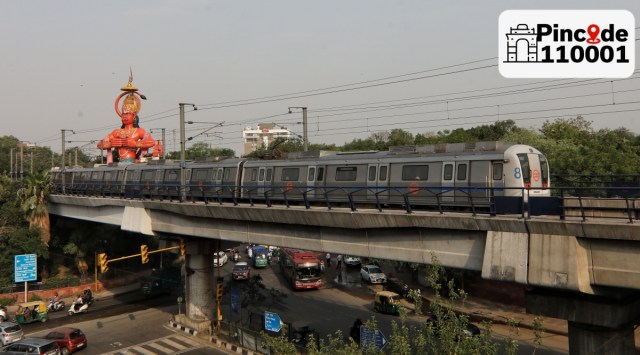 The Delhi Metro connected parts of the city considered too remote, and also acted as a social leveler where people across class would use the same facilities and share the same space. (Express file photo by Abhinav Saha)
 Nitika Arora recalls how her relationship with Delhi has bloomed over the years. The way she looks at her career and even how she spends her leisure time in the city is closely correlated with the expansion of the metro system in the city.
“In 1998, when I was still a college student, I wanted to take up an evening course in Mandi House,” Arora recalls. “But I had to ultimately drop the plan. The classes would end late and it was too unsafe to travel,” she said. When the Metro began its operations in 2004, Arora recalls how it changed not just her relationship with the city, but also her perspective of it.
Arora has co-founded Darwesh, a Delhi-based travel and culture studio, and conducts heritage walks around the city. Her latest walk was all about the Delhi Metro and how it has assimilated into and changed the culture of the city and the lives of its citizens.
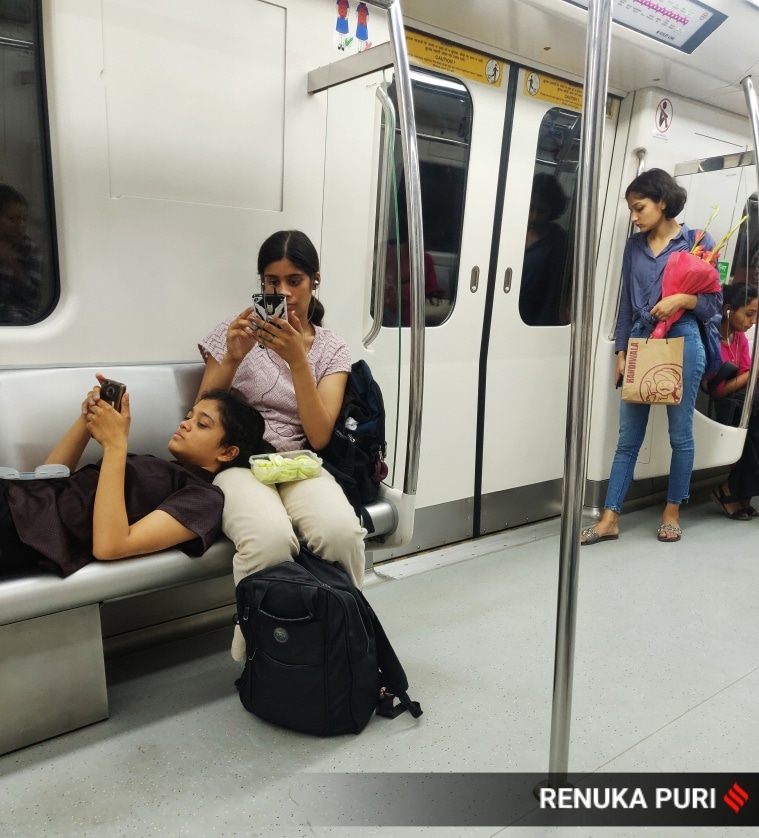 Women commuting in the Delhi Metro. (Express file photo by Renuka Puri)
Public transport in India, for most, evokes images of dust, dirt, crowds and chaos. But here was the Metro – shiny, spotless, silent, cool, and orderly. In her paper ‘On the Delhi Metro: An Ethnographic View’, Rashmi Sadana recalls author VS Naipaul’s first journey on the metro. He, like many, was taken aback by the efficiency of everything – the lines, the officials, the trains. Even the project had finished on time. He would then speculate that the experience of riding the metro would make the people of Delhi more civil over time.
Yet, the metro did much more. It connected parts of the city considered too remote, and also acted as a social leveler where people across class would use the same facilities and share the same space. It even became a space where people could feel comfortable. Hundreds of videos of couples sharing moments of intimacy circulate on the internet today. Perhaps they resort to the metro for moments of privacy not with the express motive of making other commuters uncomfortable, but because it is the only place in the city that has afforded them a safe space without the looming shadow of cops or nosy, moral vigilantes.
Women, too, feel safe to wear clothes otherwise considered too risqué for other modes of public transport. Arora shows a small clip from the movie Delhi-6 where Abhishek Bacchan walks around freely in the city, juxtaposed with Sonam Kapoor’s brisk walk to the metro in her demure salwar-kameez. But the moment she reaches the metro station, she dons a backless, sleeveless top, a bandana and a glittery belt showing off her torso.
However, what the metro giveth, the metro taketh away. While the metro has brought about development and growth to the city, it has done so, in some cases, at the cost of Delhi’s long history and legacy. The New Amar Talkies, a famous cinema hall near Ajmeri Gate was razed to build Chawri Bazaar metro station in its stead. New Amar was an essential part of Old Delhi’s history where sex workers frequented to see movies. According to Arora, the cinema would see record crowds on days it would screen movies with strong female leads such as Mother India.
Similarly, in 2010, when the Violet Line was being constructed it was met with raucous protests by RWAs in the area. Their concern was that with the line and the stations running so close to their housing complexes, it would lead to people being able to peek into their drawing rooms. It would also lead to the densification of traffic, with autos and e-rickshaws crowding near the metro gates. While the metro authorities would not be able to fix the densification, they did erect high barriers on all elevated Violet Line stations to prevent people from looking out into people’s homes.
The metro also purportedly almost obstructed the view of the Qutub Minar on the city’s skyline. According to Sadana, the Delhi Urban Art Commission had appealed to the Archaeological Survey of India to order the DMRC to reroute the elevated line. The DMRC first dug its heels in but when shown how the Kolkata Metro had destroyed the historic Chowringhee Lane, the metro body relented. And the result? A reroute costing the project an extra 300 crore rupees and giving the commuters a beautiful, unobstructed view of the Ghurid minaret.

 5 min read