5 min read
Stay updated with the latest - Click here to follow us on Instagram

Journalism of Courage



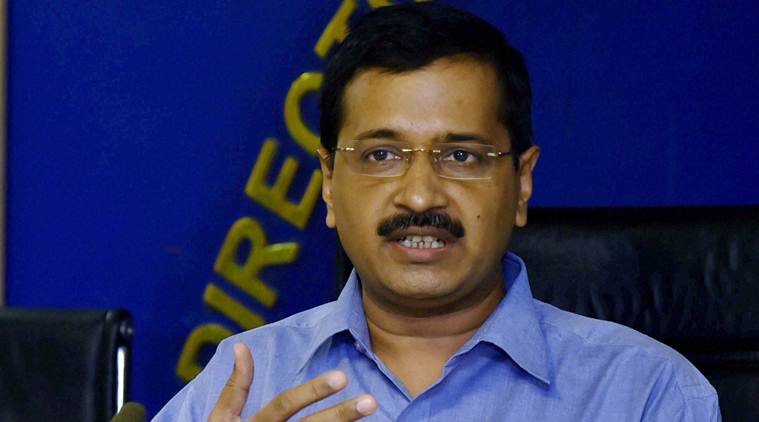 CM Arvind Kejriwal
The Delhi Janlokpal Bill, 2015 — cleared with much fanfare by the Cabinet last week — may trigger another confrontation between the AAP government and the Centre, which have clashed repeatedly over issues of jurisdiction and power.
The draft Bill gives the Janlokpal the power to investigate any allegation of corruption in the National Capital Territory of Delhi. The Bill states that the anti-corruption ombudsman can investigate public servants, including officials of Delhi Development Authority (DDA), Delhi Police and the Municipal Corporation of Delhi (MCD), according to a government official.
Both the DDA and the Delhi Police are under the jurisdiction of the Centre, while the three municipal corporations in the capital are ruled by the BJP.
The Bill also seeks an annual statement of assets from these officials. “Every public servant (including DDA, MCD and Delhi Police) will file a statement of his assets annually with the government,” states the draft Bill.
The Bill also seeks to ‘redefine’ the powers of the Lieutenant Governor, making it clear that the latter can only act “in accordance” with the decisions taken by the Delhi Cabinet.
“Lieutenant Governor means the Lieutenant Governor of the National Capital Territory of Delhi appointed by the President under Article 239 of the Constitution and who shall act in accordance with the aid and advice of the Council of Ministers,” states the draft Bill.
The Bill also makes it clear that the Lt Governor would neither have any say in the appointment of the Janlokpal nor the power to overrule the selection committee’s decision. “The recommendation of the selection committee shall be binding on the Lt Governor who shall make the concerned appointment to the Janlokpal no later than 30 days from the date of receipt of the recommendation of the committee,” states the draft Bill.
“Janlokpal will be selected only on the recommendations of the selection committee that has three political members — the Chief Minister, the Speaker, the Leader of Opposition and the Delhi High Court Chief Justice,” states the draft Bill.
The Lt Governor would not have the power to remove the Janlokpal from his post, unless the Delhi Assembly approves such a step, states the Bill.
1. The anti-corruption body: The Janlokpal will comprise a chairperson and two other members, who will hold office for a term of five years. The draft Bill states that they will not be eligible for reappointment. However, it goes on to add, “Provided, however, that upon completion of one term as a chairperson or member of the Janlokpal, such person shall be entitled to be considered for one additional term…”
2.The Janlokpal: The candidate for the Janlokpal chairperson’s post has to have served as a judge in the Supreme Court or any of the high courts, states the draft Bill. If the candidate chosen for the post is already in charge of a political post or public office, he will have to resign before taking charge.
3. Rules against complainants who lodge false cases: A person who “wilfully or maliciously” files a false complaint can be punished with imprisonment of up to one year or a fine of maximum Rs 1 lakh or both.
4. Powers of investigation officers: The Janlokpal, and the investigation officers appointed by him, would have the same powers as that of a police officer. Officers will have the power to summon complainants, witnesses and the accused, as well as to enforce their attendance. Officers have to complete the investigation between six months and an year.The Janlokpal can utilise the services of any officer, organisation or investigation agency under the central government, any state government or UT.
5. Prosecution wing: The Janlokpal will constitute a prosecution wing, under which it will appoint a Director of Prosecution and officers to prosecute corrupt public servants. The Janlokpal would have the power to provisionally attach and confiscate the assets of corrupt officials. It can also recommend their transfer or suspension.
6. Quantum of Punishment: Corrupt officials will face a jail term of minimum six months and maximum 10 years, as per the severity of their offence. In rarest of rare cases, they can be sentenced to life imprisonment. “While awarding punishment, … the special court may award higher punishment to a public servant holding higher rank,” states the draft Bill.
7. Special courts: The Delhi government, in consultation with the Chief Justice of the Delhi HC, may constitute special courts to hear and decide corruption cases. “Information collected by Janlokpal shall be treated as confidential,” states the draft Bill.
Stay updated with the latest - Click here to follow us on Instagram