Journalism of Courage



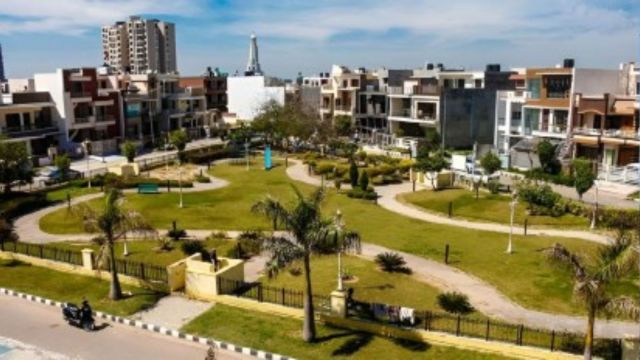 The matter was listed for hearing on December 18, but due to the ongoing lawyers’ strike in the High Court, the next date of hearing has been fixed for December 23. (File photo)
The anti-encroachment drive being carried out by the administration in Mohali has created confusion among residents, as the action is being halted and resumed intermittently. While officials claim the drive is being conducted in compliance with court orders, legal experts have raised serious objections, stating that the manner in which the action is being executed violates clear judicial directions.
To bring clarity to the issue, The Indian Express spoke to senior advocate Pritpal Singh Bassi, who said that the action in Phase 4 was initiated even before proper compliance was ensured. Questioning the joint anti-encroachment drive being carried out by GMADA and the Municipal Corporation in various phases and sectors of Mohali, Bassi said he has filed a contempt of court petition against both departments in the Punjab and Haryana High Court.
The matter was listed for hearing on December 18, but due to the ongoing lawyers’ strike in the High Court, the next date of hearing has been fixed for December 23.
“The authorities are justifying their action by citing a 2020 contempt case filed by Manoj Vashisht, but GMADA has not even submitted its own landscape policy before the court so far,” Bassi said.
Explaining GMADA’s landscape policy, the senior advocate said that corner plots are permitted to undertake landscaping up to 30 feet.
“If a residents’ welfare association wants to use the land for community purposes, GMADA is required to ensure that the plot owner provides the space. However, even in such cases, seven feet must be left for landscaping,” he said.
He clarified that even if a temporary encroachment exists after leaving five feet from the road in front of a house, it still constitutes a violation, not encroachment.
“However, in such cases, an individual notice must be served so that the plot owner gets an opportunity to respond. If GMADA is satisfied with the reply, no action is taken; otherwise, the encroachment has to be removed,” Bassi said.
The advocate noted that although the drive has been halted for the past two days, if it resumes, residents must be fully aware of their legal rights and present their case accordingly. He pointed out that several High Court judgments delivered in 2023 and 2024 clearly state that action cannot be taken on the basis of public notices and that individual notices are mandatory in every case.
Referring to the Punjab and Haryana High Court judgments in CWP No. 160 of 2023 and CWP No. 16204 of 2023, related to Panchkula matters, Bassi said these rulings make it clear that no regulatory authority — whether in Haryana or Punjab, including GMADA or the Municipal Corporation, Mohali — is above the law.
“The Division Bench has categorically held that no action can be taken without serving individual notices. Any such action would directly amount to contempt of court,” he said.
Emphasising citizens’ rights, Bassi added, “Every plot owner has the right to show these judgments on the spot and stop the action by stating that court orders are being violated. Legally, every citizen can prevent such unlawful action.”
He also rejected the practice of carrying out demolitions on the basis of public notices. “Demolition based on public notice is completely illegal. Even the judgments being cited clearly state that public notices cannot be relied upon,” he said.
The senior advocate referred to the 2024 guidelines issued by the Supreme Court, which clearly state that notices published in newspapers during demolition drives are not valid.
“If any demolition is to be carried out, an individual notice must be served on the plot owner, the property owner, or the occupant. While serving the notice, a neighbour must be made a witness. If the house is vacant, the notice must be affixed at the site,” the guidelines state.
As per the guidelines, further action can be taken only after the expiry of a 15-day period. Under GMADA’s landscape policy, a penalty of ₹25 per foot is applicable for the first 15 days. From the 16th and 17th day onwards, the penalty per foot increases, and only after 30 days can demolition or any stringent action be initiated.

 4 min read