


Stay updated with the latest - Click here to follow us on Instagram
© IE Online Media Services Pvt Ltd
Tags:


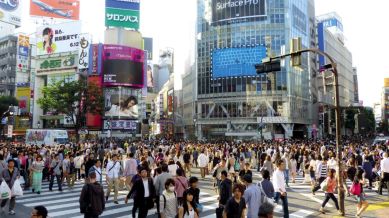
Japan’s long-standing concerns over population decline are set to worsen, with experts warning that even the country’s major cities will soon experience a drop in residents.
While rural areas have long struggled with depopulation, a tipping point for urban centres is expected by 2035, according to analyst Masashi Kawai, reported South China Morning Post (SCMP).

In his book Future Atlas: What Happens in Japan with a Declining Population, Kawai notes that several cities, including Kitakyushu, Kobe, Kyoto, and Osaka, had already begun losing population by 2020.
By 2025, Sendai, Yokohama, and Kumamoto will follow, with Nagoya, Sapporo, Hiroshima, and Okayama set to experience similar declines by 2035.
Some cities may temporarily sustain their numbers by drawing people from surrounding areas, but this source of migration will dry up within the next decade, Kawai warns. He also highlighted that Japan’s ageing population will add further challenges.
By 2035, over a third of residents in cities like Kobe (34.8%), Sapporo, Shizuoka, and Kitakyushu (34.6%) will be elderly.
In Yokohama, estimates from June 2024 show that nearly 30% of its 3.7 million residents are already aged 65 or older, leading Kawai to describe it as “a designated city for elderly people only.”
Hiroo Ichikawa, an urban planning expert and professor emeritus at Meiji University, agrees with Kawai’s findings but believes one controversial solution has been overlooked: immigration.
“The largest factor that is going to affect the nation’s total population is an increase in foreign residents,” Ichikawa said. “I fully expect that to happen, but I also accept that it is an unpopular position and one that Japanese society is not ready to talk about right now”, as reported by SCMP
Despite labour shortages in key industries, there remains strong resistance to large-scale immigration. Japanese media frequently report on incidents of violence involving immigrants in Europe, reinforcing public scepticism.
However, government data from 2024 indicates a net influx of 79,285 people into Tokyo, an increase of 11,000 from the previous year. Only six other prefectures—Kanagawa, Saitama, Osaka, Chiba, Fukuoka, and Yamanashi—recorded population growth.
“These cities will continue to attract people from rural areas, and we will also see more foreign residents settling here,” Ichikawa added. “I’m more optimistic about larger cities like Sapporo, Fukuoka, Kawasaki, and Yokohama, but smaller cities may struggle and some could eventually disappear.”
Ichikawa stressed the need for urban planning to adapt to an ageing society. “By 2040, Japan will become a more compact nation, with cities designed to support an older population,” he said, noting that new buildings already feature accessibility measures such as lifts and age-friendly designs.
Stay updated with the latest - Click here to follow us on Instagram


