

Journalism of Courage


The government, however, says demonetisation was a "watershed moment" for the Indian economy. Finance Minister Arun Jaitley Tuesday added that it was a "morally and ethically correct" step. (Express Photo/Tashi Tobgyal)
READ Here's what Arun Jaitley said

Migrant workers in the capital are among the worst hit following demonetisation. As the number of workers outgrew available jobs, wages started dropping. The Labour Chowk, at the heart of Old Delhi, sees thousands of workers from Rajasthan, Bihar, Uttar Pradesh, Haryana and other states assemble every day — so they can be hired to work in hotels, dhabas and marriage functions on a daily basis.
READ At labour chowks, a jostle for jobs; some solace in new bank accounts

In Mayapuri industrial hub in West Delhi, demonetisation, GST and the economic slowdown have led to the closure of over 500 units. The few that have survived have increased shift timings of workers from 8 to 12 hours.
READ At industrial hub, shut factories, impatient workers
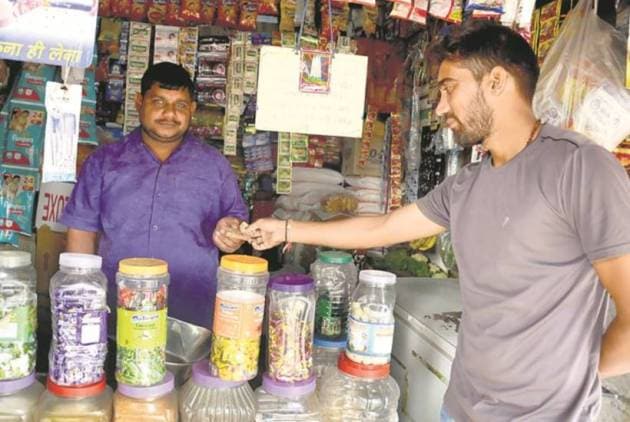
Fazilpur Badli in Gurgaon district used to be one of the “cashless” villages recognised by the government as proof of the success of demonetisation. However, now, cash is back.
READ ‘Cashless’ village back to old ways

Has demonetisation played a role in curbing terrorism and the circulation of fake currency? (AP Photo/File)
Here are the numbers

Counterfeit versions of the Rs 500 and Rs 2000 notes are not easily identifiable anymore. In fact, they are now being printed with at least 8 of the 17 security features introduced by the RBI.
READ Rs 2,000, Rs 500 fakes are now of ‘highest quality’

Textile workers in Tirupur are struggling to make ends meet, a year after demonetisation. Raja Shanmugham, president of the Tirupur Exporters’ Association says, "Once you kill it, reviving it would be impossible." (Express Photo)
READ Why Tirupur’s Rs 42,000 crore textile hub fears a wipeout

The tendency now for agricultural commodity prices in India is to be increasingly “sticky upward”.
Click to read how farmer prices have changed after demonetisation


The government says demonetisation has led to a lower cash-to-GDP ratio. However, according to experts, a lower ratio could be due to a combination of factors — lower currency supply, shrinkage in cash-dependent enterprises due to the note ban, and shortage of cash in pockets of the economy.
READ Why less cash in itself may not necessarily mean less black money

Districts corporate banks were stuck with devalued notes until recently, as the RBI had, six days after demonetisation was announced, refused to accept notes already deposited. At least Rs 2,000 crore was stuck with the banks, which have now been given permission by the Supreme Court to exchange them.
READ MORE Cooperative banks still weighed down by cash that cannot be used

Maharashtra’s 300 wholesale markets, with an estimated turnover of Rs 1 lakh crore, have historically been driven by cash. This is how demonetisation impacted them.
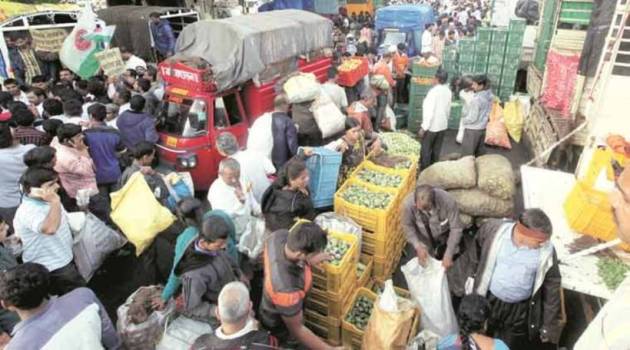
Cashless transactions are still not the preferred mode of payment in villages across the coutnry. Here are notes from Maharashtra, Jharkhand and Chhattisgarh.
READ Digitisation: Poor connection and many fears; why cash is back in ‘cashless’ villages

A year after demonetisation, data shows that ATM withdrawal have risen in India to Rs 2.35 lakh crore at the end of August against Rs 2.19 lakh crore in the corresponding period last year. The number of transactions through ATMs was 716 million, compared to 756 million.
READ One year after demonetisation, ATM firms’ reading: cash must still exist


