


Stay updated with the latest - Click here to follow us on Instagram
© The Indian Express Pvt Ltd
Tags:


I never got an opportunity to bid farewell to the old Parliament’s central hall, once the country’s most exclusive club and hub for select senior parliamentary correspondents, when the House was in session. Central Hall (CH) provided an opportunity to rub shoulders with Members of Parliament (MPs), past and present, ministers and opposition leaders. The powerful in the land were easily accessible here and journalists did not have to go through the rigmarole of fixing formal interviews, maneuvering through layers of secretaries for an appointment. The last time I visited Central Hall was March 20, 2020. Many of us scribes were hovering around TMC (Trinamool Congress) MP Derek O’Brien, who questioned the Parliamentary authorities’ casual attitude towards the serious threat of the COVID-19 virus spreading to India. Just that morning he had been told to take off his mask. O’Brien said that a prominent young BJP MP could well be a carrier since he had attended a party in Lucknow where a well- known singer, just returned from London, had skipped mandatory quarantine in Mumbai and was found to have tested positive for Corona.
Two days later, Parliament was abruptly adjourned sine die. Parliament resumed in the next session, entry for journalists was now restricted to a minimal number selected by lottery, the COVID epidemic eventually waned, but correspondents were never permitted back into Central Hall. Earlier this year, an old colleague tried to test the waters, since his Rajya Sabha pass still bore the CH stamp, indicating permission to enter the hallowed precincts lined with portraits of our national heroes. While he sipped a cup of tea in a near empty hall, since Parliament was not in session, a group of senior security guards rushed up to him and explained apologetically that journalists were no longer permitted entry by the Lok Sabha Speaker, even if the COVID threat was over.


In 1975, during Indira Gandhi’s Emergency, an embarrassed Secretary of the Lok Sabha had similarly explained to scribes that they were no longer welcome in what Sanjay Gandhi termed “a den of gossip”.
There were straws in the wind of distancing the media from the legislators even at the start of Narendra Modi’s regime in 2014. When an OSD (Officer on Special Duty) from the prime minister’s office started regularly visiting the hall, the buzz was that he was there to keep an eye on who was talking to whom (Even though the unwritten code is that journalists’ interactions are informal and not for sourcing). Timid ruling-party MPs began staying away from this popular meeting place, located strategically between the Rajya Sabha and Lok Sabha, where you can order inexpensive food, and chat for hours. But the freewheeling atmosphere still prevailed for some years.
MPs usually had favourite benches. The TMC representatives sat together at the back left, Marxists puffed on their cigarettes and held forth in the smoking lounge, MPs from the south mixed mainly with others from their respective states, regardless of party lines. The conscientious Jaya Bachchan, was a fixture in the front row with fellow Samajwadi Party MPs. Lalu Prasad Yadav sat in the middle where he held court while visiting the Capital. Supriya Sule and her group of smart sophisticates, nicknamed the Khan Market set by the more traditional parliamentarians, had a special bench. Whenever Sonia Gandhi walked briskly from the back of the hall towards her office, all Congress MPs respectfully sprang up and rushed to greet her, though she seldom lingered to chat.
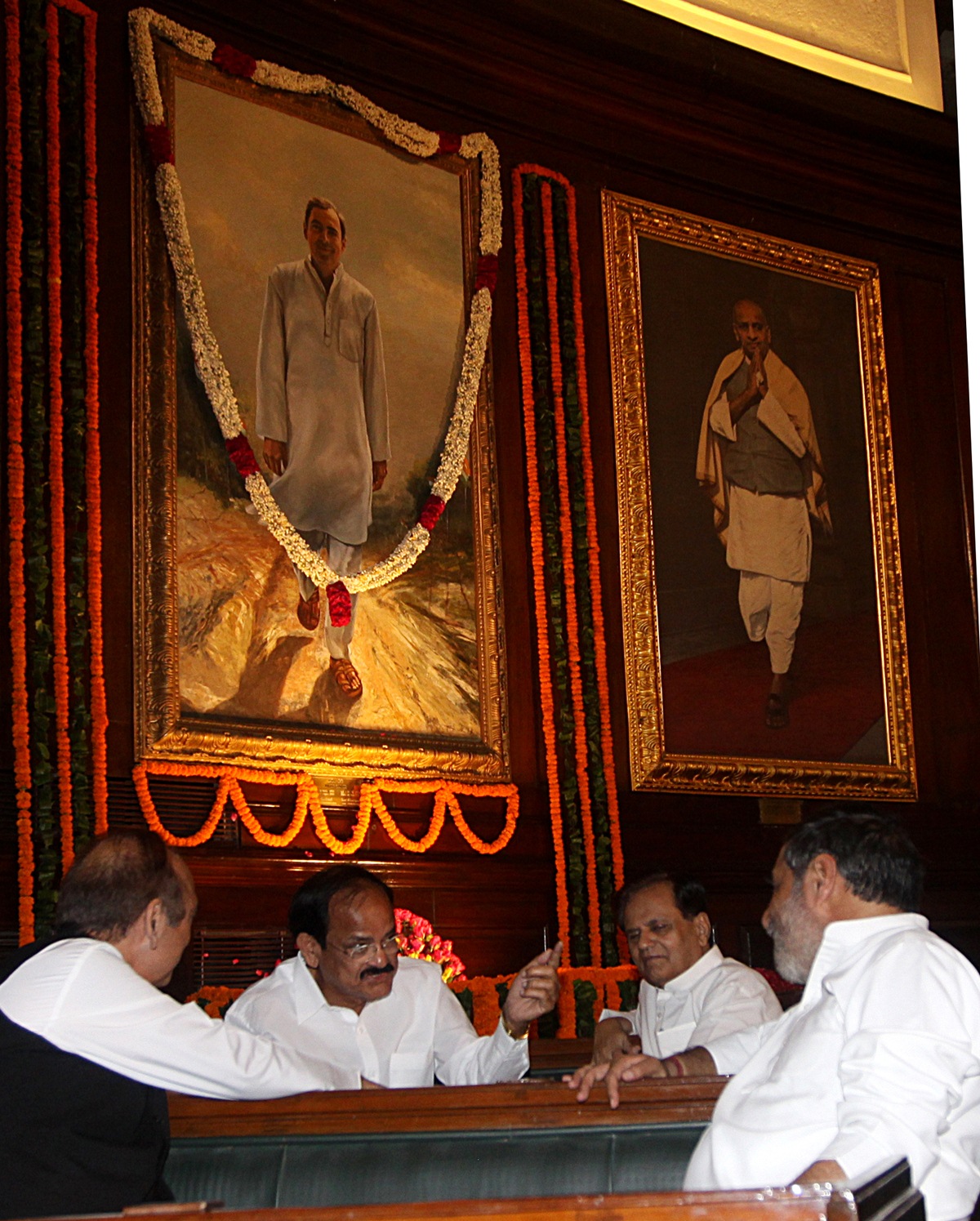
The star attractions in Modi’s first term were the late Arun Jaitley and late Ahmed Patel. Scribes flocked around them to get newsworthy insight. Both understood the importance of keeping the media on their side. But by 2019 Jaitley was no longer on the scene and the ruling party was now openly antagonistic towards the media. Even before the formal ban, it had become increasingly difficult to ferret out any news in Central Hall, which has witnessed the functioning of our parliamentary democracy for over half a century. The Constitution was drafted in this hall, Jawaharlal Nehru delivered his ‘Tryst with Destiny’ speech here, Sonia Gandhi announced that she followed her inner voice not to accept prime ministership and the Samajwadi MPs were persuaded to switch sides overnight when the Left pulled out of the UPA government. Central Hall was a place for MPs from opposing sides to interact informally and with bonhomie and in the process many compromises over legislation, tweaking policies and switching sides were reached over dosas and coffee.
In the new Parliament, there will be a special legislative chamber for seating members of both Lok Sabha and Rajya Sabha when holding a joint session. But the architectural plans for the new Parliament did not have space for a central hall, where informal exchanges can take place across party lines and the media can observe from the sidelines. The hall is now history, surely to the detriment of ensuring a healthy, interactive liberal democracy.
– Coomi Kapoor is contributing editor, The Indian Express


Stay updated with the latest - Click here to follow us on Instagram


