


Stay updated with the latest - Click here to follow us on Instagram
Tags:


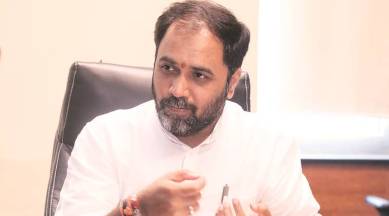
After the Kamala Mills and Saki Naka fire in December 2017 that claimed the lives of 26 people, what measures will the labor department take to ensure fire safety measures?
The Kamala Mills tragedy and that in the farsan shop in Saki Naka as well as other fire incidents have occurred due to short-circuit, negligence or other reasons. We value each person’s life equally. Under the ease of doing business initiative, we have eased processes including allowing shops and establishments to remain open for 24 hours, we have freed them from the ‘inspector raj’, introducing self-certification among other moves. So, it becomes their responsibility to ensure safety of workers in their establishment. There should be no negligence. We will now come out with an industrial safety policy for establishments and factories including a chapter on stringent norms for shops, eateries, etc. This will be a state safety policy, and we will fix the responsibility on the owners for such incidents.

Is self-certification, under the garb of ease of doing business, has led to non-compliance with required norms?
There are two sides to it. Those who are honestly doing their businesses will be troubled by some people’s action of not complying with norms while self-certifying. Our attempt is to protect such honest businessmen and to ensure that they are not troubled. And those who are not complying with norms will be punished for their acts.
What is the biggest challenge in implementation of the 24×7 policy for shops and establishment?
Women’s safety will remain the most important aspect. The number of working women is not very high. By ensuring their safety, we hope to increase their numbers, and that will help to contribute to the nation’s growth.
The labour department has proposed easing norms for factory closure without mandating permissions from the government. But labour unions have strongly objected. What’s your stand on it? I personally agree with the labour unions’ view completely. The amendments to the Industrial Disputes Act are just a proposal that came from the Union government. Some of the states have implemented it. We will discuss the matter extensively with labour unions to find a middle path to ensure that laborers’ rights are protected and also that industries do not migrate away from the state due to certain provisions in law.
There is around Rs 6,000 crore in funds with the Maharashtra Building and Other Construction Workers Welfare Board. Non-utilisation has been criticised repeatedly. Do you have plans for welfare of construction labourers?
I admit that we have not been able to register the majority of construction workers with us. But we have increased the registration of construction workers substantially from last year. Now, we aim to register around 15 lakh construction workers, out of approximately 27 lakh, over the next one year. With construction workers registered, we will now introduce various schemes worth Rs 3,000 crore. These include the Maha Kamgar Awas Yojana for residences, training programmes for them, an essential kit and also midday meals.
Despite having a large number of construction workers in the state, only around 3 lakh are registered. how will you make sure benefits of the proposed schemes reach larger numbers of workers?
Earlier, there was a procedure to renew registrations every year. Now, we have changed the provision to renew it after five years. So, once a construction worker is registered with, he will be eligible to avail all the benefits and schemes for five years. One of the major reasons behind the low registration of construction workers is that the units where the construction laborers work are not interested in registering workers with us. It was due to a fact that the liability for any accidents will be on these owners. Now, we have made a provision that it is mandatory for all such units to register the workers with us. We have also decided that if a worker who is not registered is killed on site in an accident, he will be treated as a registered worker and will be given all benefits.
The Employees Provident Fund (EPF) office in Solapur has issued notices to 61 sugar factories in Solapur, Osmanabad and Latur, asking them to start extending EPF benefits to sugarcane laborers, but factories have refused to do so.
The cane laborers are in the unorganised sector. The sugar factories have created this process so that the liabilities related to cane harvesting laborers is not on them. This system was prepared by the then government and all the factory owners. I feel that sugar factories must give EPF to the cane laborers. As the factories have so much money, they should not have any problem in extending EPF benefits to them.
Stay updated with the latest - Click here to follow us on Instagram


