


© IE Online Media Services Pvt Ltd
Tags:


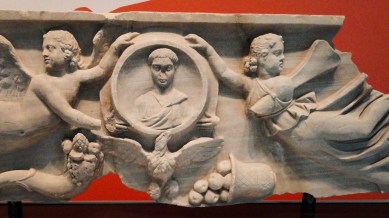
Long before fairy tales, Shakespeare’s Romeo and Juliet, Mills & Boon’s novels, teen vampire romances and swoonworthy period dramas, there was the original love story: Cupid and Psyche. It had everything — love at first sight, betrayal, heartbreak, redemption, and even a meddling goddess with a serious grudge. And while today, Cupid is often reduced to a chubby cherub on Valentine’s cards, in antiquity, he was something else entirely — a golden-haired, sharp-shooting god who could make or break a heart with a single arrow.
“Cupid has come to symbolise the daring pursuit of love, breaking the barriers of Platonic idealism. No longer a distant object to be revered, love became something to be seized, fought for, and claimed — much like a kingdom,”says Krishnan Unni P, professor of English at Deshbandhu College, Delhi University. “From the Greco-Roman revitalisation to the Renaissance reinvention, Cupid evolved from a playful matchmaker to a sensuous, virile figure, reflecting the duality of love itself: tender yet relentless, kind yet cutthroat, inspiring young lovers and adventurers to grab love boldly, even in the face of danger.”


Cupid’s job was simple: make mortals fall in love. But things got complicated when he became love’s victim himself. His troubles began with Psyche, a mortal woman whose beauty was so dazzling it made even the goddess of beauty and Cupid’s mother, Venus, seethe with jealousy. Furious that humans were worshipping Psyche over her, Venus devised a cruel revenge. She ordered her son to make Psyche fall for the most hideous creature imaginable.
But then Cupid pricked himself with his own arrow and fell hopelessly in love with her. Instead of following orders, he spirited Psyche away to a hidden palace where he visited her only in darkness, forbidding her from ever looking upon his face.
Of course, secrecy and love rarely mix well. Egged on by her jealous sisters, Psyche’s curiosity got the best of her. One night, she lit a lamp to glimpse the man she’d fallen for — and instead of a monster, she found a radiant god. In her shock, she spilled hot oil from the lamp, burning him awake. Betrayed, Cupid fled, leaving behind only one parting declaration: Love cannot live without trust.

Psyche didn’t take her punishment lying down. Determined to win back her lover, she sought out Venus, who, instead of offering help, set her up for failure. What followed was a series of tasks designed to break her spirit:

Cupid, despite his heartbreak, never really stopped loving her. Finding Psyche lifeless, he kissed her awake. Even Jupiter, king of the gods, was moved by their devotion. He convinced Venus to let them be together and granted Psyche immortality, making their love eternal.
If Beauty and the Beast feels like déjà vu, that’s because Psyche lived it first. A young woman, trapped in a mysterious palace, bound to a lover she’s forbidden from seeing — sounds familiar? Cinderella’s wicked stepsisters? Psyche had her own jealous siblings egging her on. And that enchanted sleep that only true love’s kiss could break? Let’s just say Sleeping Beauty wasn’t exactly pioneering new territory.
“Psyche’s status as the most important of three sisters, the other two of whom are morally inferior, is clearly a model for Cinderella, while her ignorance about the identity of her husband and the false idea raised that he might be a monster is clearly a model for Beauty and the Beast,” says Stephen Harrison, Professor of Latin Literature at the University of Oxford.
Even Twilight echoes the myth — a mortal girl in love with an otherworldly being, a painful separation, near-death trials, and, finally, immortality. And Bridgerton? Look a little closer, and you’ll find shades of Psyche in Penelope Featherington, the youngest of three sisters, while Colin, ever the matchmaking charmer, unexpectedly falls for her. Even Queen Charlotte’s meddling wouldn’t be out of place alongside Venus’s impossible tests.

Romeo and Juliet? The love that defies family, the secrecy — it’s all there. Juliet drinks the sleeping potion that mimics death a la Psyche, except Romeo, believing her truly lost, takes his own life, only for Juliet to awaken too late.
Clearly, some stories don’t just get retold, they resurface, slipping into new forms, century after century. “The myth presents a love story in which a young couple overcomes trials, often imposed by family. This is fully recognisable in a modern context in Europe and India, and is a message for young people to persevere in their partnerships if they believe it is right for them, even if things are practically very difficult,” says Professor Harrison.
Of course, these fairy tales and romances haven’t always aged well. Feminists have long criticised Cinderella, Sleeping Beauty, and Beauty and the Beast for their passive heroines — women who endure suffering, wait for rescue, and are ultimately rewarded with marriage. Psyche, though? She broke the rules. She disobeyed Cupid’s command, questioned her circumstances, and fought her way through impossible trials, albeit with some divine help.
Unlike so many fairy-tale heroines who are rewarded for their patience and virtue, Psyche’s love story isn’t about waiting.
Feminist interpretations of Psyche reveal a complex and often contradictory legacy. “Early feminists viewed Psyche as the goddess of the soul, a symbol of purity and transcendence,” says Professor Unni. “But later feminist readings challenge this, portraying Psyche as a doubtful and susceptible figure, influenced by her sisters and constantly scrutinising Cupid.”
Her gaze on Cupid while he slept has been analysed in multiple ways — was it an act of lust, curiosity, an early form of surveillance or an assertion of agency? Was she merely a gullible mortal swayed by her sisters, or was she reclaiming control in a relationship where she was kept in the dark? “There is curiosity, sure, but that curiosity is a kind of surveillance also,” says Professor Unni.
Historically, women’s scepticism has been marginalised. “But what’s the problem with doubt?” asks Professor Unni. “Doubt is not weakness, it’s an act of questioning, of seeking truth. Throughout history, women have been portrayed as objects of conflict, think of Helen of Troy, and Draupadi in the Mahabharata. But Psyche’s doubt makes her different.” In a world where women have often been reduced to symbols or pawns, doubt becomes an act of reclaiming agency.
One of her tasks — the retrieval of golden fleece — is particularly striking. She is ordered to approach violent rams, an image laden with masculine aggression.
Even artistic depictions of Psyche reveal subtle biases. The painting ‘Abduction of Psyche’ by William-Adolphe Bouguereau portrays her entirely nude, stripped of control, says Professor Unni. Unlike depictions of other mythic women (think Leda, who retains some covering), Psyche’s nakedness symbolises her utter vulnerability, but also invites critique on the ways women’s suffering has been aestheticised in art.
Professor Harrison, however, offers a counterpoint: “Psyche is one of the few female protagonists in Roman literature, and this and her resilience and courage make her a good feminist role model. It is true that she suffers, but she does get there in the end, admittedly with divine help, and her fulfilling of the labours assigned to her (including a descent into the Underworld) shows her resolution.”

From ancient Greek philosophies to the Renaissance, the dichotomy between body and soul has been a defining aspect of human thought. “While the Greeks initially placed more emphasis on the body, the Greco-Roman civilisation, especially as it evolved from the later BCs to its peak in the 4th and 5th centuries, began to prioritise the soul. This shift continued into the Renaissance, where the soul was seen as superior to the body,” says Professor Unni, adding that artists such as Michelangelo (Michelangelo di Lodovico Buonarroti Simoni), Alberti (Leon Battista Alberti), and Donatello (Donato di Niccolò di Betto Bardi) depicted corporeal love as a means to attain a higher, soulful connection. The evolution of this thought is reflected in the myth of Cupid and Psyche, where love (Cupid) ultimately seeks union with the soul (Psyche).
Besides, as Professor Harrison explains, Cupid and Psyche adapted well to Christian ideology, as it could be understood as a Platonic allegory of love and the soul. “Christianity and Platonism enjoyed a close relationship under the Roman Empire, as both shared a dualistic worldview — one that saw the material world as a mere shadow of a greater, eternal reality. This allowed Apuleius’ tale to be seamlessly integrated into Christian thought, reinforcing the idea of spiritual love over physical desire,” he says.


