

Journalism of Courage

Toothpaste made with hair could soon change the way we protect our teeth. Scientists at King's College London have discovered that keratin, a protein found in hair, skin, and wool, may help repair damaged teeth and even stop the early stages of decay.
"We think this is a game changer, an industry-mover to introduce keratin as an actual product within our daily use to protect and heal your tooth enamel without even realising," said Dr Sherif Elsharkawy, from King's Faculty of Dentistry, Oral & Craniofacial Sciences, in an interview with Sky News. (Source: Freepik)

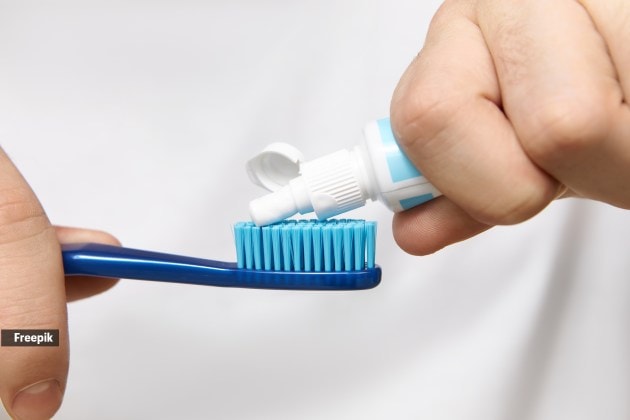
The research highlights how keratin, already used in shampoos and hair treatments, can strengthen enamel in a way fluoride cannot. "If you have a micro crack or a very small defect, it would heal itself without you even realising," Dr Elsharkawy explained. Since enamel does not regenerate once it is lost, the idea that a protein-based toothpaste could help teeth protect themselves is raising hopes of a new, more sustainable alternative to current treatments.
To understand more about this development, we spoke with a few experts. (Source: Freepik)
How promising is keratin really as a solution to protect and repair teeth compared to traditional fluoride-based toothpastes?
Dr Tania Nijhawan, founder of Udana Wellness, a premium multi-speciality dental and wellness centre, tells indianexpress.com, “Fluoride remains the most reliable option to strengthen and protect teeth. Keratin is a promising innovation as it can mimic natural tooth proteins and support repair at a micro level, but it’s still in early research stages. So far, this research has only been demonstrated in laboratory settings, and primarily using keratin extracted from wool.” (Source: Freepik)
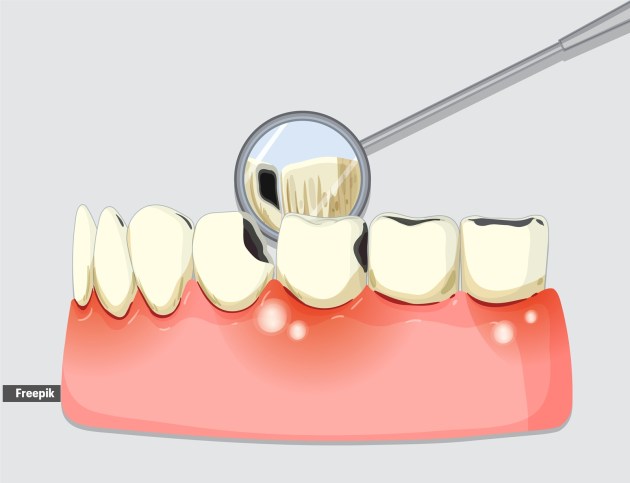
According to Dr Niyati Arora, a dentist, “It is said that the structural adaptability and mineral ion-binding affinity of keratin help it form a microscopic scaffold, which interacts with minerals from our saliva to create a crystal-like layer that mimics enamel. So, if we are able to achieve aligned enamel-like apatite nanocrystals from organic matrices, which is very challenging, it would indeed be a huge breakthrough in dentistry.”
However Dr Nijhawan stresses that we will need to wait for further trials, clinical studies, regulatory approvals, and long-term validation before such a product can be safely introduced for public use. (Source: Freepik)
Could keratin-based toothpastes replace regular dental treatments?
Keratin-based toothpastes are more likely to act as an added protective measure rather than replace dental treatments, notes Dr Nijhawan. “They may help strengthen and repair minor damage, but professional care and treatments will always be essential for deeper dental issues. Think of keratin as a future support to fluoride and regular dental care, not a complete substitute (if one gets the regulatory approvals).” (Source: Pexels)

Safety or allergy concerns that people should be aware of
Dr Nijhawan stresses, “Keratin-based products are generally considered safe, but since they’re often derived from sources like hair or wool, people with allergies should be cautious. There’s still limited data on their long-term use in oral care, so any new formulation must undergo thorough toxicology and biocompatibility testing to ensure it is safe, non-allergenic, and suitable for everyday use before reaching the market.” (Source: Pexels)

“Its difficult to comment on the allergy concerns as keratin is not widely used in dental products or procedures. But surely will be more aware once the clinical trials are done before they are brought out in the marketplaces,” concludes Dr Arora. (Source: Pexels)


