


📣 For more lifestyle news, click here to join our WhatsApp Channel and also follow us on Instagram
© IE Online Media Services Pvt Ltd
Tags:


Pumpkin seeds, also referred to as pepitas, are rich in dietary fibre which aids digestion, according to Richa Anand, chief dietician, Dr LH Hiranandani Hospital, Powai, Mumbai. “The presence of nutrients and minerals in a good variety helps in reducing heart disease risk,” she said.
Pumpkin seeds are a good healthy snack for monsoon as they have all the vital nutrients, minerals, and good fats that boost immune health. “The richness of dietary fibre also helps in digestive issues, which becomes a common problem during monsoons in individuals. But make sure that the seeds are stored in airtight jars because if they come in contact with moisture, they spoil easily and will be inappropriate for eating.”

Let’s take a look at the health benefits of these edible seeds.
The following is the detailed nutritional profile of a 100-gram serving of pumpkin seeds.
Calories: 559
Cholesterol: 0 grams
Total Carbohydrates: 11 grams
Sodium: 18 milligrams
Dietary Fibre: 6 grams
Sugars: 1 gram
Total Fat: 49 grams
– Saturated Fat: 8.5 grams
– Monounsaturated Fat: 16.7 grams
– Polyunsaturated Fat: 21.5 grams
Protein: 30 grams
Vitamin K: 73% of the Daily Value (DV)
Folate: 23% of the DV
Vitamin C: 2% of the DV
Vitamin B5: 32% of the DV
Vitamin B6: 20% of the DV
Vitamin E: 22% of the DV
Potassium: 37% of the DV
Magnesium: 42% of the DV
Iron: 23% of the DV
Phosphorus: 58% of the DV
Zinc: 23% of the DV
Copper: 50% of the DV
Manganese: 48% of the DV
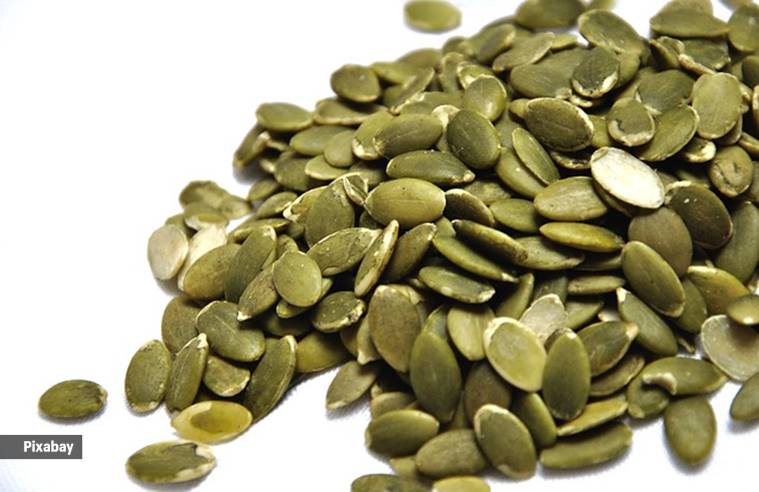
Pumpkin seeds have multiple nutrient compositions beneficial for well-being, according to Anand, who elaborated on them.
It is very important to consume pumpkin seeds in moderate amounts as they have high-calorie content but an adequate amount of consumption can be a delightful and nourishing addition to your diet, Anand noted.
Pumpkin seeds are best advisable as a nutritious snack option as they help regulate blood sugar levels and prevent rapid spikes in people with diabetes, according to Anand. “The presence of protein and good fats helps stabilise energy levels and promote satiety. Also, the presence of magnesium helps enhance insulin sensitivity.”
However, as these seeds have high caloric content, it is advised to consume fixed portions for diabetic individuals. Consulting a registered dietician or healthcare provider is best for taking personalised guidance on including pumpkin seeds in a diabetic diet.
Pumpkin seeds are abundant in important minerals including folate, iron, and zinc, which are very important for the development of the foetus, according to Anand.
“The presence of iron helps in healthy blood production for both the mother and the baby. Also, folate helps avoid the risk of neural tube problems. Zinc’s presence boosts the performance of the immune system. Additionally, the presence of protein and good lipids contributes to overall nutrition,” she added.
It is advised for pregnant ladies to consult their gynaecologist before adding pumpkin seeds to their diet.

There are a few guidelines to be aware of before consuming pumpkin seeds, explained Anand.
Some myths about pumpkin seeds were debunked by Anand.
Myth 1: Pumpkin seeds should not be consumed by individuals trying to lose weight.
Fact: If consumed in adequate portions, pumpkin seeds can be highly beneficial as they are packed with other nutrients. Their richness of protein and fibre content gives you the feeling of fullness which can help with portion control.
📣 For more lifestyle news, follow us on Instagram | Twitter | Facebook and don’t miss out on the latest updates!


