


Stay updated with the latest - Click here to follow us on Instagram
© The Indian Express Pvt Ltd
Tags:


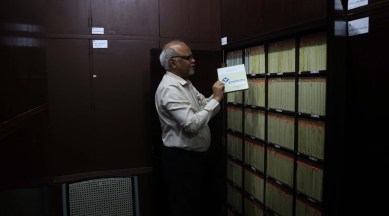
If you are a musician, a scholar studying music or someone who appreciates a good note, you are in for a pleasant surprise. The Nariman Point-based National Centre for the Performing Arts (NCPA), which is home to over 5,622 records, 1,396 cassettes, and over 750 CDs covering various styles of music and featuring several collector’s items, has painstakingly created a digital catalogue of its musical treasures. This expands its access from those who were regular at the NCPA and a member of its library to literally anyone — just browse through the vast collection on its site, fill out a form and book an appointment.
“Archiving was a priority for Dr Jamshed Bhabha,” shared Nayan Kale, Chief Executive, Technical Department at the NCPA, adding that his vision was brought to reality by former Director General of All India Radio Dr V K Narayan Menon, who was appointed as the performing centre’s first executive director. “A musician himself, he would ask the artists to perform something solely for recording, which would be different from what they would perform here. These recordings were curated solely for archival purposes, even a lot of these artists would not have a copy of these recordings,” shared Kale.

The preservation vaults include works from notable artists like Vilayat Khan, Bismillah Khan, Bhim Sen Joshi, M S Subbulakshmi, Birju Maharaj, Gangubai Hangal, Bal Gandharva, Zhohra Bai, and Gauhar Jan, among others, alongside the renditions of the Symphony Orchestra of India. Then there are also donations made by legends – such as 16mm and 35mm film reels of The Apu Trilogy given to the NCPA by Satyajit Ray. Next to them, sits another work of Ray’s, Bala, an NCPA production and documentary on Bharatanatyam exponent T Balasaraswati.

Such was the dedication towards archiving Indian music that for those who could not come here, the NCPA went to them. “When we figured that some artists, particularly folk artists from Rajasthan, are not comfortable performing in a studio and would rather do it at a common space in their neighbourhood or in somebody’s house, we created an air-conditioned mobile recording van with portable tape recorders, which would travel to their neighbourhood. It was started sometime in the mid-1970s and went on for a couple of years,” he added.
Not an easy feat
Those who are in this field know well that archiving is anything but easy. The music was initially recorded on archival magnetic tapes and kept in a repository that had double walls for thermal insulation. It is lined with aluminium foil and painted with special paints, and the temperature is kept between 21 and 23 degree Celsius and the humidity between 45 and 50 per cent. “These magnetic tapes can have print-through effect because there are multiple layers wrapped on one another so we have to periodically take them out, bring them to normal temperature and then do the winding and rewinding,” shared Kale, adding that they kept changing the format of storage with the times, from magnetic tapes to CDs, DVDs and now hard disks.
It also needed instruments that would play the original tapes, which was important to get the right speed, a lack of which, Kale said, would not get the correct reproduction of that particular piece. “Our Nagra tape recorders stopped working and despite our best efforts, it could not be repaired anywhere in India. We reached out to Nagra company and they manufactured two tape recorders — especially for the NCPA — years after they had been discontinued, and all the digitisation has happened using those machines,” added Kale, who maintains four copies of every archival piece — a golden copy, a silver copy, a playback copy and now a digital copy. “I don’t even have enough space because ideally, they all need to be kept in different spaces,” he said.
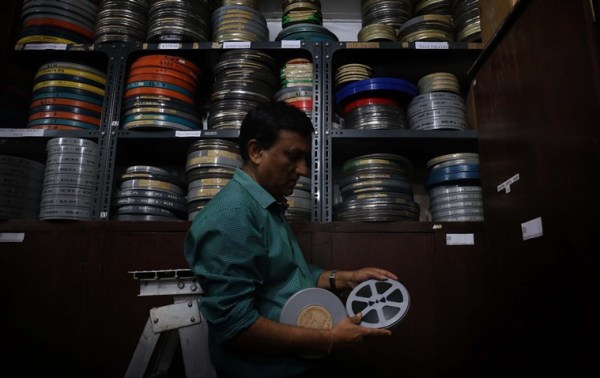
When asked what makes it worth it, Kale, who has already seen a handful of online applications for accessing the digital catalogue, said, “Say 50 years later, you want to know how a particular raga was being sung by a vocalist or instrumentalist or by a particular Gharana. Different Gharanas have a different style and since it is not written anywhere, one would know it only if they have gone there and learnt it from them. In case they cannot, they can get a reference from here. You may not be able to sing it because that needs learning and practice, but at least you can listen to it.”
Online form: ncpamumbai.com/ncpa-music-library


Stay updated with the latest - Click here to follow us on Instagram


