


Stay updated with the latest - Click here to follow us on Instagram
© The Indian Express Pvt Ltd
Tags:


As the clock strikes 5 in the morning, the 2,500-odd officials inside Asia’s largest prison complex – Tihar – get ready for their day. Depending upon the time of sunrise, the jail gates are opened around 5.30-6 am and thousands of prisoners are removed from their cells and barracks to enable them to move about in the open area and prepare for the day ahead. Before the prisoners are let out of their cells, jail officials take a roll call and maintain a register for attendance.
It is in this jail and around this time period when gangster Tillu Tajpuriya was allegedly stabbed to death by four rival gangsters inside a cell earlier this month, barely a few weeks after another gangster, Prince Tewatia, was also killed in a similar manner.


Tillu was inside his cell when four persons allegedly climbed down the first floor of the ward and killed him using improvised weapons. The Delhi Police Special Cell booked six inmates for murder and conspiracy. The Delhi Prisons Department suspended eight jail officers while Tamil Nadu Special Police “called back” seven of its jail officials for negligence in duty.
Gang rivalries is not the only thing that keeps the jail officials on their toes; they also have to watch out for prisoners planning an escape to freedom.
In 1976, 13 convicts managed to dig a tunnel near the boundary wall and flee. The incident left officials red-faced as doubts over their connivance with the convicts were raised. This changed the security arrangement in Tihar as most guards were replaced by Tamil Nadu Special Police personnel to create a language barrier between inmates and the guards.

At Tihar, the early morning routine includes waking the inmates up, unlocking cells, roll call, preparation of breakfast, meditation and using the washrooms. Most jails in Tihar are single-storeyed, except Jail no 8 and 9 which are double-storeyed. A central courtyard is used as a free space with the barracks and cells surrounding it on all four sides. Each building has a room reserved for weapons, stationery, food and other items. Guards have a small room of their own where they rest and maintain registers.
By 6 am, the roll call is complete and registers are sent to the head warden and jail superintendents. CCTVs are closely manned and security teams are on “high alert” as most prisoners are out of their cells. Around 6.30 am, breakfast is prepared by a group of inmates, who usually sleep in the kitchen area, as others take up duties to clean the utensils and the kitchen. “The prisoners who regularly help in cooking and cleaning are highlighted. This is regarded as good behaviour and even helps with remission of a sentence,” said an official.
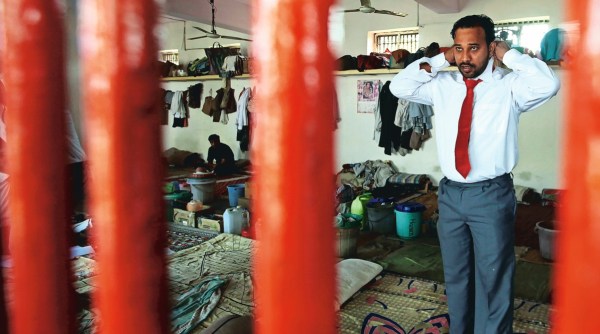
Around 7 am, inmates who have to visit court are advised to clean their cells and take a bath. They are then escorted to vehicles which ferry them to courts. Officials said guards are stationed at watch towers to keep a check on the inmates, adding Delhi Police also assists them in moving the prisoners. The jail officials have reasons to be wary of this time window.
In 2004, it was around this hour that Sher Singh, convicted of killing Bandit Queen-turned-politician Phoolan Devi, managed to escape. “One of his associates came to the jail posing as a cop. He took Sher away on the pretext of court hearing. Guards later realised they had been conned,” said a jail officer.
Inside the prison complex, inmates are allowed to spend their day the way they want – in prayer, participating in Yoga, and doing chores around the premises.
“There are also classes for inmates to learn English, Urdu and other subjects. Few inmates attend these classes, which are usually taught by inmates or outside faculty,” said an official.
Inmates such as Olympic medallist Sushil Kumar, arrested last year for allegedly killing fellow wrestler Sagar Dhankar outside Chattarsal Stadium, teaches wrestling to other inmates.
At Tihar, the eyes of the authorities are fixed on the prison compound via hundreds of CCTV cameras. Besides, personnel from Indo-Tibetan Border Police (ITBP) and Central Industrial Security Force (CISF) take rounds throughout the day.
At 10 am, it is time for jail inmates for ‘mulakat’ during which they can interact with their loved ones with a glass partition separating them. This goes on till noon, when it is time for the inmates to head to the kitchen area for lunch.
Amid Covid surge in 2020-21, the Delhi Prisons Department stopped all meetings with outside persons. However, in order to connect inmates with their families, the department launched video conferencing service ‘e-mulakat’ allowed to all once a week.

Jail officials said not all prisoners are expected to follow the same rules. With Tihar housing prisoners from all over India, there are special rules for elderly inmates, VIPs and the handicapped.
In 2014-15, Sahara India Pariwar founder Subrata Roy, sent to jail after he allegedly failed to pay money to his depositors, was allowed to use a special room for conference to run his hotels in New York and London. A senior jail official, who refused to be named, said, “We remember he had special permission from the courts and even paid a fine of Rs 1.23 crores – the highest any prisoner has ever paid Tihar jail for special privileges.”
Half a century before that, American don Daniel Walcott, arrested in 1963-64, was also provided with special privileges. According to jail officials, this is what “encouraged” the international smuggler who illegally sold exotic animals and drugs, make a plan and flee from the prison.
At Tihar, early afternoon is usually reserved for rest. From 12.30 pm to 3 pm, most inmates take their lunch to their cells and eat, sleep or read books and play board games. At 3.30 pm, tea is served to all along with snacks.
Tihar is one of the few prisons in India with spacious in-house gyms, spice-manufacturing units, shops and factory spaces. A spokesperson said, “ Some of the products made by prisoners, such as bags and spices, have a huge demand in Delhi. The inmates are allowed to work from 11 am to early evening hours. They have regular customers (for paper, bags, spices) such as the Supreme Court, Delhi High Court and offices and homes of several magistrates.” Inmates also work at carpentry unit, pottery unit, paper unit, chemical and food unit. The products are sold from Tihar premises, shops near district courts, and Saket Mall.
In the evening, teams of Tamil Nadu staffers and CISF personnel get busy conducting checks and raids in barracks and cells. They also help in counting inmates following which the prisoners are asked to help with dinner duties. With dinner served around 6 pm, jail officials start locking the prisons at 7 pm.
The food at Tihar is said to be cooked amid “highest” security measures with the area guarded by iron grilles and cemented slabs. The arrangement was necessitated after Charles Sobhraj’s prison break in 1986. “One day, he got sweets for everyone. The jail guards ate it and later found they were laced with sleeping pills and drugs. He managed to escape by posing as a cop while guards were found lying unconscious outside his cell,” said the senior official.
Even as the jail is under scrutiny after the murder of Tajpuriya and Tewatia, officials said they have always been looking for ways to scale up the security. As per the jail manual, each superintendent is required to visit the jail regularly in the morning and afternoon. They periodically inspect the prison at night and check food and living arrangements. The deputy superintendent has to be present at times of prison lock-up and unlock.
Several jail superintendents and senior officers complained of overcrowding being the biggest issue hindering security and other arrangements. “ It is very easy for inmates to pick up utensils, furniture pieces and wood, and carve out weapons. The checks are only conducted weekly… inmates often hide the weapons in groceries,” said an officer.


Stay updated with the latest - Click here to follow us on Instagram


