


Stay updated with the latest - Click here to follow us on Instagram
© The Indian Express Pvt Ltd
Tags:


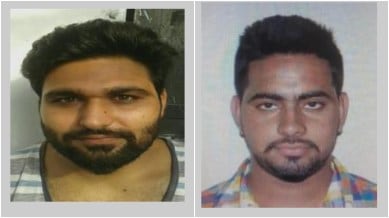
With the new Donald Trump administration in the US declaring its aim of deporting all people living illegally in the country, particularly those wanted for criminal acts in other countries, the Punjab Police has begun preparing documentation listing all such gangsters and their crimes in the likely event of seeking their deportation.
Speaking to The Indian Express, a senior police official said that while the process of extradition was usually very cumbersome and could take many years to reach the stage of finality, the executive decisions being implemented by the new US administration would result in faster deportation of wanted criminals.

“We have to be prepared for any such eventuality and provide all the necessary material to prove the criminal antecedents of these individuals. Most of them have either entered the US illegally or through forged passports or passports made with false identities. These are all illegal residents of that country and they are running criminal networks in Punjab while remaining in the US. Hence they are very much on the radar of US authorities,” the officer said.

Accordingly, all material related to these individuals, who number at least more than a dozen in the US and also have havens in Canada, is being collated methodically. “We certainly feel that under the Trump administration, there will be a better possibility of getting these gangsters back. The documentation will be presented to the authorities concerned at the appropriate time and we hope to get these gangsters back in Punjab where they will face action,” said a senior police official.
The Punjabi organised crime network in the US involves several elements, primarily centred around individuals from Punjab, who have connections to criminal activities both in India and abroad. Among the gangsters, the infamous names are Goldy Brar, Swaran Bhola, Happy Passia, Gurjant Bholu, Pardeep Gardiwal, Harpreet Hapoo, Sunny Dayal, Rashpal Singh alias Dana, Gopi Mahal, Amrit Bal, Darmanjot Singh, Sonu Khatri and Saurabh Gujjar.

“These networks operate across borders, with members based in India, Canada, the USA, and other countries. They often use international connections to evade law enforcement and to coordinate activities like drug trafficking, arms smuggling, and extortion,” reads a summary prepared by the police on these crime syndicates.
The Lawrence Bishnoi gang, which has been linked to high-profile crimes, including the murder of Sidhu Moosewala, has members and associates in the US. Brar and Anmol Bishnoi are also believed to be operating from the US. Similarly, the Bambiha gang, Jaggu Bhagwanpuria gang and others also have members or affiliates in the US.
Extortion, drug trafficking, arms smuggling, kidnapping for ransom, money laundering and now links with Khalistani terrorists are some of the criminal attributes of these gangs. Targeting wealthy Punjabis or business owners, often in collaboration with local criminal elements, these gangs are active in the drug trafficking trade, particularly heroin, opium, and synthetic drugs, with networks that connect Punjab to North America.
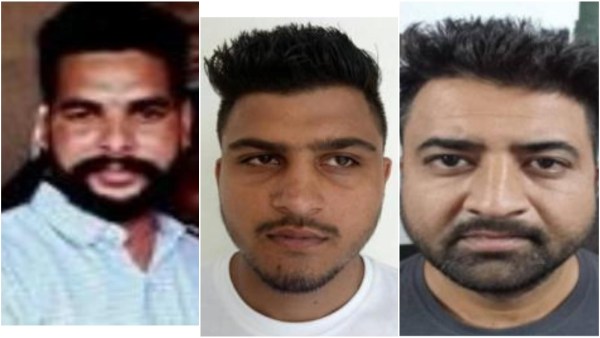
Police officials say that some Punjabi criminal networks exploit community ties for support, including legal aid to fight extradition or legal proceedings in the US. Using encrypted communications and social media for threats or to demonstrate power, these gangs or factions within these networks have ties to Khalistani separatist movement.
US law enforcement agencies like the Federal Bureau of Investigation (FBI) and Drug Enforcement Administration (DEA) work with Indian counterparts, often leading to arrests, extraditions, or at least disrupting operations. However, the transnational nature makes this challenging.
The case of Brar, whose real name is Satinderjit Singh Brar, highlights how these networks can operate with significant impunity when based abroad. A Canada-based gangster of Indian origin associated with the Lawrence Bishnoi gang, Brar is accused of orchestrating Moosewala’s murder from the US/Canada.

Operations by US law enforcement, like the arrest of Satnam Singh alias Satta in California in 2020, linked to the Bishnoi gang, show ongoing efforts to tackle this crime.
“The network’s structure often lacks a central leadership but operates on a cell basis where different groups or individuals might work together on specific jobs. This decentralised approach makes them resilient to crackdowns but also leads to internal rivalries and conflicts,” a senior police officer said.


Stay updated with the latest - Click here to follow us on Instagram


