


Stay updated with the latest - Click here to follow us on Instagram
© The Indian Express Pvt Ltd
Tags:


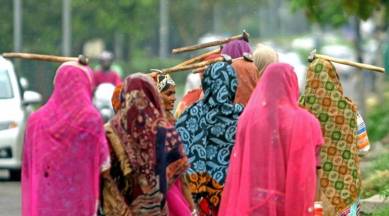
As many as six out of every 100 women above the age of 30 live with undetected diabetes in Maharashtra, revealed a recent health survey conducted among 5 lakh women. Doctors have observed a shift in trend where relatively younger women, between the age of 30-45 years, are getting diagnosed with diabetes.
According to the data, Pune topped the charts with 63.9 per cent detection rate, followed by Chandrapur (21 per cent) and Nagpur (18.62 per cent).

Diabetes in women is different from men as hormonal fluctuations play a major role in the former group.
To gauge the prevalence of diabetes, the state health department started a door-to-door NCD (Non communicable diseases) screening initiative covering 5.07 lakh women above the age of 30 years across Maharashtra. In the ongoing survey, 29,952 women were identified with undiagnosed diabetes with a six per cent detection rate.
“Under the programme, we have covered over 1.50 crore population above the age of 18 years in the state. We have plans to increase the coverage in urban areas. We will also raise awareness about eating healthy as we have also witnessed a major prevalence of diabetes in rural parts of the state,” said Tanaji Sawant, state health minister.
With change in lifestyle, more younger women than before are falling prey to diabetes, which is a condition in which the body is not able to take up sugar (glucose) into its cells and use it for energy. This results in a buildup of extra sugar in the bloodstream, a phenomenon which is termed as diabetes.
Dr Vimal Pahuja, metabolic physician, Dr LH Hiranandani Hospital, said, “There has been a reported rise in diabetes, especially among urban women to the tune of 9 to 10 per cent in the younger age group. One in 10 women is found to be diabetic in the age group of 35-49.”
Dr Anil Bhoraskar, senior diabetologist at SL Raheja Hospital and secretary of Diabetic Association of India (Scientific Section), said that women, especially who have Polycystic Ovarian Syndrome (PCOS), have a higher level of insulin resistance, which ends up contributing to the vast number of pre-diabetic women. Pre-diabetic state is considered as a forerunner of type-2 diabetes.
The prevalence of diabetes can have long-term impact on the health of women. According to the doctors, women with diabetes can find their productivity truncated, face challenges during pregnancy, suffer increased risk of heart disease and cancer at a young age. “Women may go through depression more than males. It can also contribute to sexual problems. It impacts the quality of life, happiness quotient, and self-esteem in the long run,” said Dr Pahuja.
Cyclical hormonal changes make diabetes control more difficult in pre-menopausal women. Also, pregnancy is a stressful event resulting in a lot of adverse effects on a woman’s endocrine apparatus which explains why in India a large number of women have type-2 diabetes, experts said.
“Besides hormonal fluctuations, women have lower muscle mass as compared to men. Hence, the energy expended by metabolism in muscle is lower than that in men, which is why women are more vulnerable to insulin resistance as well as obesity,” said Dr Bhoraskar.
Stay updated with the latest - Click here to follow us on Instagram


