


© IE Online Media Services Pvt Ltd
Tags:


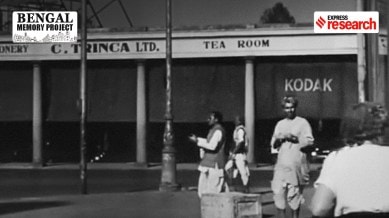
It is a sunny Monday afternoon on Park Street. Honking vehicles crawl along the road, and schoolchildren make their way home. Yet Trincas is packed — old friends catching up, office colleagues celebrating a deal, a retired couple enjoying a slow afternoon. Among them sits Anand Puri, the third-generation owner of the restaurant. When he returned to Calcutta in 2019 after a decade in Delhi, taking over the family business was not on his mind. “I had no intention of displacing or interfering with my dad’s business, which he had been running diligently for 40 years,” he tells indianexpress.com.
For anyone who grew up in Calcutta in the 1960s, Trincas feels much the same. The warm, cosy interiors, the stage with a red backdrop, gentle lighting and classic Asian food all evoke nostalgia. Nearly every wall of the century-old eatery is lined with framed images — black-and-white photographs of Park Street, early menus, photos of the bands that once performed here, and a portrait of its Swiss founders. This is no accident but a result of a conscious effort at preservation.

As Anand settled back into life in the city, he found himself increasingly drawn to the stories behind those pictures.
The rise of Calcutta’s European diaspora in the early 20th century shaped a vibrant dining culture. “The Italians brought Firpo’s, Baghdadi Jews started Nahoum and Sons, the Portuguese introduced MXD’ Gama and the British, the Great Eastern, to name a few,” says Anand.
In an attempt to piece together Trincas’ history, Anand launched a project: the Trincas Timeline Project, hosted on the restaurant’s website. “I began an outreach programme to connect with people across the world who once lived in Calcutta and have memories, pictures or anecdotes about Trincas.”
What began as a marketing project soon became a personal mission. “The project triggered a whole landslide of information. I found myself skiing down it because there was just so much coming in from all corners of the world,” he recalls. “I realised very quickly that no one person can hold the memories of this institution. It has to be a community-based effort.”
This is the story of Trincas — and the lives it has touched — told through Anand’s recollections and the tales passed down from his grandparents.
Trincas has been around since at least 1927. “So it’s almost 100 years,” says Anand, though Park Street looked very different at the time of its opening. “There was no Karnani Mansion, and Stephen Court had just been built. Across the street, Park Mansions was also fairly new. This was a street of garden houses.”
For decades, Park Street was considered too far for the British living around Dalhousie Square and later Chowringhee. Only after those areas grew crowded did shops and entertainment venues arrive in Park Street. “It had the reputation of being a dangerous place, with dacoits and lots of greenery. And then, all of a sudden, it became a place for redevelopment,” says Anand. As redevelopment brought young professionals into the new apartment blocks, restaurants flourished, creating a self-sustaining ecosystem of music and dining.

“Interestingly,” Anand adds, “the music you hear on Park Street today — Trincas being the sole torchbearer of that tradition — has its roots in wartime Calcutta of the 1940s, when jazz musicians came to entertain the troops.” There was a circuit of European musicians who would tour Asia along trading and shipping routes: starting in Bombay, then Colombo, Calcutta, Rangoon [in Myanmar], Hong Kong, and Shanghai, performing whenever there was an audience.
In 1927, two Swiss nationals — Cinzio Trinca and Joseph Flury opened a Swiss confectionery and tea room on Park Street, which eventually evolved into what is known today as Flurys. “Calcutta already had a huge expat community,” Anand explains. “First, you had the British. Then, Europeans were already here. You had Italians running restaurants that were booming; there were also French people, and a sizable German population up to a certain point. There were also Czechs and Russians. So, there was a big cosmopolitan mix of people in the city. There were bakeries, and there was a lot of scope.”
Around 50 to 60 Swiss nationals lived in the city and had a Swiss Club on Theatre Road. Anand notes that Trinca and the Flurys were part of that network and opened their business in an up-and-coming part of the city. “Over the years, the business thrived and built a loyal clientele.”
Around 1940, the partnership between Trinca and Flury dissolved for reasons still unclear. Cinzio and his wife, Lilly, moved Trinca’s Tea Room and Confectionery across the street to its present address at 17 Park Street. Anand laughs at a rumour that has circulated for decades: “Apparently one ran away with the other’s wife. I’ve disproved that theory because I actually spoke to someone from Trinca’s family. They moved back to Switzerland in 1960, so I know that nobody ran away with anyone’s wife.”
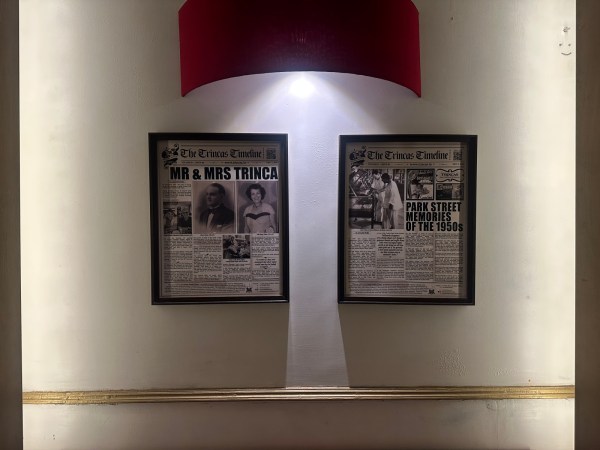
Trinca ran the business until he was about 61 or 62. By 1958, ageing and sensing the British exodus, Trinca wanted to return to Switzerland. “You get to that point in life where you think, how do I deal with this stuff in my later years? He decided to leave and sell his business to somebody who could carry it on,” says Anand.
That opened the door for Anand’s grandfather, Om Prakash Puri, and his close friend and business partner, Ellis Joshua, who were already looking for a place to start their own business.
To understand how that partnership formed, Anand rewinds to 1943. During World War II, as Japanese forces swept through Asia, the British colony of Burma collapsed. “Rangoon was a trading centre with abundant mineral resources, and Burma was a British colony. So when the Japanese attacked, the entire British settlement in Burma evacuated. Along with them, many other settled communities fled,” explains Anand.
People began marching through jungles, and thousands died along the way — of cholera, dysentery, malaria, hunger, and exhaustion. Among them were the Joshuas. “Ellis Joshua, who would later become my grandfather’s best friend and business partner, was 22 at the time. He had elderly parents and seven siblings. They finally reached Calcutta, which had a Jewish community — Baghdadi Jews, like those in Rangoon. The Calcutta Jewish community did their best to welcome them in,” says Anand.

Joshua and his brother soon found jobs at the Grand Hotel on Chowringhee.
Meanwhile, Om Prakash had been living in Lahore. In 1943, he followed his sister to Calcutta, where her husband — also employed at the Grand Hotel — helped him get work there. The two young men began their professional lives in the same place, forming a friendship that would shape Park Street’s future.
While the young Joshua stayed on in Calcutta, Puri was later transferred to other work assignments across the country. A decade or so later, in 1958, Om Prakash married Swaran Kapur and returned to Calcutta with their young son. Joshua continued at the Grand Hotel and became well acquainted with the city. In 1959, Puri and Joshua bought Trinca’s Swiss tearoom and turned it into a fully fledged restaurant with live entertainment.
“My grandmother, Swaran, ended up playing a massive role behind the scenes. A refugee from Pakistan during the Partition, she moved to Delhi after her family had lost everything. They had once been wealthy and well-connected, and she was able to leverage these connections. She managed to get relatives and friends to lend money so they could buy the property. Together, the three of them purchased it from Cinzio Trinca,” says Anand.
Renovations transformed Trincas from a tearoom into a restaurant with live shows. The nightclub culture of Park Street was born as other restaurants followed suit.
The decades that followed were not easy. The 1970s and 80s were marked by militant labour politics, curfews and long power cuts. “Without air conditioning, the restaurant would often be empty. There were strikes, curfews, and Calcutta was shut by 8pm. At one point in the 1980s, the restaurant went into loss-making,” says Anand.
On what kept Trincas afloat, Anand says, was his father, Deepak Puri. Deepak took over the restaurant at the turn of the 70s and changed the culinary landscape. “Dad was a trainee at the Taj Hotels, working in Bombay, where a man named Frankie Lau was brought in from Hong Kong to introduce a twist to Chinese food”.
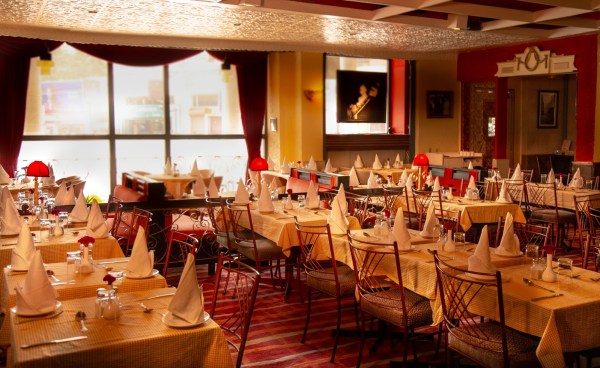
At that time, Chinese food in India was mostly Cantonese and Hakka, especially in Calcutta. Lau introduced the use of red chillies, garlic and Szechuan pepper. “And when you spice up Chinese food for a country that loves spice, that’s a revolution,” Anand says with a smile.
Deepak left for a year to pursue further studies and returned to Calcutta in 1981, where he began working for Om Prakash and Joshua. He realised there was a gap in the market: everyone was eating Chinese food, but it was the same everywhere. He wanted to introduce Szechuan food, with a twist. “It wasn’t at a five-star price point, yet it offered the same quality of food. It went boom — queues out of the door, people couldn’t get enough. He democratised Chinese cuisine in India, especially Szechuan food”.
Even after an hour of conversation, Anand speaks with passion and pride. “What I’m in greatest awe of is how many people Trincas has touched over the years.” Describing his association with the restaurant as ‘serendipity,’ he says taking on the business was never part of his plan. “When Covid happened, I took a more active operational role. But by 2019, I was already saying, ‘Hey, listen, can we change the front door? Can you bring the stage back to what it used to look like? Does it look better?”
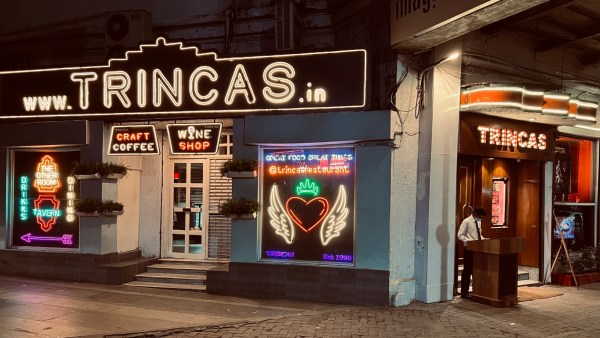
On his vision for Trincas, Anand says he’s simply following his own path. “I’m marching to my own tune. I’ve made history cool. I’ve made history current.”
Perhaps that is what Trincas has always stood to symbolise — a vision of its own. One that preserves Calcutta’s cosmopolitan heritage, its love for jazz and food, and one that continues to stand out amidst the many eateries on Park Street.


