


Stay updated with the latest - Click here to follow us on Instagram
© The Indian Express Pvt Ltd
Tags:


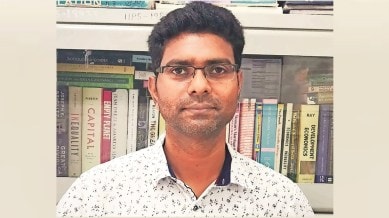
Close to 70 to 80 per cent of the change in the older population is happening due to declining fertility rather than rising life expectancy in India, said Dr Srinivas Goli, Associate Professor in Demography at the International Institute for Population Sciences, Mumbai, during an Explained Live session on Monday, which was moderated by Nikhila Henry, Assistant Editor, The Indian Express.
In the session: ‘Understanding India’s Rapid Aging: Challenges and Solutions’, Dr Goli explained how some states are ageing faster than others. “When you say India is ageing, it is not that the entire India is ageing; there is a lot of demographic diversity. Several South Indian states have crossed the older dependency ratio of 15. Most of them now are around 18 and 19. Kerala is above 20. This means more than one-fourth of the ageing population is dependent on the working-age population. Similarly, states like Punjab, Himachal Pradesh and West Bengal have the lowest fertility rates. However, states like Uttar Pradesh and Bihar maintain moderate fertility rates,” he said.


Talking about the reason for the declining fertility rates across the country, Dr Goli explained how urbanisation leads to more cost of living.
“If the cost of living rises, people are more afraid of having more children because the cost of education, health care and having a good house rises. Aged marriage in certain populations is increasing due to unemployment because, in the marriage market, employment is becoming such an important parameter for getting marriage proposals. Today, having a livelihood is not a need. People are looking more at self-actualisation, having a decent life, having time for self, looking for self-esteem, and looking for happiness in life. So the needs are also changing,” he said.
Stay updated with the latest - Click here to follow us on Instagram


