


Stay updated with the latest - Click here to follow us on Instagram
© The Indian Express Pvt Ltd
Tags:


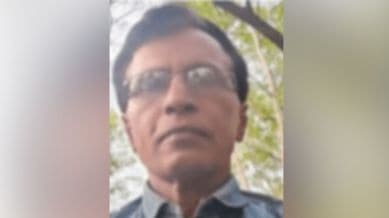
The surrender of senior CPI (Maoist) leader, Mallojula Venugopal Rao alias Sonu alias Bhupati (70), along with 60 cadres in Gadchiroli marks one of the biggest blows to the banned outfit in recent years. The group includes one Polit Buro member, two zonal committee members, ten divisional committee members, and other members of various dalams.
Gadchiroli police sources confirmed they handed over 54 weapons, including seven AK-47 rifles. Sonu, a resident of Peddapalli (Telangana), a BCom graduate and ITI professional, was a central committee member. He was active in Maad area. He was also known by the names Sonudada alias Vivek alias Laxmirajan alias Lachhanna alias Abhay.

The cadres surrendered early Tuesday near Fodewada in Bhamragad taluka, close to the Chhattisgarh border. According to reports, buses were sent along the Laheri road to bring them to Gadchiroli police headquarters. All the surrendered Maoists will formally lay down arms before Chief Minister Devendra Fadnavis on Wednesday.
According to police sources, the surrender process began months ago after Bhupati’s wife Tarakka (62), herself a senior Maoist, turned herself in before Chief Minister Devendra Fadnavis in Gadchiroli along with ten senior Maoists in January 2025. Her surrender helped build confidence between Bhupati and Maharashtra’s security agencies, police sources said.
Officials said Bhupati had been under pressure and disillusioned after the CPI (Maoist) leadership chose another leader, Devuji, as General Secretary following the encounter of Basavaraju, a post Bhupati was once considered for. “That decision created deep resentment within him. Over time, he began looking for a trustworthy channel to surrender,” a senior officer said.
The recent encounters in Chhattisgarh, in which two Central Committee members were killed, also pushed him to avoid surrendering there due to fear of retaliation or mistrust. Telangana, too he felt would not cooperate to his surrender efforts, and he would have to cross vast forests to reach Hyderabad. Instead, he turned to Maharashtra, where the state’s surrender and rehabilitation policy has encouraged several top-level cadres to give up arms in the past.
Bhupati’s surrender was facilitated through the Intelligence Cell of Gadchiroli Police and C-60 commandos in the Bhamragad area. “He was convinced that Maharashtra police would ensure a fair process,” said an officer involved in the operation.
Senior officials have confirmed their belief that a letter from a surrendered Maoist, known as ‘Anil,’ played a vital role in inspiring Sonu’s decision to surrender. Anil, who was closely associated with several high-ranking leaders, including Sonu, detailed his life after leaving the movement. The Indian Express also acquired a copy of this correspondence. In the letter, Anil opens with a personal greeting, “Respected Com. Sonu Dada, Johar! I hope that you are safe even in these difficult circumstances. Anju and I surrendered in Nagpur on September 15, 2024. Both of us are currently in Gadchiroli. We received positive cooperation from the police and I have secured a job. We are planning to build a house right here in Gadchiroli.” He also noted the trend of others joining the mainstream, writing, “When we arrived here, there were a few others with us, including Girdhar (Tumreti), but now the number has significantly increased. Tarakka (Sonu’s wife) is also with us. Approximately 60-70 of us have gathered here. Tara Didi is fine; when her health deteriorates, we take her to the hospital. Her family members also visit her regularly.”
Anil then shifted to his core ideological shift, stating, “After being away from the struggle for 6-7 years, I lacked a good grasp of the ground realities. Since arriving here, I have listened to and read multiple reports, considered both sides of the arguments, and reviewed party literature available online. My conclusion is that armed movements have no future in India, the Indian armed forces are now more powerful, modern, and centralized than ever before.”
This realisation was compounded by the human cost, as he lamented, “The daily news of deaths and increasing violence deeply saddens my heart. The thought of hundreds of people being killed is heart-wrenching.” He questioned the long-term effectiveness of armed struggle, adding, “It was much later that I understood how long achievements gained through the power of violence can last?”
Appealing directly to Sonu’s character, Anil wrote, “Dear Comrade, I know you have immense love and compassion for the people and your comrades. You are fundamentally a sensitive litterateur, not a guerrilla, for whom the people have always been important. You, too, do not desire bloodshed.” He observed the tragic irony on the ground, “Today, on both sides, the weapons are in the hands of those people whom we claimed to protect. Be it the People’s Liberation Guerrilla Army, DRG, C-60, or Koya Commando, all of them are tribals standing against each other with guns.”
The letter contained a critique of the Maoist movement’s internal struggles and strategy: “Today, the Maoist movement in India has reached a point where it should review itself in a calm environment. Of all the setbacks since 1972, the biggest setback has happened now. I feel that all the major documents and reviews that came after 2011 did not align with Indian circumstances.”
He went on to criticize the party’s urban sympathizers, claiming, “The urban structures on which the party is holding some hope, are extremely selfish, lazy, and useless. Many people have used the party’s name to enhance their academic and intellectual careers… They have done so much for themselves with the party’s funds!”
Anil’s central plea to Sonu was a personal one, urging him to return, “By staying with you, I learned to live for the people and comrades. How many years must have passed since you wrote a book or a story due to your responsibilities? I say, now is the time to write that. You must live for your own people at any cost. We do not want a sensitive and true intellectual to die. You must live for your own. We want you to be with us. This country needs you.” He dismissed the revolution’s chances, pointing out that, “Despite all these assumptions, we see that a socialist revolution has not been accomplished in a single country.”
He guaranteed that their development goals could be achieved through peaceful means, “The dream you have for the people… I guarantee that it can be achieved much better under the Constitution, through government schemes, by addressing the shortcomings through constitutional means.”
Citing positive developments like the peace initiative and global shifts like the PKK abandoning its guerrilla army, Anil concluded with a strong call for change: “My humble request to you is to abandon the armed movement and join the mainstream. I urge the entire party to join the peace process and express its faith in the Indian Constitution, and in Babasaheb Dr Bhimrao Ambedkar. Only through this can it bring about reforms for the tribals, Dalits, the deprived, and the backward.” The letter was signed, “Yours, Anil.”
The letter, police say could have played a very important role.
Police sources say Bhupati holds extensive knowledge of Maoist networks, both in the forests and urban areas. His surrender is expected to trigger further defections from North Bastar and Maad divisions (Abujhmad), where several cadres have already expressed willingness to surrender. According to police sources, 100 more Maoist cadres are expected to surrender in Chhattisgarh in coming days.
Officials called it a turning point in the anti-Maoist operations, signalling a rapid decline in the insurgency in Gadchiroli district.
Stay updated with the latest - Click here to follow us on Instagram


