


Stay updated with the latest - Click here to follow us on Instagram
© The Indian Express Pvt Ltd
Tags:


Thirteen years after five Class 12 students of a government school were booked for stalking and catcalling their teacher, they returned to the Delhi High Court in 2025 with a plea to quash the First Information Report (FIR) against them. Their settlement deed with the complainant to end the dispute did not include any monetary compensation — only a promise to stay away from her.
However, when the case came up at the Delhi High Court in September, the court noted the gravity of the allegations and allowed the case to be quashed on one condition: the five men perform community service on weekends at Lok Nayak hospital in Delhi for two months.

“The hospital administration chose their tasks, which included cleaning blood off the floors in the emergency area,” their lawyer Aslam Shah tells The Indian Express.
This case is not an outlier. An examination of 10 publicly available Delhi High Court orders passed between July 2024 and October 2025 shows the same trend: a dispute was settled between parties, a petition to quash the FIR, and a judicial direction to the accused to perform community service before the court closed the file.
A few patterns stand out. Most matters involved cases filed under Section 506 (criminal intimidation) of the Indian Penal Code. In many cases, the charges also included provisions under Sections 509 (related to insulting or outraging the modesty of a woman) and 34 (common intention).
Some orders also involved broader offences of sexual harassment and stalking under Sections 354, 354A and 354D of the IPC.
The orders make it clear that the courts treat community service as a mechanism to reconcile the competing demands of law and social resolution. The recurring finding is straightforward: judges record that where a genuine settlement exists, “no useful purpose” would be served in continuing with the proceedings.
However, while the courts do not insist on a trial, they do not ignore the allegations. Before permitting the quashing of the FIRs, they require an expression of accountability.
Most petitioners were first-time offenders. Since the disputes were personal — stalking, domestic quarrels, neighbourhood fights and minor altercation — the courts treated them as private conflicts and imposed conditions based on the conduct.
In most of the orders, the court itself imposed the condition of community service, although in a few instances, the parties offered the form of service that the court turned into a binding direction.
A win-win solution
In the case of the five schoolboys, Dr BL Chaudhary, medical director, Lok Nayak Hospital, says a team leader supervised the community service.
“The duties were recorded and a completion report was sent to the court and to the investigating officer (IO). That completion report is what the court considers while allowing the quashing of the FIR,” he tells The Indian Express.
Ensuring accountability is clear in other orders too.
In the case of Saurav Porwal, accused of physical assault and intimidation, the court said the petitioners “cannot be let off only because the complainant has decided to enter into a settlement”. Besides service at Gurdwara Rakab Ganj Sahib, the court ordered Porwal to plant trees as well.
While Karan Moolchandani, Zihad Ahmed and Mohammad Tufail, accused of sexual harassment, stalking and criminal intimidation, were directed to do community service at Lok Nayak hospital for varying durations, the FIRs against Amar Singh and others, accused of harassment and intimidating a public servant, were quashed only after each petitioner did community service at the Delhi government’s Safdarjung Hospital and Atal Bihari Vajpayee Institute of Medical Sciences.
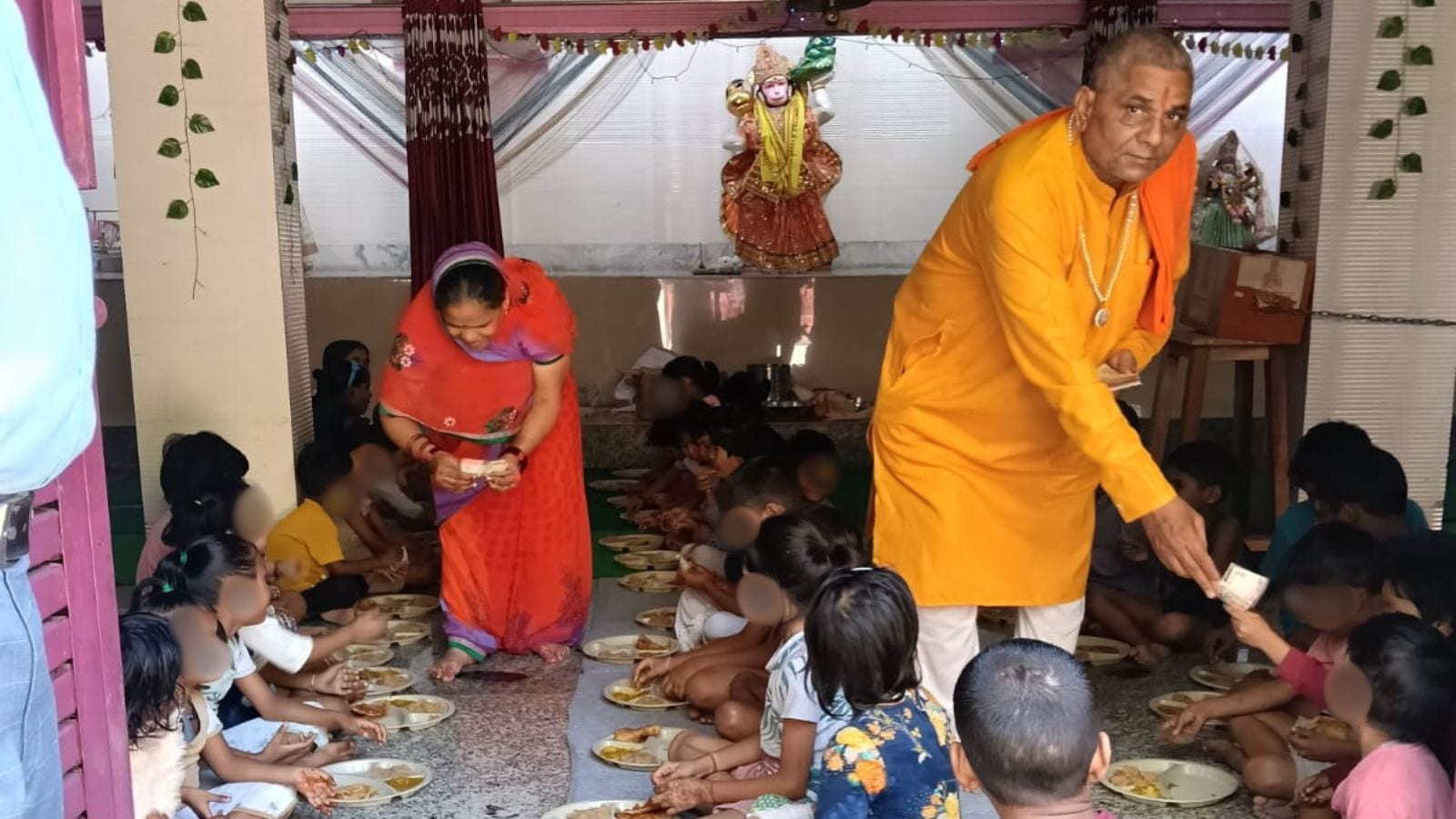
In the case of Brij Ballabh Gaur, accused of assault by a weapon, the accused opted to organise a bhandara (communal feast) during Navratri and Diwali, while in Akbar Ali & Anr vs State of Delhi & Anr, a case related to offences against women’s modesty and criminal intimidation, the petitioners proposed a small payment to the Delhi Police Welfare Fund and community work at Jama Masjid.
The community service is recorded and reported. “There is a duty roster. We assign duties, supervise, and send a report,” says Dr Chaudhary of Lok Nayak Hospital.
Additional Public Prosecutor (APP) Amit Ahlawat says the IO has to verify compliance. “When a court orders tree plantation, for example, the IO was required to submit proof of the size, survival and growth,” he says.
At Gurdwara Rakab Ganj Sahib, petitioners often work in the langar (community) kitchen, where they clean, wash utensils and serve food. “Their families join them too at times,” the person in charge says.
According to APP Ahlawat, most of the cases are petty and compoundable offences.
“Earlier, fines were common. Now courts are choosing community service instead of money. It’s visible, it’s time-bound, and it brings a kind of closure,” APP Ahlawat says.
The orders show that the judiciary has started operationalising the idea, but within a narrow frame. Without rules on duration, eligible institutions, supervision and verification, the practice runs on coordination between courts and local institutions.
The result is a system that depends on the institution that receives the offender, on the IO who files the report, and on the court that accepts the certificate.
For those who do the work, the system offers a clean slate and leaves no criminal record. For victims, it offers closure, and for courts, it’s a way to close cases that might have persisted for years.
A rising trend
The idea of community service as a criminal penalty was brought to India through the law reforms introduced by the Bharatiya Nyaya Sanhita (BNS), which replaced the IPC and related codes.
The Bharatiya Nagarik Suraksha Sanhita (BNSS) prescribes community service as a punishment for a range of minor offences. Under Section 23 of BNSS, community service is defined as “the work which the Court may order a convict to perform as a form of punishment that benefits the community, for which he shall not be entitled to any remuneration”.
However, the concept had earlier appeared in limited form under the Juvenile Justice Act. When a child was found to have violated the law, courts were allowed to “order the child to perform community service under the supervision of an organisation or institution, or a specified person, persons or group of persons identified by the (Juvenile Justice) Board”.
Even before its statutory inclusion, several high courts used their inherent powers under Section 482 of the Code of Criminal Procedure to impose community-oriented conditions while granting bail or quashing criminal proceedings.
Under Section 356(2) of BNS, defamation is punishable with “simple imprisonment” that may extend to two years or a fine, or both, or with community service. Under Section 355 (misconduct in public by an intoxicated person), the court can impose community service, a fine of up to Rs 1,000, imprisonment for up to 24 hours, or a combination of these.
Under Section 303 (theft involving property worth less than Rs 5,000), community service is an option if it is a first-time offence and the property is returned or its value restored. Section 226 (suicide attempt) provides for community service, except when the act obstructs a public official from performing official duties.
One of the five accused schoolboys admits that his community service at Lok Nayak hospital was “difficult in the beginning”.
“As the days went by, it turned into a mix of learning and self-reflection. It made me more disciplined and gave me time to think about my actions,” he says.
To a query by The Indian Express on why she agreed to a compromise, the complainant teacher said the court hearings and surrounding uncertainty started affecting her life.
“The order ensured accountability, while still giving the students a chance to improve. I never sought a harsher penalty for the accused. My goal was to ensure they understand the seriousness of their actions,” she says.
Stay updated with the latest - Click here to follow us on Instagram


