


© The Indian Express Pvt Ltd
Tags:


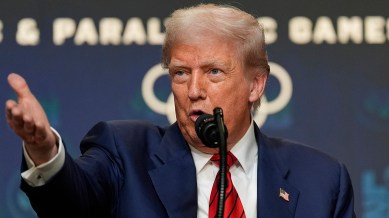
Ramping up pressure ahead of the expected arrival in India of US trade negotiators on August 25, President Donald Trump Wednesday doubled the tariffs on India to 50 per cent, but opened a 21-day window before the additional tariff of 25 per cent kicks in.
A White House statement said the US will impose “additional 25 per cent ad valorem duty” above the 25 per cent reciprocal tariffs announced on August 1 to “deal with the national emergency stemming from Russia’s actions in Ukraine”. This tariff is deemed necessary and appropriate due to India’s “direct or indirect import of Russian Federation oil”, which the President judges will more effectively address the national emergency, the executive order said.

The additional tariff dramatically raises pressure on India as most of its competitors such as Vietnam, Bangladesh and now China are at lower tariffs. However, exporters said that the US tariff-related uncertainty is already disrupting trade. About half of India’s total exports of $80 billion are, however, in the exemption list that include products such as pharma and electronics goods.
While the fresh order takes the total US tariffs to its highest on any country globally, it also offers a fresh window for discussion. Last Saturday, The Indian Express reported that key economic ministries had been asked for inputs to sweeten the trade deal stuck on India’s resistance to US demand for access to the Indian agriculture market.
“This 25 per cent ad valorem duty will be effective for goods entered for consumption, or withdrawn from warehouse for consumption, on or after 12:01 a.m. eastern daylight time 21 days after the date of the order. There are exceptions for goods that were loaded onto a vessel and in transit before this effective date and are entered for consumption or withdrawn from warehouse for consumption before 12:01 a.m. eastern daylight time on September 17, 2025,” the order stated.
Hours before the announcement of additional tariff, Trump, while responding to a question from news agency ANI on US import of Russian chemicals and fertilisers, said: “I don’t know anything about it. I’d have to check, but we’ll get back to you on that.”
On Wednesday, The Indian Express reported that US imports from Russia had been rising, growing 23 per cent year-on-year to $2.1 billion between January and May this year. The surge was led by a sharp increase in the import of palladium (37%), uranium (28%) and fertilisers (21%).
While Delhi has called the targeting of India over the purchase of Russian oil “unjustified and unreasonable” and vowed to take “all necessary measures” to safeguard its “national interests and economic security”, Indian exporters are in a fix, scrambling to retain access to the US, their most valuable export market, accounting for nearly 20 per cent of India’s total outbound shipments.
‘Cannot absorb high US tariffs’
Reacting to higher than expected US tariffs, Indian exporters said they are not in a position to absorb such high tariffs. Federation of Indian Export Organisations (FIEO) president, S C Ralhan, said: “This (US) move is a severe setback for Indian exports, with nearly 55 per cent of our shipments to the US market directly affected. The 50 per cent reciprocal tariff effectively imposes a cost burden, placing our exporters at a 30-35 per cent competitive disadvantage compared to peers from countries with lesser reciprocal tariff,” he said.
Ralhan said many export orders have already been put on hold as buyers reassess sourcing decisions in light of higher landed costs. For a large number of MSME-led sectors, absorbing this sudden cost escalation is simply not viable and margins are already thin, and this additional blow could force exporters to lose long-standing clients, he said.

CITI Chairman Rakesh Mehra said, “The US tariff announcement of August 6 is a huge setback for India’s textile and apparel exporters as it has further complicated the challenging situation we were already grappling with and will significantly weaken our ability to compete effectively vis-a-vis many other countries for a larger share of the US market.”
Mehra appealed to the government to urgently take steps to come to the aid of India’s textile and apparel sector during these hugely testing times given the government’s strong commitment to increase the competitiveness of local industry and help our companies become major players on the world stage.
China largest importer of Russian oil
Incidentally, China is the largest buyer of Russian oil, at about 2 million barrels per day, followed by India (just under 2 million barrels a day) and Turkey. The US had agreed to lower tariffs on Chinese goods to 30 per cent from 145 per cent in May.
The executive order does not make any mention of China, but stipulates a mechanism wherein the US Secretary of Commerce, in coordination with other senior officials, “will monitor if any other country (beyond India) is directly or indirectly importing Russian Federation oil and recommend further action”.
New Delhi-based think tank Global Trade Research Initiative (GTRI) said that in 2024 alone, China bought $62.6 billion of Russian oil – more than India’s $52.7 billion.
Washington avoids targeting Beijing because of China’s leverage over critical materials such as gallium, germanium, rare earths and graphite, vital for US defence and technology, GTRI said.
“The US has also overlooked its allies’ trade with Russia: the EU imported $39.1 billion of Russian goods last year, including $25.2 billion in oil, while the US itself purchased $3.3 billion in strategic materials from Russia. The tariffs are expected to make Indian goods far costlier in the US, with potential to cut US-bound exports by 40-50 per cent.
Hit to India-US ties
Indian officials have indicated that the US is unwilling to negotiate sectoral tariffs – such as those on steel and automobiles – which have already impacted nearly $5 billion worth of Indian exports.
Evan A Feigenbaum, vice president for Studies at the Carnegie Endowment for International Peace, said Monday that US-India relations may now become a political football, especially in Delhi. He warned that the core understandings that enabled closer ties may be at serious risk, as Delhi had largely assumed Washington would take political risks to strengthen the relationship – something Trump has not done and clearly will not do.
Feigenbaum said the split in relations is further underscored by Trump’s effusive praise for Islamabad and recent engagement with Pakistan’s army and government – developments that raise obvious concerns in Delhi.
“The United States was roiled by India’s ties to Iran, Myanmar and later Russia. Trump and his administration are now moving to sanction and tariff India over its oil trade with Russia. This significantly shifts the bar for bilateral relations,” he said.


