Journalism of Courage

The central bank, however, announced a bond-buying calendar which will ensure that borrowers reap the benefits of a low interest rate regime.

The second wave of Covid-19 infections in India is accelerating at an unprecedented pace with the nation becoming only the second one after the US to report over 1,00,000 fresh cases in a day.

Under the scheme for white goods, eligible investors in air-conditioners, LED lights and such components will be granted a total incentive of Rs 6,238 crore.

The central bank's decision to keep rates unchanged for the fifth consecutive time is in line with the economic need to encourage growth, experts said.

On Tuesday, the IMF projected an impressive 12.5 per cent growth rate for India in 2021, stronger than that of China, the only major economy to have a positive growth rate last year during the COVID-19 pandemic.

RBI Monetary Policy 2021 announcements: The six-member Monetary Policy Committee (MPC) headed by Reserve Bank of India (RBI) Governor Shaktikanta Das kept the repo rate unchanged at 4 per cent, while the reverse repo rate also was kept unchanged at 3.35 per cent. Here's what the Indian central bank announced.

According to the Sebi rules, the top 500 listed firms are required to separate the roles of Chairperson and MD/ CEO before April 1, 2022.

The government had originally set a target to collect Rs 2 lakh crore by end of March 2020, but the pandemic upset the calculations.

Senior bureaucrat Tarun Bajaj was appointed revenue secretary as part of a top-level bureaucratic reshuffle by the Centre Tuesday.

Notably in 2020, India's economy contracted by a record eight per cent, the International Monetary Fund (IMF) said as it projected an impressive 12.5 per cent growth rate for the country in 2021.
In a Reuters poll, 65 of 66 economists surveyed said the RBI's monetary policy committee (MPC) will leave rates unchanged.

The country’s manufacturing sector activity weakened sharply in March, with the IHS Markit India Manufacturing Purchasing Managers’ Index (PMI) slipping to a seven-month low of 55.4 in March from 57.5 in February.

Having successfully managed the first wave of the coronavirus pandemic, India is well prepared to combat the scourge of the second wave, the Finance Ministry’s monthly economic report said.

At this juncture of the onset of the second wave, the report said, India is well prepared to combat the scourge of the virus.
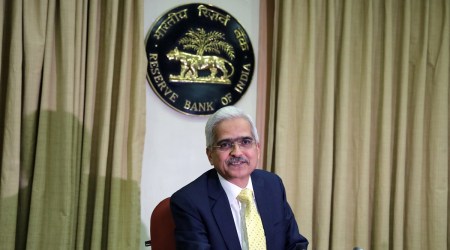
The Reserve Bank will announce the resolution of the Monetary Policy Committee (MPC) on April 7.

The seasonally adjusted IHS Markit India Manufacturing Purchasing Managers' Index (PMI) fell from 57.5 in February to a seven-month low of 55.4 in March.

These outflows were mainly due to profit booking by investors amid rally in stock markets.

While some lenders like State Bank of India (SBI) and HDFC have raised deposit rates in recent months, next week’s monetary policy review could determine the future course of rates.
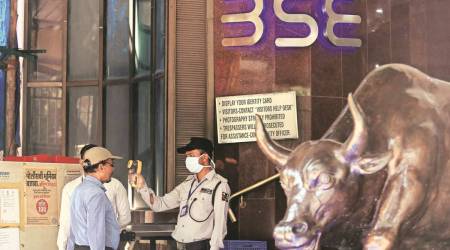
According to depositories data, FPIs invested Rs 10,482 crore into equities and Rs 6,822 crore in the debt segment during March.

The CSC, a special purpose vehicle of the IT Ministry, had in April last year started allowing its village level entrepreneurs the option to launch a Grameen e-store.
The Monetary Policy Committee (MPC) members, who will unveil the new policy on April 7, will have to do the tight rope walk in order to keep inflation under check and boost the growth.
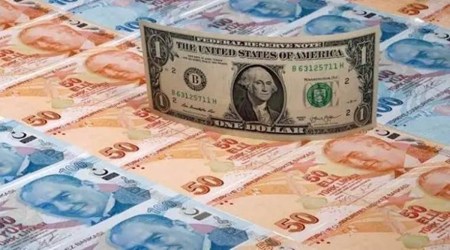
In the previous week ended March 19, the forex kitty had increased by $233 million to $582.271 billion. It had touched a record high of $590.185 billion in the week ended January 29, 2021.

Reliance Retail Ventures Ltd (RRVL) has extended the timeline for the “Long Stop Date” from March 31, 2021 to September 30, 2021, said a regulatory filing by Future Retail.

Walmart India had approached with the offer sometime in February and had discussed the possibility of buying all the Grameen e-stores for expanding the reach of its own retail outlets as well as augmenting the capacity of Flipkart’s last-mile delivery.

The gross GST revenue collected in the month of March 2021 stood at Rs 1,23,902 crore, of which central GST is Rs 22,973 crore, state GST is Rs 29,329 crore, integrated GST is Rs 62,842 crore (including Rs 31,097 crore collected on import of goods) and cess is Rs 8,757 crore (including Rs 935 crore collected on import of goods).