

Journalism of Courage

On March 29, noted artist Vivan Sundaram breathed his last at a hospital in Delhi, where he had been admitted after a suffering from a brain hemorrhage earlier this month. (Express archive photo)


Known for giving India one of its first art installations, he passed away at the age of 79, and is survived by his wife, Geeta Kapur, an art historian and curator. (Express photo)

Born in Shimla in 1943, his parents were Kalyan Sundaram, chairman of Law Commission of India from 1968 to 1971, and Indira Shergil, sister of prolific Indian modern artist Amrita Sher-gil. (Express photo)

Sundaram studied painting from the Faculty of Fine Arts, MS University, Baroda, and pursued further education at Slade School in London. (Express photo)

He trained under the American artist RB Kitaj, who he met in London. (Express photo)
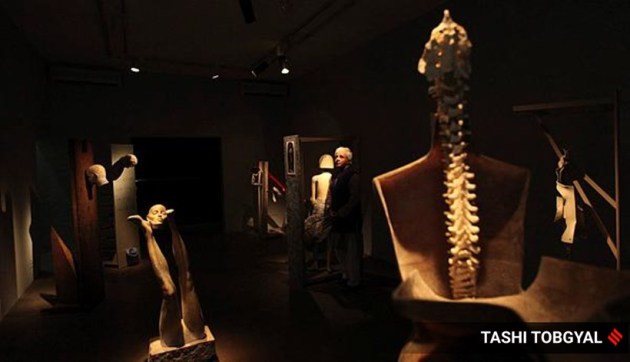
The artist worked using different mediums such as painting, sculpture, printmaking, photography, video art and installation. (Express Photo by Tashi Tobgyal)

His works are politically conscious and highly intertextual in nature such as Memorial (1993, 2014), made in response to communal violence in Bombay and Trash (2004 to 2003) which investigated urban landscapes and the economy of second-hand goods. (Express Photo by Tashi Tobgyal)

Being an advocate of the narrative figurative style by the 'Baroda School' group of artists, he founded the Kausali Art Centre in 1976 to build an interdisciplinary approach towards art. He is also one of the founding members of the Safdar Hashmi Trust (SAHMAT), established after the death of activist and playwright Safdar Hashmi in 1989. (Express photo by Abhinav Saha)

Currently, his drawings showcasing the verses from Chilean poet Pablo Neruda's poem and showing solidarity with oppressed populations called The Heights of Macchu Picchu (1972) are at view at the ongoing Kochi-Muziris Biennale. (Express photo by Abhinav Saha)


