Journalism of Courage

Frantic anticipation fills the streets of Kolkata ahead of Durga Puja. Bamboo structures crop up, changing the city’s topography overnight. Advertisements line the streets and pavements spill over with last-minute shoppers. But, all of this is easy to forget when one enters 12, Shib Krishna Daw Lane at Jorasanko, where members of Daw family are going about preparations for their pujo. It is 177 years old.
IN PIC: Rituals at Shiv Krishna Daw bari in North Kolkata during Sandhi puja. (Text: Aniruddha Ghosal; Photos: Partha Paul)

The Daw family, one of the oldest in Kolkata, doesn’t believe in sarbajanin (community) or parar pujo. In a city where antiquity is a relative concept measured in centuries, and nostalgia is made solid, the Daw family believes that the tradition must continue, virtually unchanged.
IN PIC: Lighting the earthen lamp rituals at Shiv Krishna Daw bari in North Kolkata during Sandhi puja. (Text: Aniruddha Ghosal; Photos: Partha Paul)
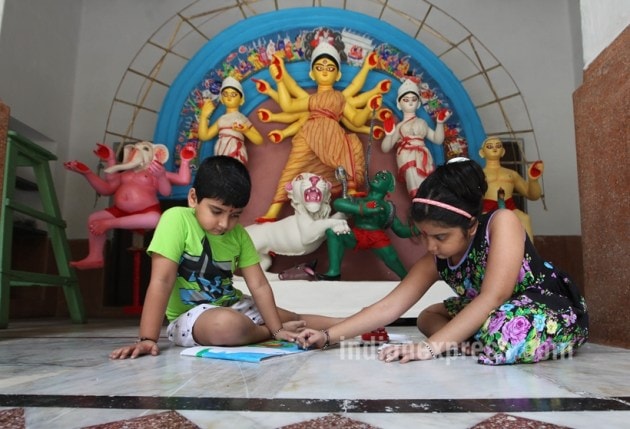
The family’s seventh generation patriarch, Ashim Chandra Daw, says, “Financial records found in our offices show that one of the early pujos, about 150 years ago, was celebrated at a total cost of Rs 2,500. Now, the amount has changed exponentially, to almost Rs 2 lakh.” There are other exceptions, too. Ghee has given way to white oil for the bhog, to save cost.
IN PIC: Family members of Jorasanko Daw bari. Pratit along with his elder sisiter Pratiti at their presmises in North Kolkata. (Text: Aniruddha Ghosal; Photos: Partha Paul)
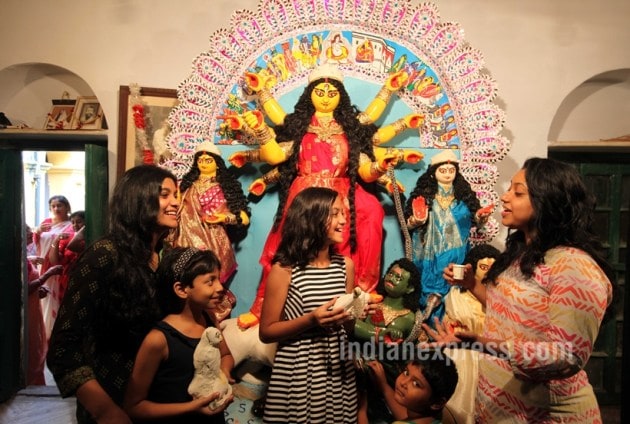
Unlike parar pujos, tradition dictates everything in these households. Families get together and pool in resources. While some old families have a trust, most rely on family members getting together and discussing how much money can be invested. Other pujas look for new themes, but the barir pujas stick to the more traditional Durga idols.
IN PIC: Family members of Chorbagan Chatterjee bari at North Kolkata after bringing Durga idol at home. (Text: Aniruddha Ghosal; Photos: Partha Paul)
Of utmost significance, however, is the time spent with the family. “We still live in a joint family. We never really see Durga Pujas apart from our own,” says Sayan Sen of the Sen family in Kumartuli. The Sens first moved to Kumartuli in 1840, when they migrated from Dhaka. “People we’ve never met before travel miles to come to our home to witness it, so we’re always expecting guests. Our puja is famous because of our connection with the Ramakrishna Paramhansa,” says Sayan. Late family patriarch, Ganga Prasad Sen, was a kabiraj (ayurvedic doctor) known for being the doctor of Ramakrishna.
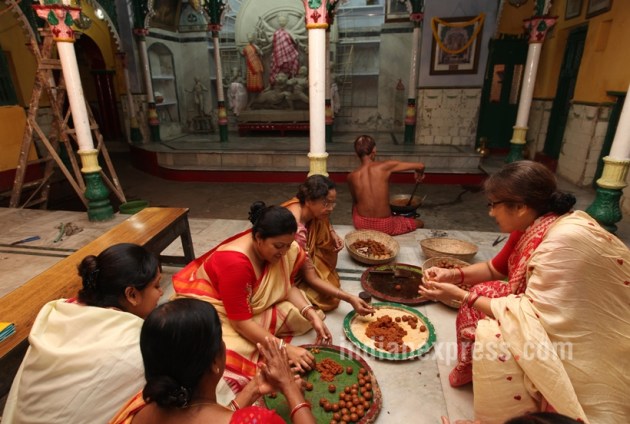
IN PIC: Family members of the Daw bari praparing naru (a coconut-based sweet) at their presmises in North Kolkata. (Text: Aniruddha Ghosal; Photos: Partha Paul)

Food is an important part of the celebrations. The Sen family focuses on their tradition labda recipe. “Labda is a typical vegetarian bhog dish. We’ve had the same ingredients and recipes passed down from generation to generation,” says 26-year-old Subhashree Sen. The tradition of animal sacrifice, however, was discontinued in the Seventies.
IN PIC: Aloke Krishna Deb of Shovabazar Raj bari with (from left) daughter Krishna Archana Basu, nice Antara Deb and grandson Sanjoy Mitra at his residence in Kolkata. (Text: Aniruddha Ghosal; Photos: Partha Paul)

On Muktaram Babu Street, at the Chorbagan Chatterjee Bari, 42 family members, spanning four generations, have come back home for the festival. They break into joyous conversations when the idol arrives at the doorstep. The young ones are especially excited. Five-year-old Samriddha gingerly adjusts the Ganesh idol’s dhoti. “I've been doing this for a long time,” she says.
IN PIC: Family members of Chorbagan Chatterjee bari at North Kolkata during a puja meeting. (Text: Aniruddha Ghosal; Photos: Partha Paul)
Kaushik Daw, a descendant of another branch of the Daw family, which also lives in Jorasanko, is now in his thirties. Unlike many old families and other branches of his own family, the expenses of the Durga Puja celebrations don’t cripple the family’s finances. The reason, he explains, is that, unlike other old families, their wealth continues to be in the family business.
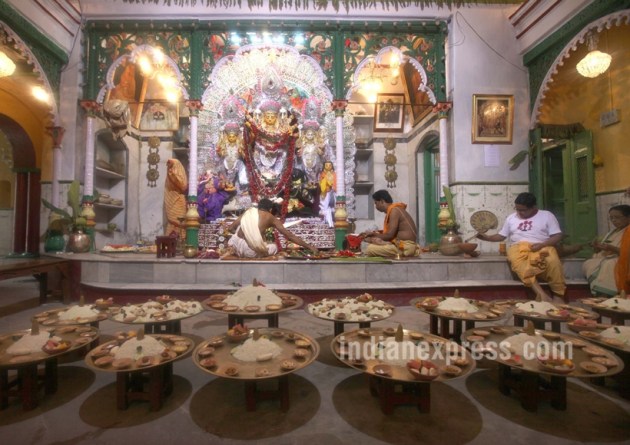
IN PIC: Family members of Jorasako Daw Bari perform Saptami Durga Puja at their North Kolkata house. (Text: Aniruddha Ghosal; Photos: Partha Paul)
“While most old families invested in land — our family’s main source of income is the NC Daw Arms and Ammunitions at Esplanade. After the Rent Control Act in Bengal and the abolition of zamindari, many old families were hit badly. Others are fighting long legal battles to get their wealth back, which in turn have bled them dry. We were lucky,” he says.
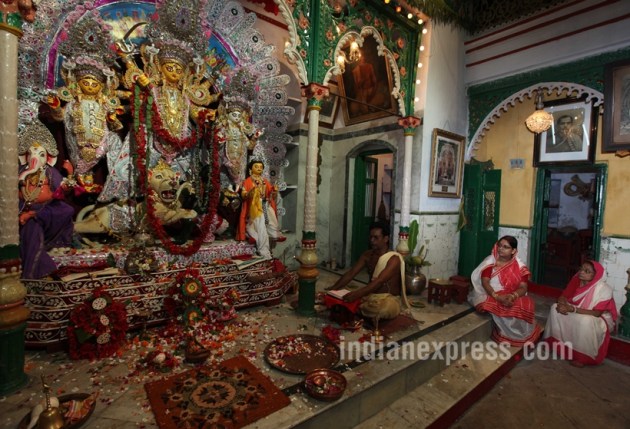
IN PIC: Family members of Jorasanko Daw Bari perform Saptami Durga Puja rituals. (Text: Aniruddha Ghosal; Photos: Partha Paul)
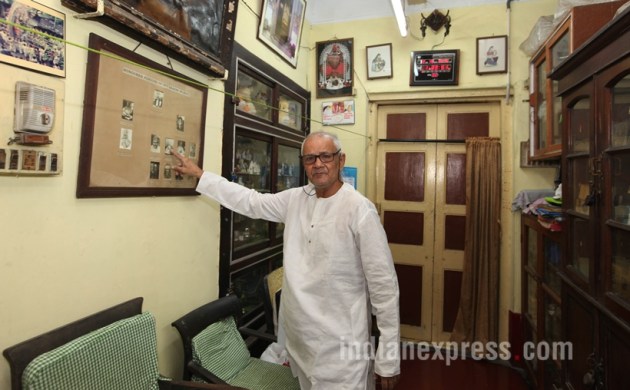
Nowhere is this more apparent than while talking to 84-year-old Alok Krishna Deb (in pic). Living in a tiny flat at Sovabazar, next to the Sovabazar Rajbari, the octogenarian is the “king” of the Sovabazar family. He leads the charge for the Rs 4,000-crore Shovabazar estate case. (Text: Aniruddha Ghosal; Photos: Partha Paul)
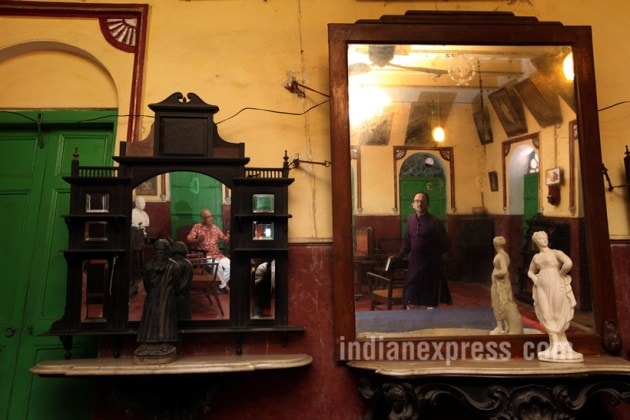
He sits with his grandson, 21-year-old Srinjoy Mitra, and shows him various artefacts belonging to the royal family — from the original deed from the East India Company, giving the family the possession of Sutanuti village, one of the three villages that merged into modern-day Kolkata, to a pocket watch which the royal family in Egypt had gifted the Rajbari when maritime trade between Kolkata and Cairo was at its peak.
IN PIC: Badal Sen (left) and his nephew Sayan Sen, decedent of Kabiraj Gangasaprasad Sen at his Kumartuli Street house in North Kolkata. (Text: Aniruddha Ghosal; Photos: Partha Paul)
“There are about 150 members of the family who come here every year,” says Mitra, “We’re all great friends and, though not particularly religious, this is the time of the year that we get together every year. Today, other pujas focus on things which aren’t really traditional. They focus on things like ‘sindoor khela’. Think about it, if the goddess is coming home for a bit and Dashami is when she departs, how can there be a joyous end to that? When puja ends, our family weeps. That is the real tradition of this puja.”
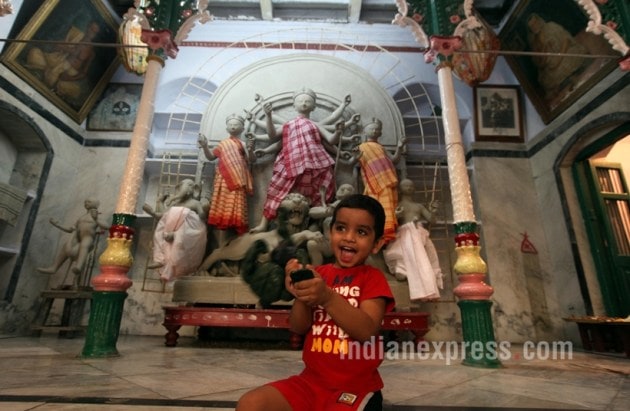
IN PIC: Aadish Daw, 3, a sixth generation family members of Daw bari (bandukwala) at their house in North Kolkata. (Text: Aniruddha Ghosal; Photos: Partha Paul)