Journalism of Courage
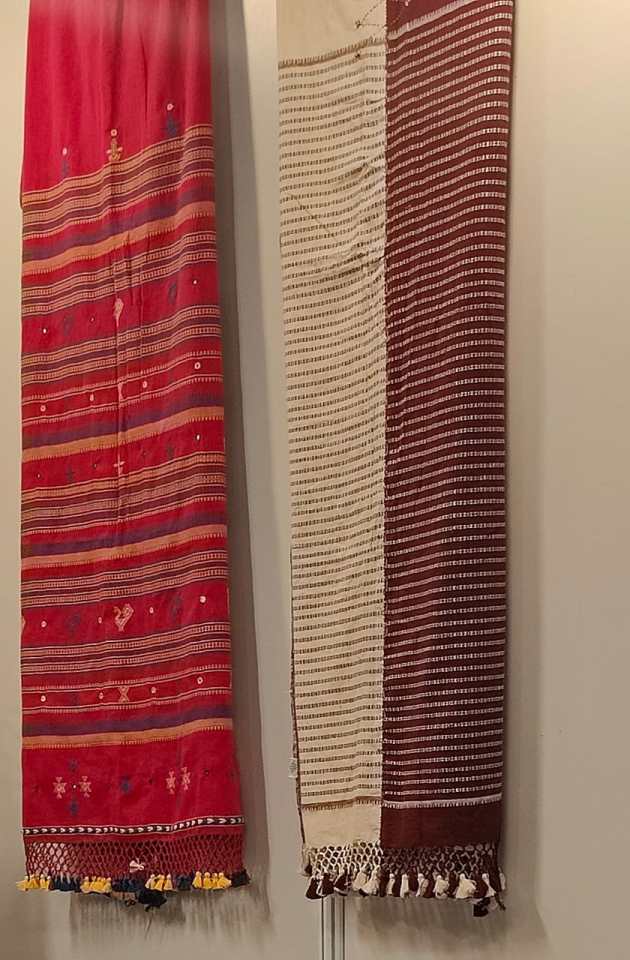
Bhujodi is an age-old weaving tradition that reflects the rich cultural heritage of Kutch. Originating over 500 years ago in Bhujodi village near Kutch, the craft emerged from a unique collaboration between the Rabaris, a tribal community who supplied wool, and the Vankars, skilled weavers who transformed it into textiles. (Photo Credit: Naysa Shrivastava)
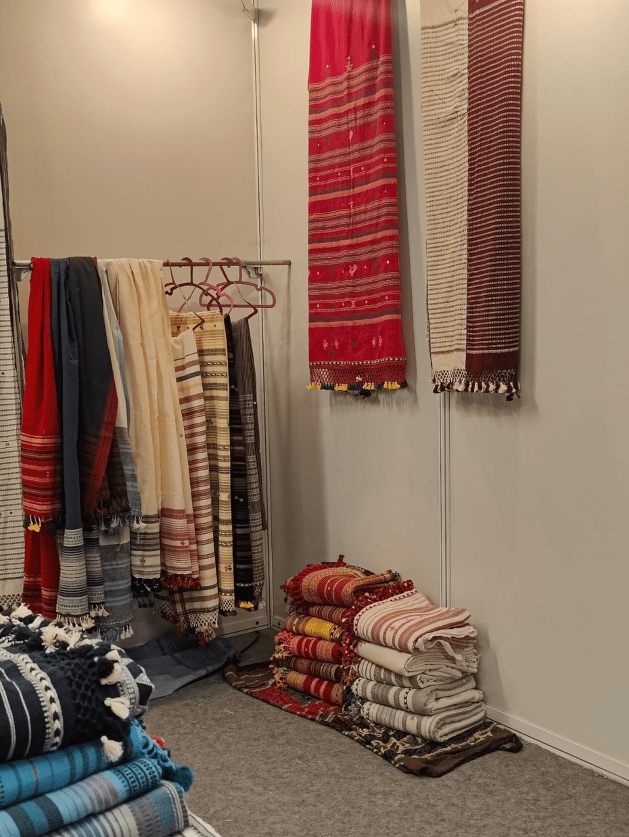
Bhujodi shawls, traditionally known as Kutchi shawls, are an integral part of Gujarat’s cultural heritage. Once used by the Rabari community as protection against the region’s harsh monsoon climate, these handwoven textiles are a symbol of resilience and craftsmanship. In 2011, Kutchi shawls received Geographical Indication (GI) tag recognition, safeguarding their cultural identity. (Photo Credit: Naysa Shrivastava)
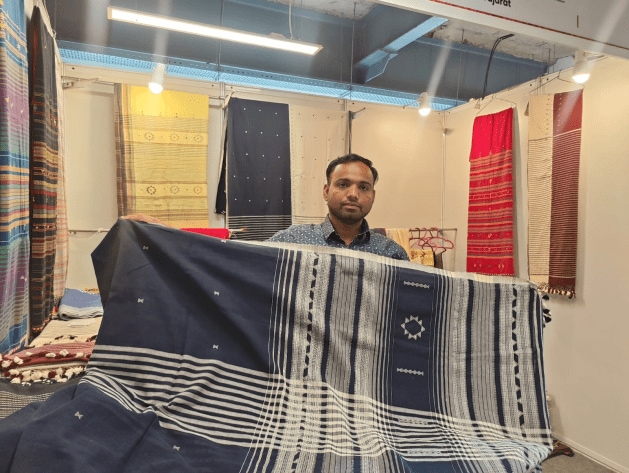
Narendra Marwada, a skilled Bhujodi weaver from Kutch, showcases a Kutchi saree at the Handloom Saree Exhibition. Determined to popularise this traditional weaving style across India, Marwada proudly carries forward the legacy of his forefathers and remains deeply committed to preserving this unique cultural art form. (Photo Credit: Naysa Shrivastava)
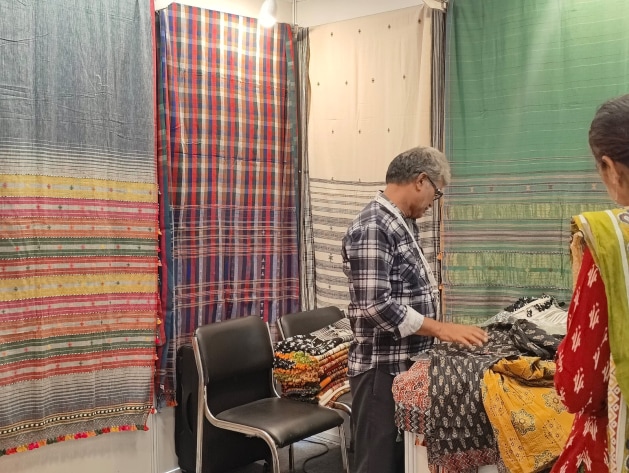
Malshi Dana Bankar, another passionate Bhujodi weaver and Kutchi saree exhibitor at the Handloom Saree Festival, shared insights into his and his wife’s efforts to teach weaving at a past exhibition. Speaking with deep pride, he reflected on the intricate process and the challenges that come with keeping the centuries-old tradition alive. (Photo Credit: Naysa Shrivastava)
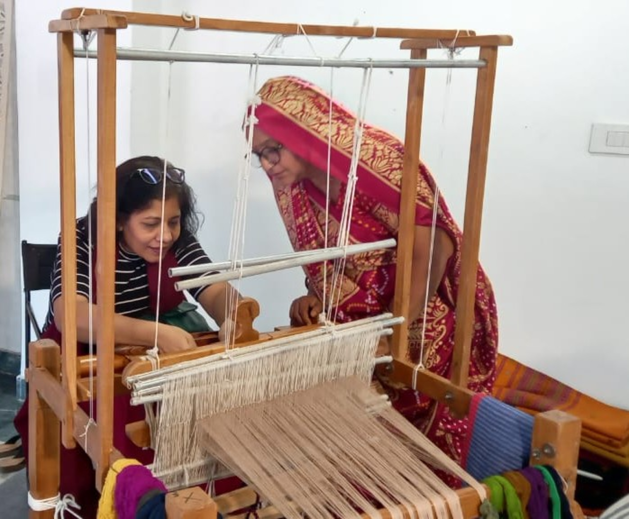
Malshi’s wife demonstrates the traditional art of weaving on a loom, commonly referred to as a khaddi. Weavers typically use throw and shuttle looms to craft sarees, shawls, and blankets. Using the extra-weft technique, they intricately incorporate motifs such as birds, waves, and hoofprints into their textiles. (Photo Credit: Malshi Dana Bankar)
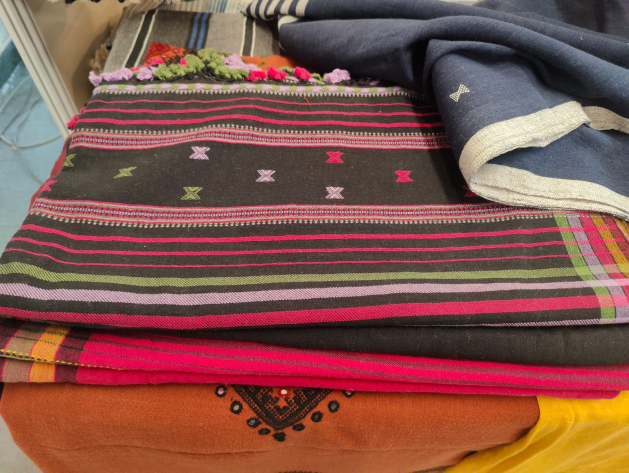
Kutchi sarees and shawls are known for their distinctive motifs such as leher (waves), vakhiyo (zig-zag), and chaumukh (symmetrical motifs at all corners). Over time, these traditional patterns have evolved to include more contemporary designs like camels and women carrying ghada (water pots), blending heritage with modern aesthetics. (Photo Credit: Naysa Shrivastava)
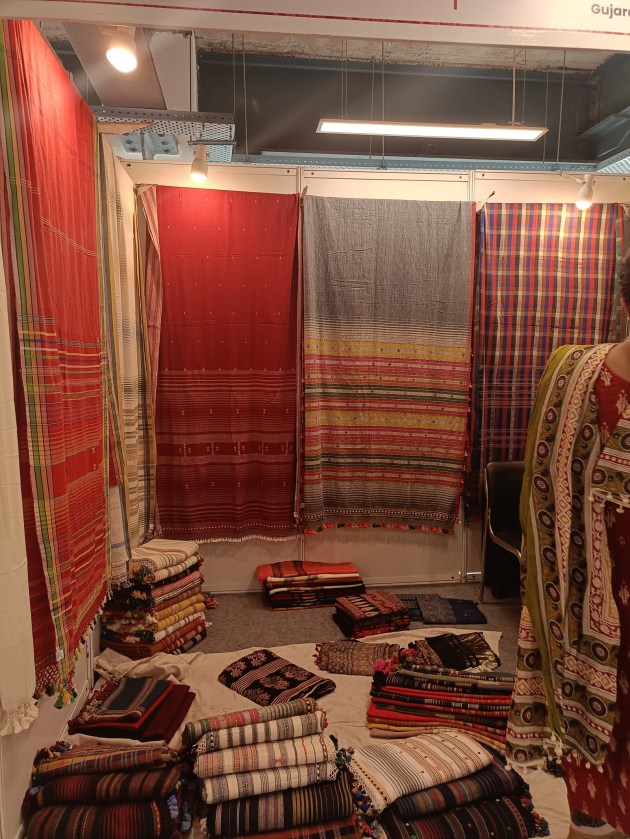
The dyes used in traditional Kutchi sarees are derived from natural sources such as plants and minerals. Madder roots and pomegranate rind are commonly used to create vibrant shades of pink, red, yellow, and light green, contributing to the textile’s earthy, organic charm. (Photo Credit: Naysa Shrivastava)
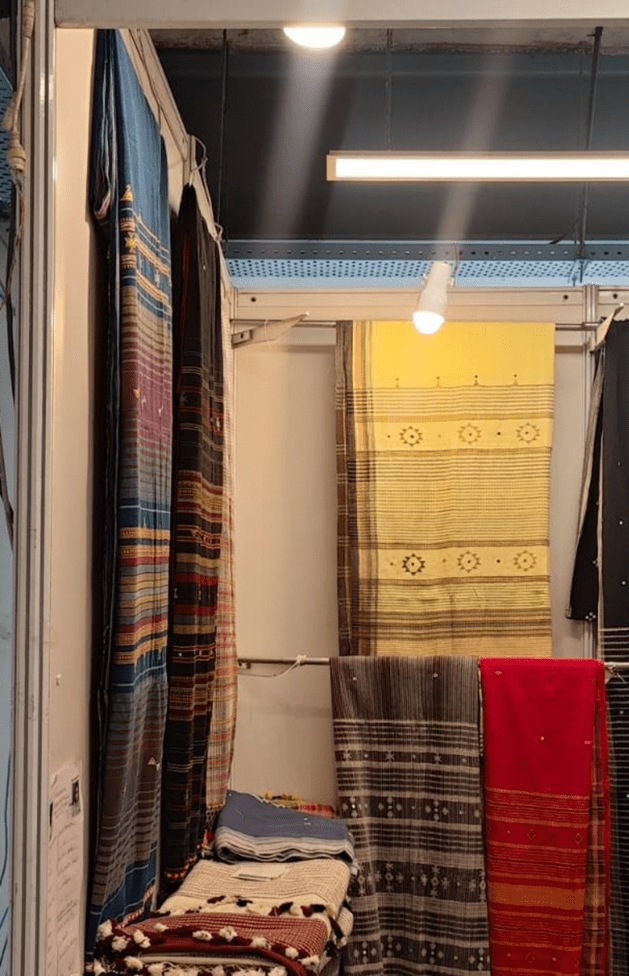
To meet changing market preferences, Kutchi sarees are now also being woven from Kala cotton—a lightweight fibre well-suited for summer wear. However, due to its thinness, Kala cotton presents a significant challenge to weavers, making the process more intricate and labour-intensive. (Photo Credit: Naysa Shrivastava)