

Journalism of Courage
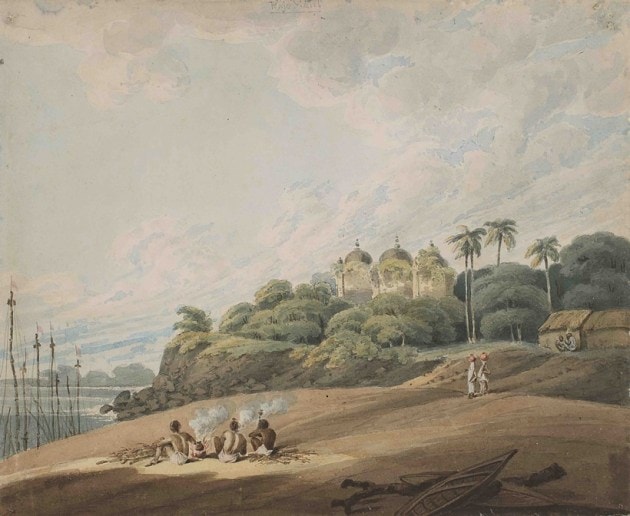
Art is not just a visual documentation of the current times but also a historical representation of the times gone by. An ongoing exhibition, New Found Lands, curated by Dr Giles Tillotson explores landscape painting in India over a period of two hundred years, from 1780 to 1980. On till May 31, 2021, at The Fuller Building, New York and online at Viewing Room at the gallery's website http://www.DAGWorld.com, the show is a visual story that moves from an imposed colonial gaze, through Indian accommodation and adjustment, to rejection, and the profusion of new forms of imagery, rooted in the land; View of Rajmahal by William Parker (Source: PR Handout)

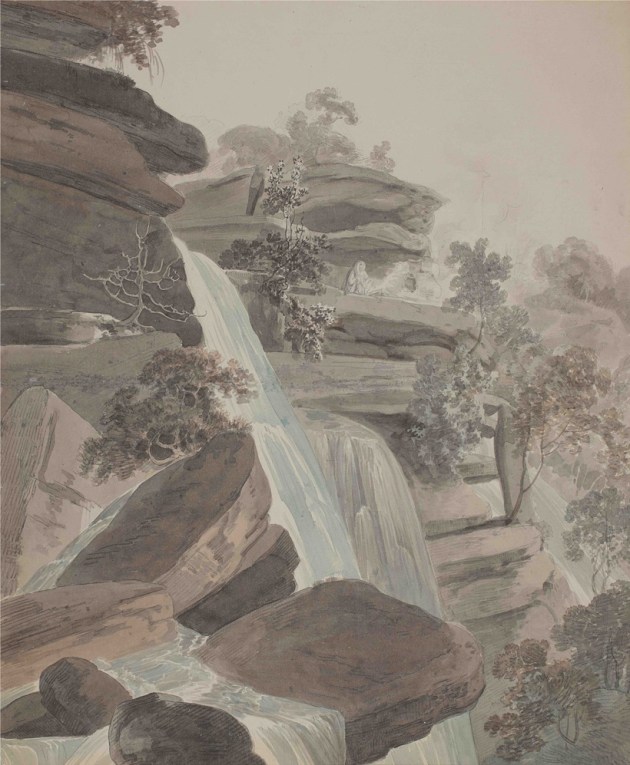
Featuring 108 works divided into three sections, the exhibition, accompanied by a book, investigates the development of landscape painting from the perspective of the Picturesque, the Naturalistic and the Free; Untitled by Thomas Daniell (Source: PR Handout)
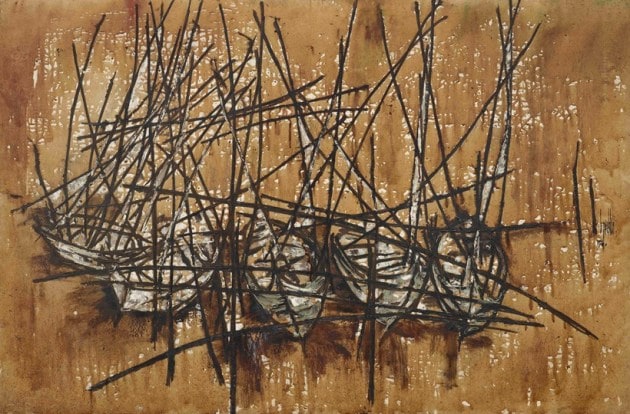
Starting with English artists who travelled in India from the late 18th century onwards, to the introduction of new materials and teaching methods in the art schools from the middle of the 19th century, to the adoption of similar approaches by Indian artists, the art exhibition captures Indian artists who sought new modes of expression, and invented a glorious array of new landscape styles; Untitled by B Prabha (Source: PR Handout)
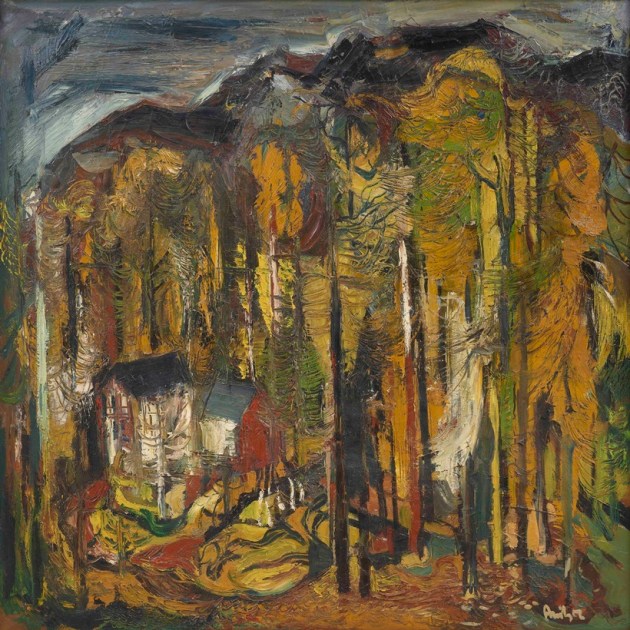
The parallel with the course of the freedom movement is no coincidence, as artists react to the conditions and events of their times. Landscape artists are acutely alert not only to time but to space, finding ever new ways to depict the land on which they stand, even as the control of it is reclaimed; Untitled (Houses in the forest) by Avinash Chandra (Source: PR Handout)
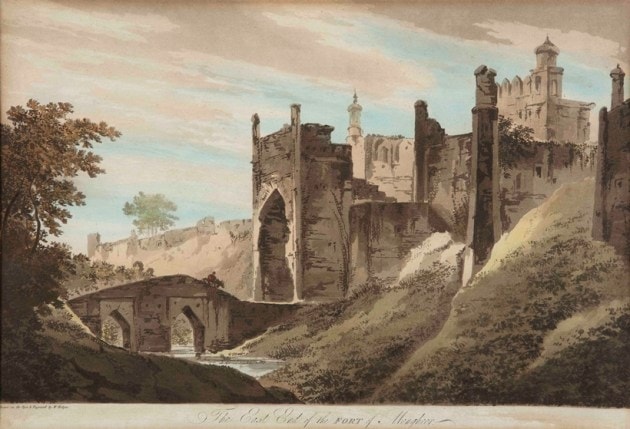
The English aesthetic, known as the picturesque, developed in the late 18th century and the first artists to bring this aesthetic to India were Richard Wilson’s pupil William Hodges, who was in India from 1780 to 1783, and Thomas Daniell, who toured extensively through India with his nephew William Daniell between 1786 and 1793. They made countless drawings and paintings, both in India and after their return home, and published sets of aquatints, which disseminated their vision of India more widely; The East End of the Fort of Mongheer by William Hodges (Source: PR Handout)
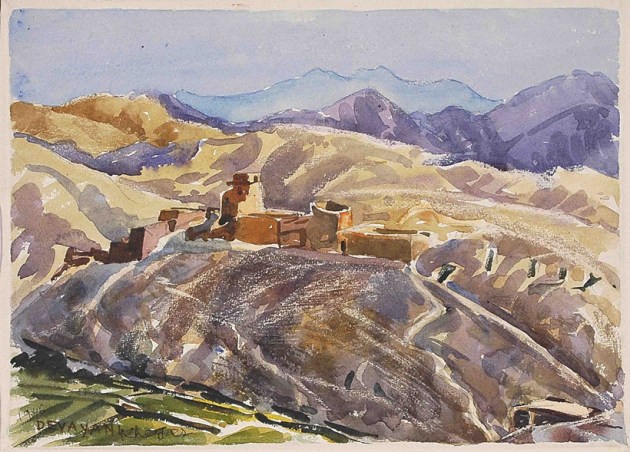
That vision was of dramatic landscapes with varied terrain: towering hills and forests, deep valleys and rugged country roads. It also included buildings, for, as Richard Payne Knight expressed it, architecture should be considered as ‘a mere component part of what you see’. The picturesque approach to architecture was scenic not functional; Khyber by Devayani Krishna (Source: PR Handout)
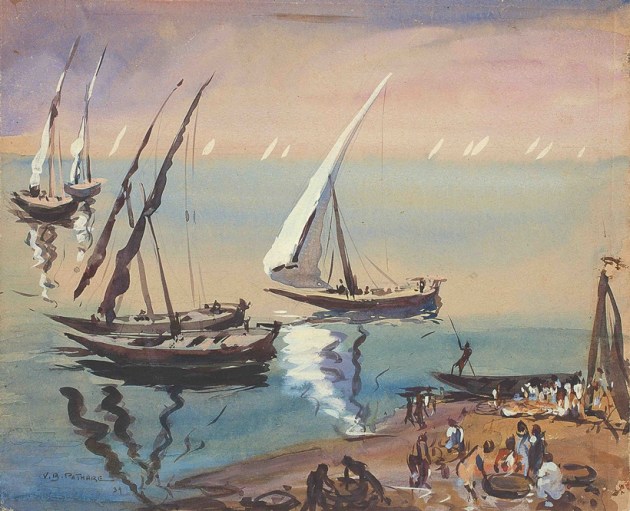
It is not surprising that the first great Indian artists to produce pure landscapes – as distinct from literary or religious ones – were all associated with the Bombay School —Pestonji Bomanji and M V Dhurandhar, and their younger contemporaries such as L N Taskar and M K Parandekar. Their approach soon became a self-perpetuating tradition, joined by the likes of S L Haldankar, N R Sardesai and D C Joglekar. These artists were all born between 1850 and 1900 and were active through the first half of the 20th century, producing views of Indian scenery in a Western style; At Rest by V B Pathare (Source: PR Handout)
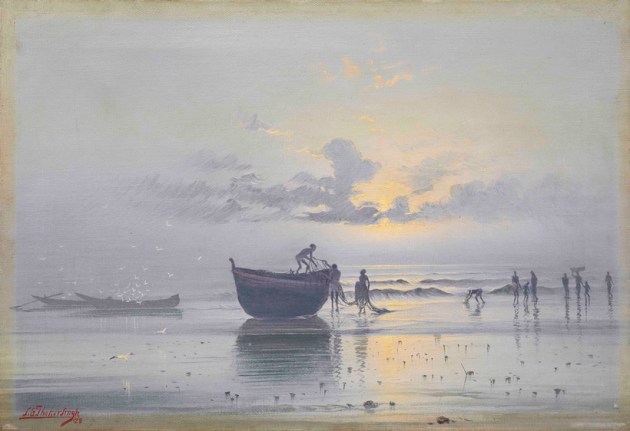
Their watercolours, in particular, show an obvious debt to the formulaic principles of the picturesque as these artists explored the potential of art to render convincingly the appearance of the visible world. This aspect is well illustrated by the case of S G Thakur Singh, originally from Amritsar, who made his career initially in Bombay and later in Calcutta; Fishermen at Dawn on Madras Beach by S G Thakar Singh (Source: PR Handout)
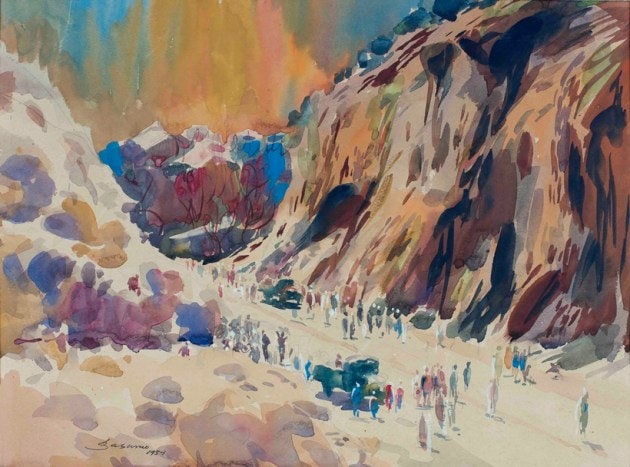
By the early 20th century, some artists began to question the need for realism in the genre of landscape painting. Such an approach seemed too literal ti them, and much too dependent on alien academic conventions. Why should landscape not be treated like any other subject – like the human figure perhaps: not as a form to imitate, but as a source of inspiration while creating new forms? ;Excavation in the Mazgaon Area by Baburao Sadwelkar (Source: PR Handout)
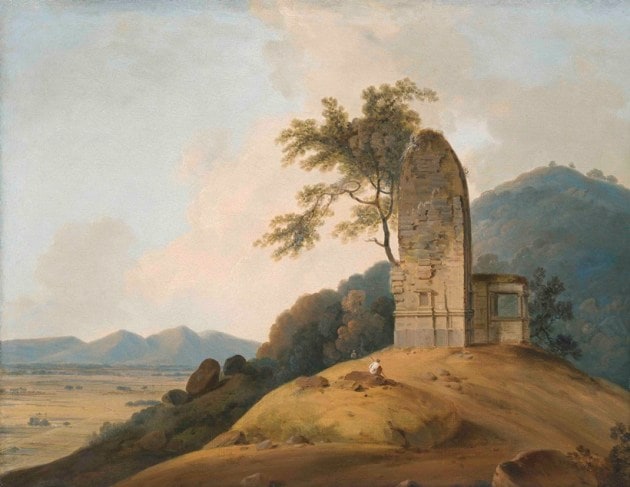
In part, these artists were responding to global developments such as Expressionism and Abstraction, in part they were asserting a self-given right to greater freedom to experiment; A Ruined Hindu Temple on a Rocky Outcrop by Thomas Daniell (Source: PR Handout)
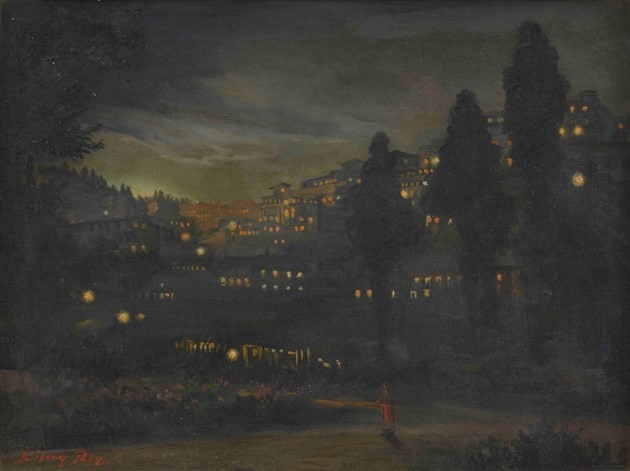
Although the ‘free’ landscape emerged later, there was no linear progression from one approach to the other. Indeed they existed alongside one another. The artists represented in this section were all born between 1900 and 1947, in what was still a colonial state; Untitled (Darjeeling by Night) by Kisory Roy (Source: PR Handout)


