Journalism of Courage
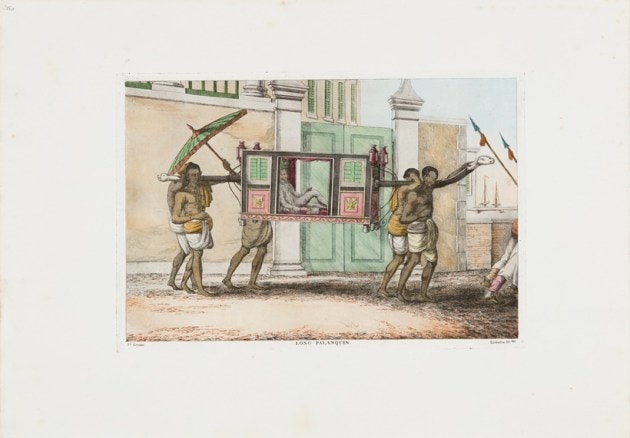
For public display of works by foreign artists who have lived in India, and to make art accessible to the general public, a new art exhibition presents a complete series of 288 etchings by artist Baltazard Solvyns -- named by him as -- Les Hindoûs; Long palanquin (Source: PR Handout)
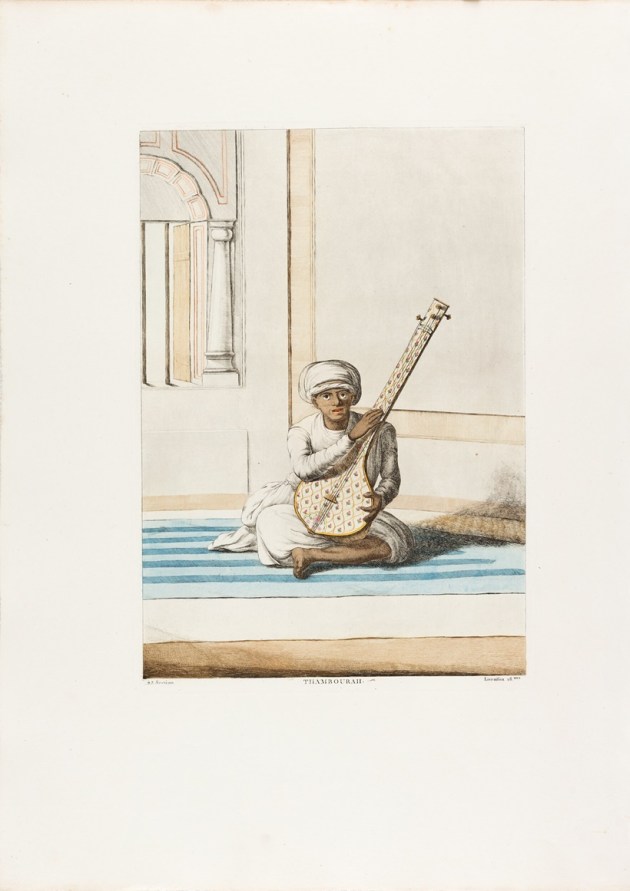
Opening on July 31, 2021 at the Bikaner House, New Delhi, and on view until August 20, 2021, the exhibition by DAG is a foreigner’s view of India’s past – or at least of part of it, in the eighteenth century. The work focuses on Bengal and also its neighbouring regions, where the artist lived and worked for over a decade starting in 1791; Thambourah [tanpura] (Source: PR Handout)
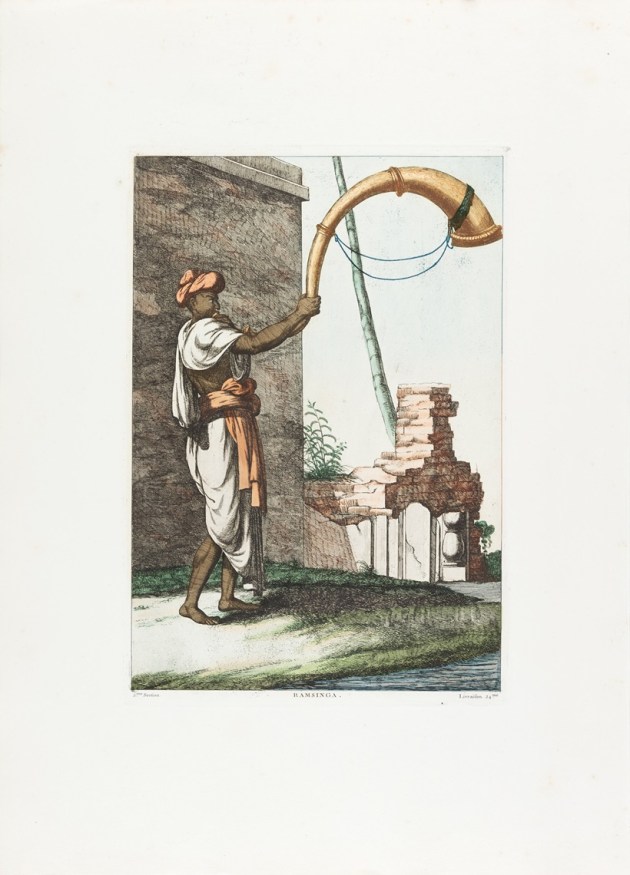
Born and trained in Antwerp, Solvyns came to India and started living in Calcutta without permission from the board of the East India Company. While picking up odd jobs, he embarked on an ambitious project to produce a comprehensive survey of ‘the manners, customs, and dresses, of the Hindus’. The first edition, containing 250 hand-coloured etchings, was published in Calcutta (Kolkata) between 1796 and 1799. It was not commercially successful and Solvyns returned to Europe; Ramsinga [serpent horn (Source: PR Handout)
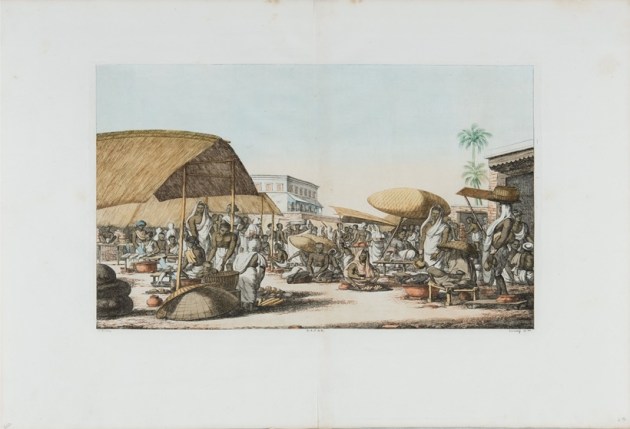
Undaunted by his failure, in 1808-12 he published in Paris a second, enlarged edition, differently arranged, in four volumes, with bilingual descriptive text in French and English, and some additional plates, making a total of 288. The exhibition for the first time brings his work across as a complete set; Bazar [market] (Source: PR Handout)

Curated by Dr Giles Tillotson, senior vice president, Exhibitions and Publications at DAG, the exhibition is accompanied by a book which introduces, illustrates and contextualises this body of work; Ramayin Gayin [Ramayan gayan] (Source: PR Handout)
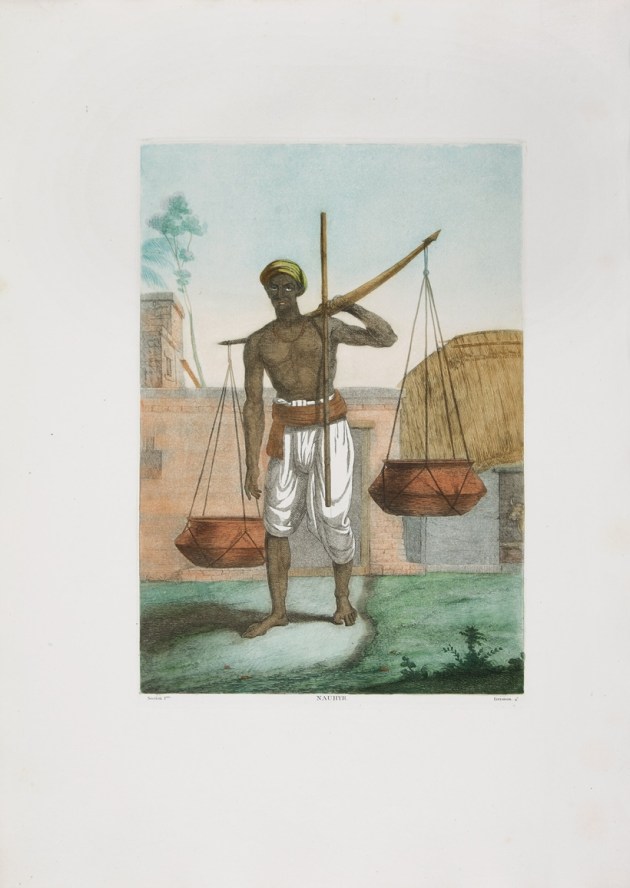
Ashish Anand, CEO and managing director, DAG, noted how when Solvyns lived in Calcutta, India’s relationship with Europe was not on equal terms. "But two hundred years on we can return his gaze with equanimity and ease, to explore not just what his depiction of India tells us about him, but whether we can learn in it anything about ourselves. Solvyns may not always seek to please, but his searching gaze will certainly intrigue us, and may make us look afresh at things we thought we knew only too well," said Anand; Nauhyr [ahir]. (Source: PR Handout)

According to DAG, exploring an extraordinarily detailed and intimate portrait of a people at a given moment in history, The Hindus includes representatives of every profession and every level of Indian society and depicts festivals and sacred rites; shows animals, birds and insects, trees and crops; records all the various kinds of boats, carriages and musical instruments that were then in common use; Natche [nautch] (Source: PR Handout)
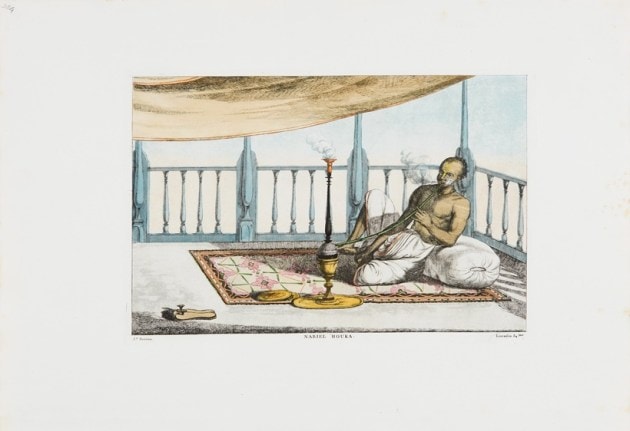
Every person and object is seen very closely, with an informed and inquisitive eye, and is shown, sometimes with wit, sometimes with a melancholy grandeur; Nariel Houka [hookah] (Source: PR Handout)
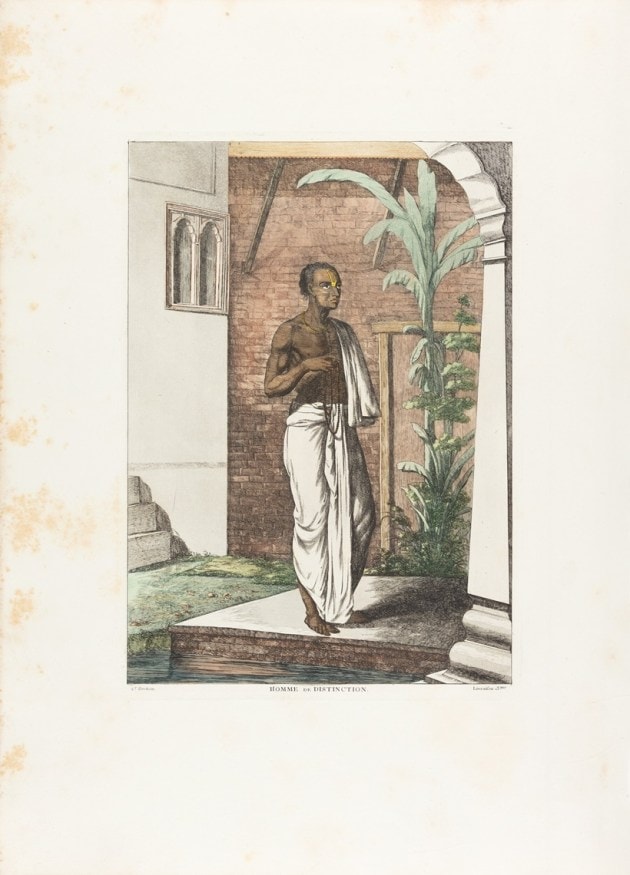
As per the gallery, Solvyns appeals today because he was a challenging artist, who did not seek to delight us, but to confront us, to engage us in a discussion about the world he shared here for a while; Homme de distinction [man of distinction] (Source: PR Handout)
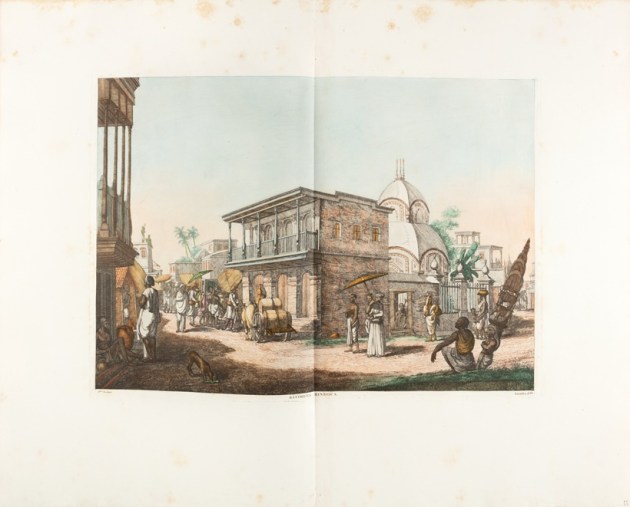
While other European artists in India of his time sought to make their fortunes by painting portraits of wealthy nawabs or powerful East India Company officials; or they made their reputations by depicting India’s magnificent buildings and scenery, Solvyns roamed the back lanes of Calcutta and explored the city’s outlying districts to meet people of all kinds and classes; Bâtimens Hindoûs (Source: PR Handout)
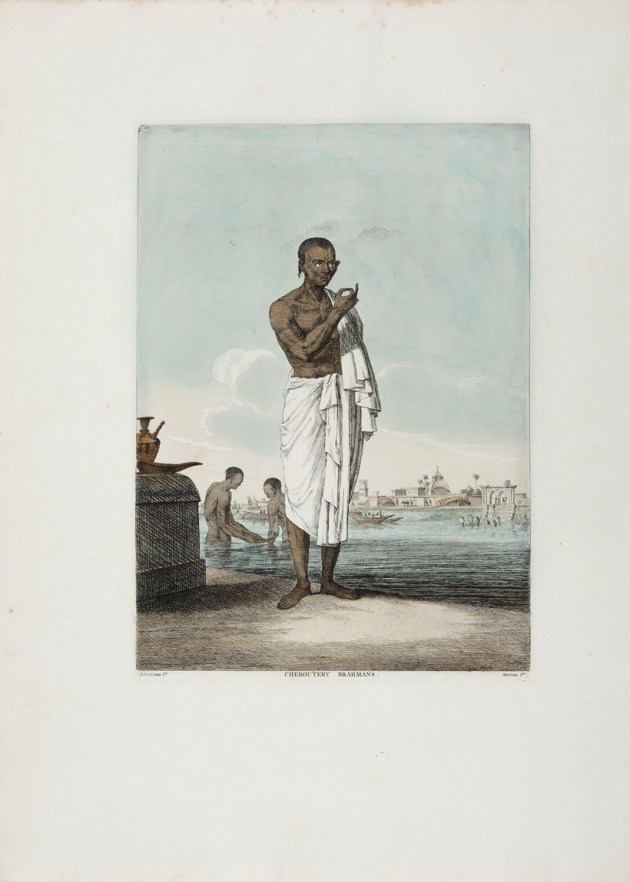
With an aim to engage with audiences from all walks of life, the exhibition aspires to promote an understanding of Indian society and culture in the late 18th century as well as sharing a strong sociological component, thus offering educational content in two fields alongside presenting fine works of art; Cheroutery brahman [Srotriya brahmin](Source: PR Handout)
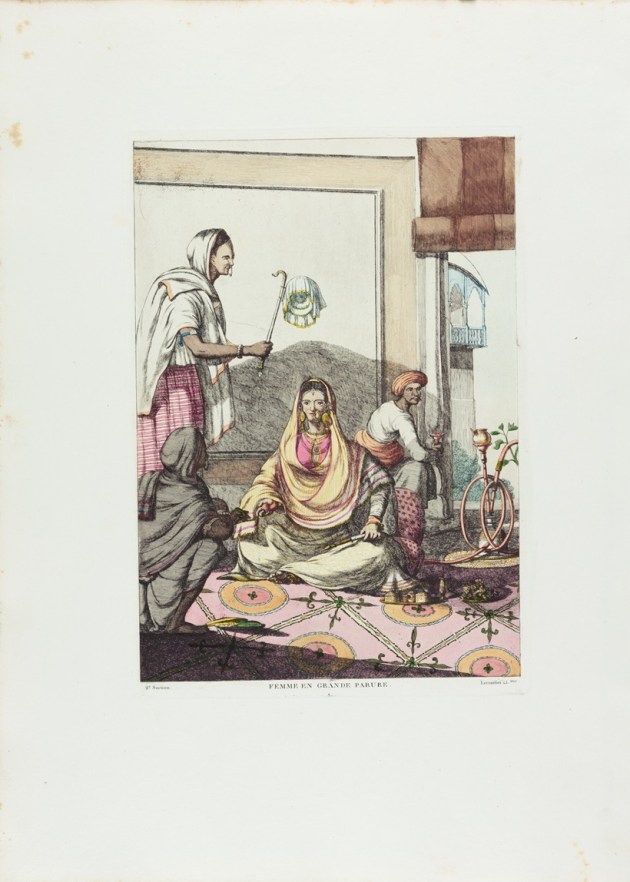
As per the organisers, the exhibition, "both intimate and encyclopaedic at the same time", rises to the challenge of an artist of his temperament and is an attempt to present the series as an ethnographic as well as a creative exercise; Femme en grande parure [woman in full dress]. (Source: PR Handout)