Journalism of Courage
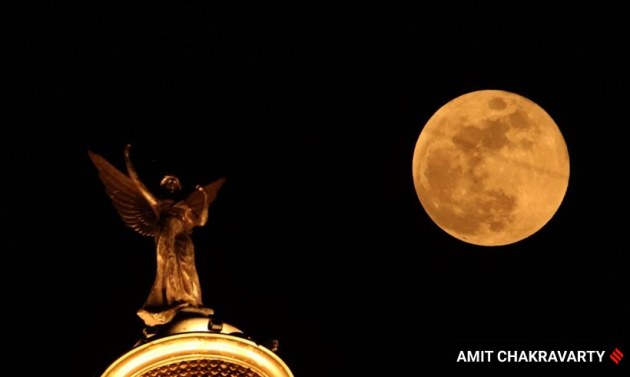
A total lunar eclipse was observed on November 8, the world's last until 2025. Nighttime skywatchers in Navi Mumbai were treated with the view of the 'blood moon', as observed in this picture. (Express Photo by Amit Chakravarty)

Total lunar eclipses occur when the Earth casts its shadow completely over a full moon, blocking reflection of all direct sunlight from the lunar orbit. Photographed through multiple exposure, the lunar eclipse as visible on a smoggy evening in New Delhi. (Express Photo by Tashi Tobgyal)
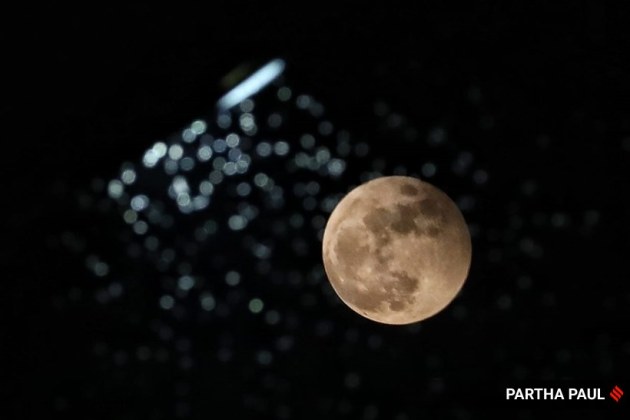
The reflection block dims the color of the moon to a reddish hue, hence the term “blood moon.” Seen here is the lunar eclipse as visible from Kolkata on November 8. (Express Photo by Partha Paul)

Here's a view of the lunar eclipse behind the statue of a deity, as seen in Lucknow. (Express Photo by Vishal Srivastava)
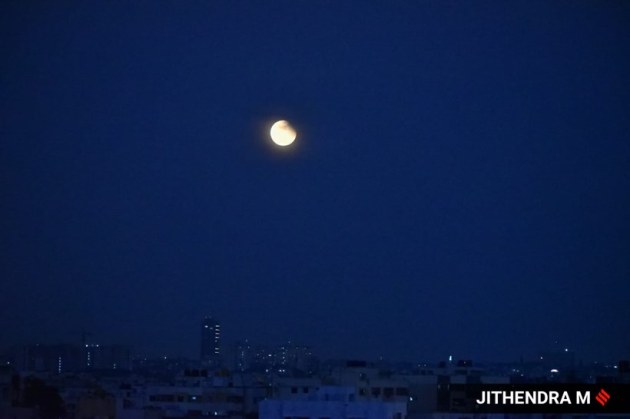
The total lunar eclipses occur, on an average, about once every year and a half, according to NASA. A partial lunar eclipse was seen in Bengaluru on Tuesday. (Express Photo by Jithendra M)
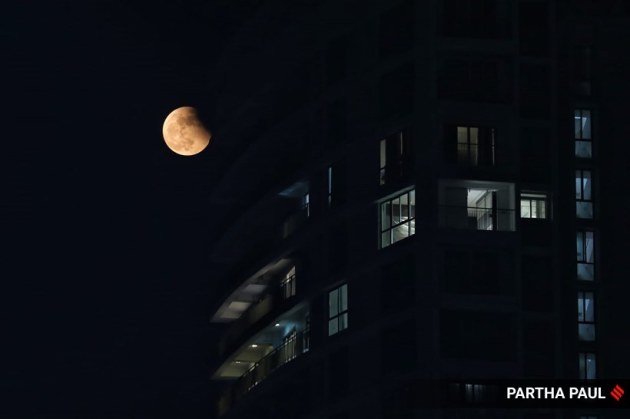
The total phase of the eclipse was in progress at the time of moonrise in Kolkata and Guwahati, according to India's Ministry of Earth Science. (Express Photo by Partha Paul)
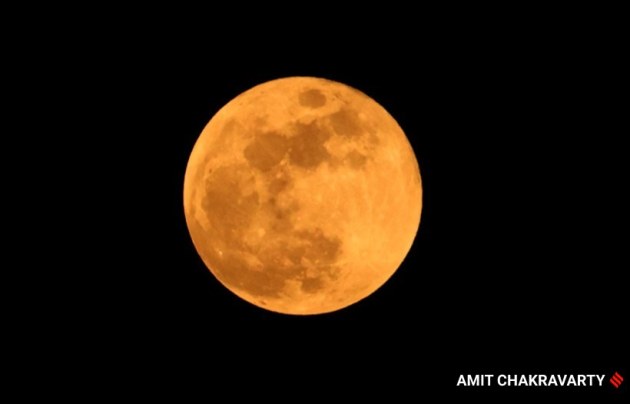
The entire eclipse unfolds over a period of nearly six hours as the moon gradually edges into the Earth’s outer shadow – 'penumbra,' followed by the Earth’s inner shadow, or 'umbra,' before reaching totality and eventually emerging from the other side. Here's a photograph of the 'blood moon' after the total lunar eclipse, as seen from Mumbai. (Express Photo by Amit Chakravarty)
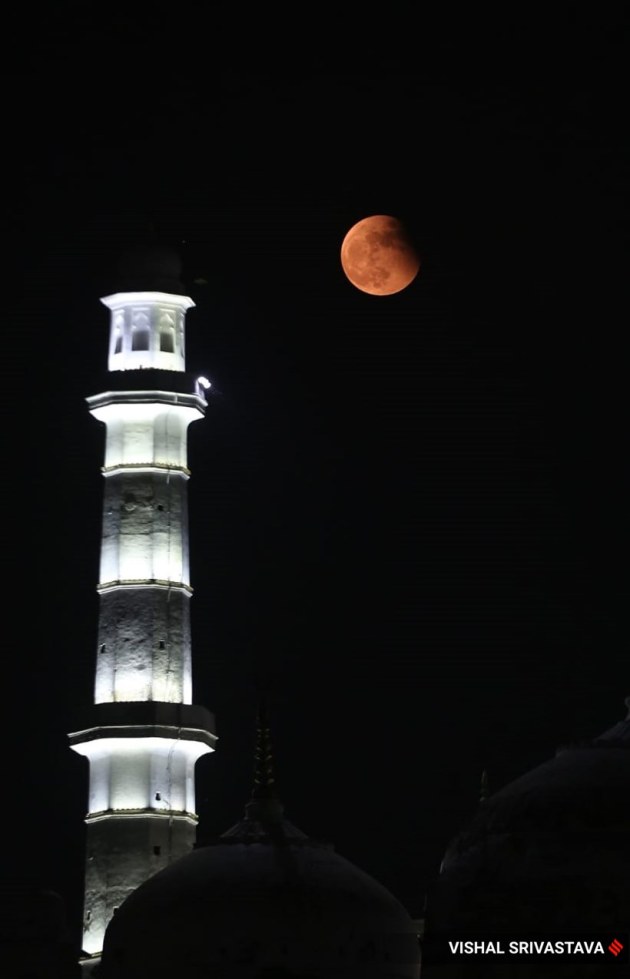
There is an another kind of lunar eclipse, called the partial lunar eclipse, which happens when a part of the Moon enters the Earth’s shadow. (Express Photo by Vishal Srivastava)
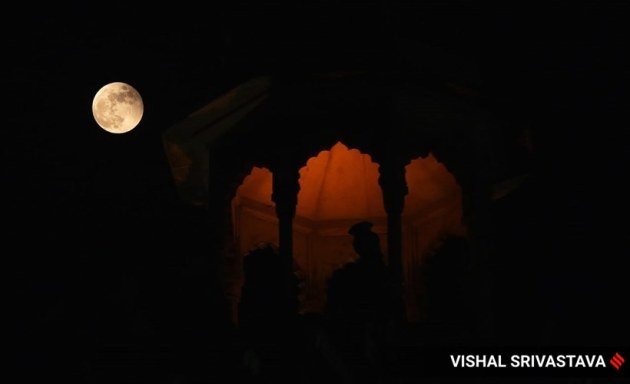
The total eclipse, on Tuesday, ended at 6.19 pm (Express Photo by Vishal Srivastava)
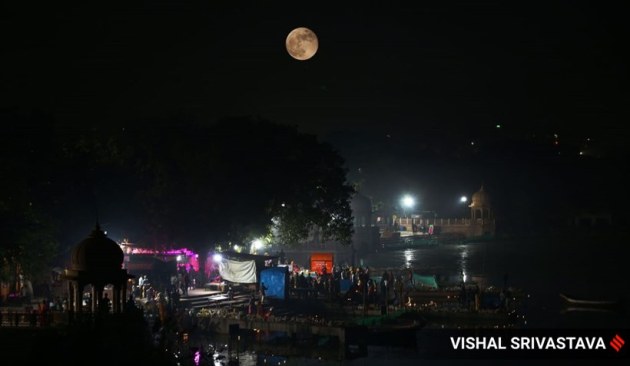
The event marked the second blood moon this year, following one in mid-May. The next one is expected after March 14, 2025. (Express Photo by Vishal Srivastava)
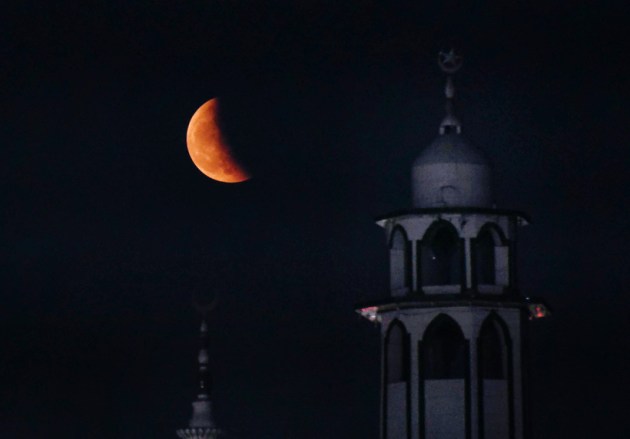
Moon partially covered by the earth's shadow during lunar eclipse, in Patna. (PTI)
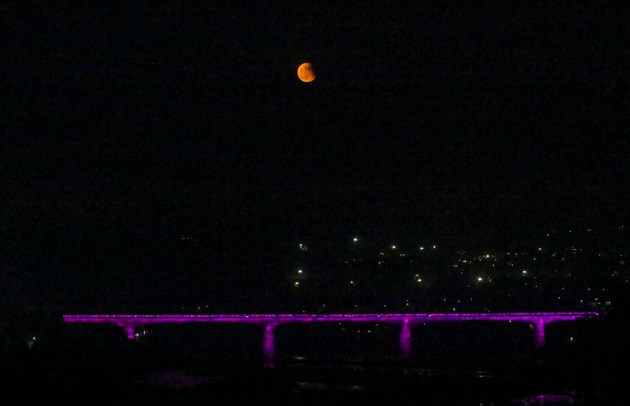
Moon partially covered by the earth's shadow during lunar eclipse, in Jammu. (PTI)