***
Like his two predecessors, Vir Bahadur Singh and Mulayam Singh Yadav, Kalyan Singh was also elected as an MLA for the first time in 1967. A Bharatiya Janata Party (BJP) stalwart, Kalyan Singh was its key hardline Hindutva face in north India, especially during the party’s Ram Janmabhoomi Temple campaign.

He did two stints as the BJP’s chief minister in UP in the 1990s, with his total tenure stretching to nearly three years and seven months. After 1999, when his relations soured with BJP heavyweight and then Prime Minister Atal Behari Vajpayee, he quit the saffron party and kept returning and leaving it repeatedly in the subsequent years.
Born in a village in Aligarh’s Atrauli tehsil on January 5, 1932, Kalyan became an active member of the Rashtriya Swayamsewak Sangh (RSS) and the Bharatiya Jana Sangh (BJS) since the fifties.
When the then Janata Dal leader Mulayam Singh Yadav took over as the UP CM in 1989, the BJP was growing rapidly in the state, riding on its Ram Janmabhoomi Temple campaign that involved the Vishwa Hindu Parishad (VHP) and other Sangh Parivar constituents. A major OBC leader, Mulayam had taken a tough stand over the Babri Masjid-Ram Janmabhoomi dispute.
To counter Mulayam, the BJP started projecting Kalyan Singh as its leader, who belonged to the Lodh Rajput community that comes under the OBCs.
Kalyan won Atrauli seat for the first time in 1967 on the BJS ticket, Since then, he was elected from the same seat nine times until 2002. In the 1977 Janata Party-led UP government, he was the health minister.
In the 1991 Assembly polls, the BJP got a majority for the first time in UP, winning 221 seats in the 425-member House. On June 24, 1991, Kalyan was sworn in as UP’s 16th CM.
Kalyan Singh is greeted by supporters on his 86th birthday at his official residence in Lucknow. (Express Photo: Vishal Srivastav)
The Kalyan Singh government cracked down on politicians with criminal background, putting four such legislators behind the bars. It tried to curb frequent transfers-postings of officials and when one of his cabinet ministers (health minister late Dinesh Jauhary) violated its directions, Kalyan sacked him. His government also brought an ordinance, declaring copying in board examinations as a cognizable offence.
On December 6, 1992, when a large number of kar sevaks had gathered near the Babri Masjid-Ram Janmabhoomi site in Ayodhya, Kalyan had issued instructions to security personnel not to fire on them. Soon after they demolished the Babri Masjid, then PM PV Narasimha Rao-led Centre sacked his government along with the BJP governments in three other states.
Ahead of the 1993 Assembly polls, the SP and the BSP forged an alliance, which managed to form the government. Kalyan Singh was Leader of the Opposition during this government’s tenure. In the 1996 polls, the BJP won 174 seats as against the SP’s 110 and the BSP’s 67. After a short spell of President’s rule amid a hung Assembly, the BJP and the BSP joined hands to form a government under the formula that the CM’s post will rotate between the two partners after every six months.
BSP leader Mayawati first took oath as the CM and started using the Prevention of Atrocities against SC/ST Act pro-actively. After completing six months, when she vacated her chair, Kalyan was sworn in as the CM, for the second time, on September 21, 1997. But when his government allegedly started diluting these SC/ST Act cases, the BSP withdrew its support from the government. The Kalyan government however did not fall as it managed to “engineer” defection in the BSP, Congress and some other parties to keep itself afloat.
After the 1999 Lok Sabha polls, when the BJP could not perform well in UP, Kalyan’s tense relations with then PM Vajpayee deteriorated. He then quit the
BJP and formed his own Rashtriya Kranti Party (RKP), which fought 2002 Assembly polls but won only four seats including two seats from where he won.
Ahead of the 2004 general elections, senior BJP leader late Pramod Mahajan took the initiative to get Kalyan back into the party fold. Kalyan’s son Rajveer Singh and his protege Kusum Rai were ministers in the then Mulayam Singh government since 2003, but they resigned following his return to the BJP. In the elections, he won from Bulandshahar as a saffron party candidate.
In the 2007 Assembly polls, the BJP again experimented with Kalraj Mishra’s leadership, but could win just 51 seats. Kalyan became estranged from the BJP again as the party did not concede his demand for a Rajya Sabha nomination for Rajveer but instead gave it to Kusum Rai.
In January 2009, Kalyan again quit the BJP, resigning from his post as the party vice-president. He then joined hands with his erstwhile bete noire Mulayam for the 2009 Lok Sabha polls and got elected from Etah as an Independent with the SP’s support.
In the November 2009 bypoll in Firozabad parliamentary constituency, Mulayam’s daughter-in-law Dimple Yadav lost the election, which Mulayam attributed to the loss of the Muslim community’s support owing to his alliance with Kalyan. Following this snub, Kalyan distanced himself from the SP, and Rajveer also resigned from the party.
In January 2010, Kalyan floated another outfit, the Jan Kranti Party (JKP), which fielded 208 candidates in the 2012 UP assembly polls but won none while losing deposits on 198 seats.
A weakened BJP could not afford to keep a prominent OBC leader like Kalyan, who continued to have a significant hold over the Lodh Rajput community, out of its fold for long. So, in the run-up to the 2014 Lok Sabha polls, he again returned to the BJP after dissolving his JKP.
In the 2014 and 2019 Lok Sabha elections as well as in the 2017 Assembly polls, Kalyan had been a key strategist for top BJP leaders, PM Narendra Modi and Amit Shah, for UP. The Modi government appointed him as the Rajasthan governor. After completing his gubernatorial tenure, he returned to his home in Atrauli. He passed away on August 21, 2021 in Lucknow.
Kalyan’s son Rajveer Singh has been a BJP MP from Etah since 2014. In the 2017 Assembly polls, his grandson Sandeep Singh was elected from Atrauli on the BJP ticket and became a minister in the Yogi Adityanath government.

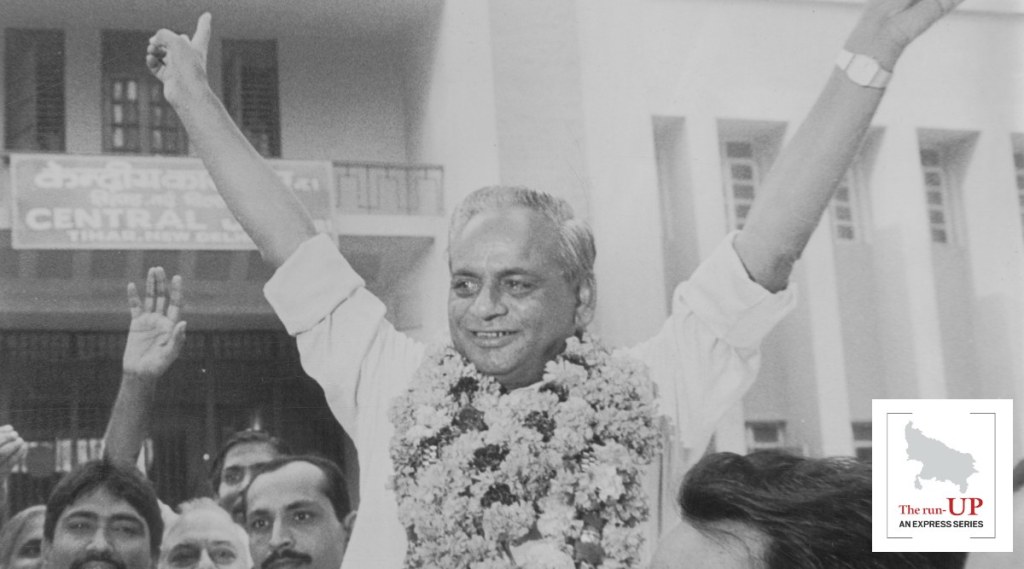 Former Uttar Pradesh chief minister Kalyan Singh (Express Archive)

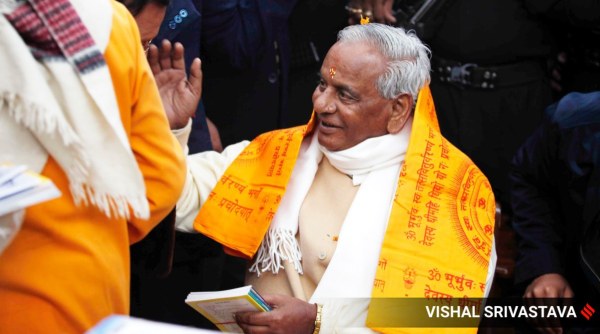 Kalyan Singh is greeted by supporters on his 86th birthday at his official residence in Lucknow. (Express Photo: Vishal Srivastav)

 Share


