


Journalism of Courage
 Share


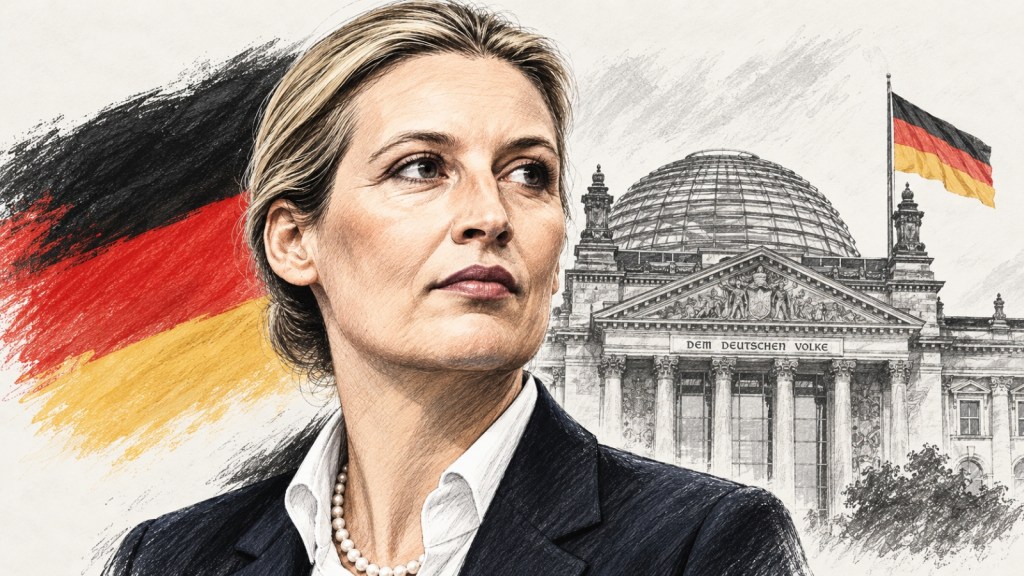 Alice Weidel has led the AfD since becoming a defining figure in its rise. (AI-generated image)
Alice Weidel, the co-leader of Germany’s far-right AfD, has emerged as one of the most recognisable faces of the country’s political shift to the right. Her latest clash with Chancellor Friedrich Merz in parliament came days after the AfD scored a historic 43.8 per cent in Saxony-Anhalt, its strongest showing in a German state election.
Yet 47-year-old Weidel’s personal life sits uneasily alongside parts of the party’s platform. She is openly gay and lives with her Sri Lankan-born partner, Sarah Bossard, with whom she has two children. The AfD, meanwhile, has promoted a traditional family model and opposed the expansion of LGBT-related policies. Weidel has said she sees no contradiction between her own family and the political position she represents.
The AfD’s 43.8 per cent in Saxony-Anhalt was a historic result, giving the party 39 seats in the 83-member state parliament, just three short of a majority. The result has opened the possibility of Germany’s first far-right state government since the Second World War, although the AfD would need support from another party.

The AfD fell three seats short of a majority and may now try to govern with support from the left-wing populist BSW party. A senior AfD figure in the state has even suggested Merz’s Christian Democrats could work with the AfD if the party drops its long-standing refusal to co-operate with the far right, a policy known in Germany as the Brandmauer, or “firewall”.
Merz hit back at Weidel by accusing the AfD of pursuing policies that would damage Germany’s economy and society. Referring to the party’s “remigration” plans, he said they amounted to “nothing other than a synonym for ethnic cleansing” and told Weidel: “You are and will remain a destructive force.”
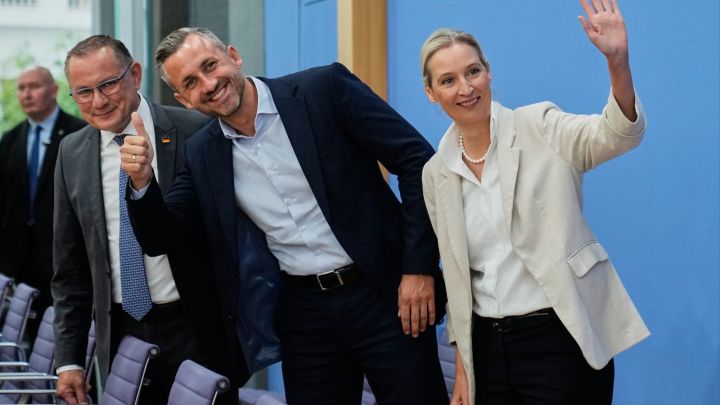
Merz said his government accepted that some deportations were necessary, but drew a distinction between people who contribute to the economy and those without permanent residency. He also rejected any suggestion the AfD could soon take power nationally, telling Weidel directly, “You are and will remain a destructive force.” He accused the party of misleading voters by claiming before the election that its candidate for state premier, Ulrich Siegmund, would take office only with a majority, then starting to seek a coalition hours after the result came in.
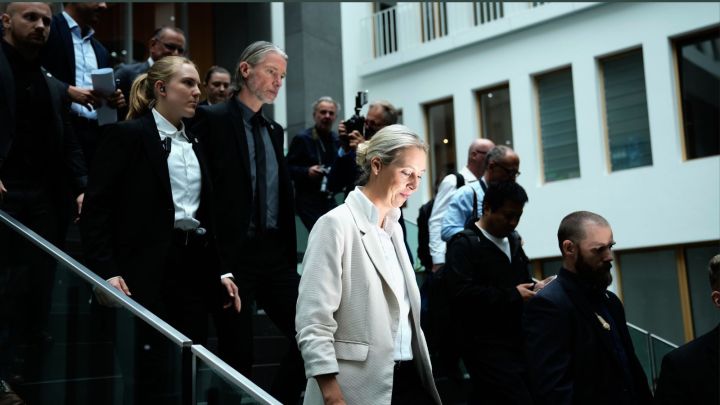
Weidel has led the AfD since becoming a defining figure in its rise, despite standing at odds with much of the party’s own platform
She has described her own upbringing as deeply political, though her parents did not belong to any party. Her grandfather served as a judge under the Nazi regime, and her family was expelled from Silesia, now part of Poland, after the Second World War, according to the German newspaper Die Welt. That family history, she has said, shaped her early interest in politics and the state.
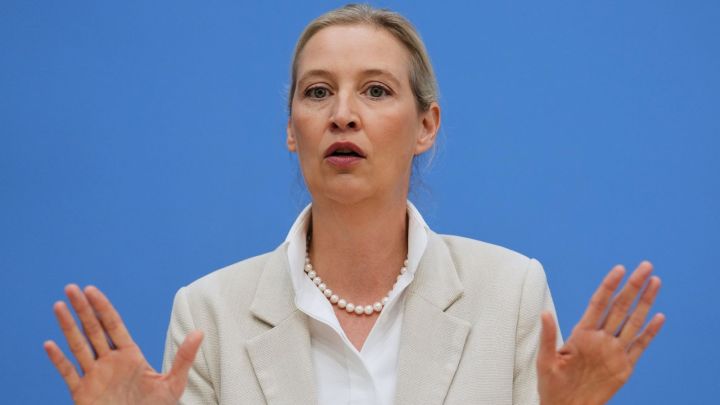
Weidel studied business and economics before joining Goldman Sachs. She later moved to China, where she learned Mandarin and completed a doctorate on the country’s pension system while working as a business consultant, building a career far removed from the party she would go on to lead.
She joined the AfD in 2013 during the eurozone bailout crisis, which the party strongly opposed, and has modelled her economic views on those of former British leader Margaret Thatcher, backing a Brexit-style vote on EU membership.
Under her leadership, the AfD has shifted from an economically focused party into one built around a harder line on immigration and social policy. In 2016, the party adopted its first formal manifesto, which defined family strictly as a mother, father and children, called for an end to sexual diversity education in schools, and formally opposed full marriage equality.
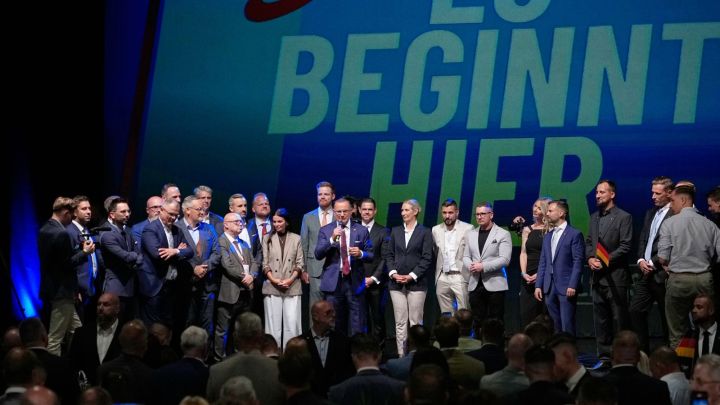
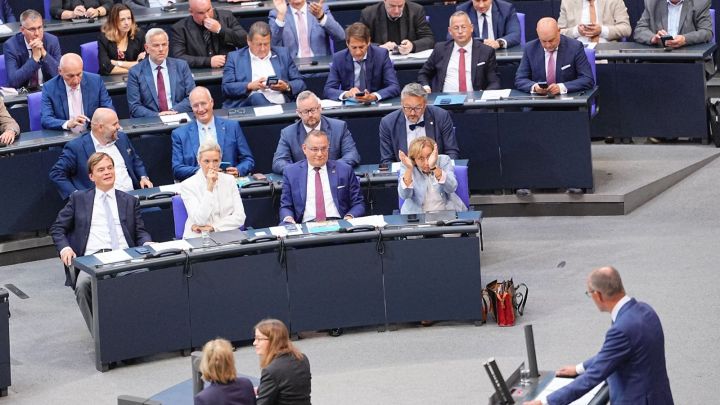
Weidel, opening the session as leader of the main opposition party, told Merz his party had been “pulverised” in Saxony-Anhalt after winning just 17.2 per cent of the vote there, and accused his coalition with the centre-left of pushing Germany towards bankruptcy. She said voters had shown his government was a failure and that his time in office was up. She also argued that mass migration had brought daily knife violence and attacks on trains and in stations across the country.
At one point, disruption from AfD MPs grew so loud that Bundestag President Julia Klöckner warned them to settle down, telling the chamber, “We are not on a football pitch.”
Her own position within that party has become one of the more striking contradictions in German politics. When asked how she reconciles her identity as a gay woman with leading a party often criticised as anti-LGBTQ+, Weidel has said her role as an openly gay co-leader is itself a political statement. She has argued that stronger immigration controls would do more to protect gay people from violence, which she has blamed specifically on what she called “Muslim gangs” rather than on domestic attitudes toward LGBTQ+ people in Germany.
Weidel’s influence also extends beyond Germany. She has cultivated ties with Trump’s MAGA movement, while US Vice-President JD Vance has previously criticised Germany’s “firewall” against parties such as the AfD. Trump himself celebrated the AfD’s Saxony-Anhalt victory and blamed Germany’s immigration policies for the result.
Meanwhile, a planned call between Trump and Merz, meant to mark the 25th anniversary of the September 11 attacks in the United States, was postponed this week. A government spokesperson in Berlin did not give a reason, and no new date has been set.
(With input from agencies)
 Share
