Trump’s H-1B visa double whammy: Why Indians could feel the heat
A fresh $103,265 charge proposed on top of an existing $100,000 fee would push the total cost of hiring an H-1B worker past $200,000. Universities, hospitals and tech firms warn of serious damage, while Indian workers, who hold most H-1B visas, stand to feel it most.
Indian H-1B families are likely to feel the brunt of this impact. (File Photo)
The cost of sponsoring some new H-1B workers could exceed $200,000 if two separate Trump administration measures ultimately apply to the same case. The Department of Homeland Security has proposed a $103,265 fee for H-1B petitions subject to the annual cap, while a separate $100,000 payment introduced last year has been blocked by a federal court and remains under appeal, reported USA TODAY.
The administration argues that the higher cost would discourage employers from using H-1B workers where qualified US workers are available. Critics, including immigration and business groups, argue the fee could severely restrict the programme.
.
H-1B Visa Fees
H-1B double whammy: could the cost cross ₹2 crore?
A new $103,265 DHS proposal, an older $100,000 charge still tied up in court — what stacks, what doesn't, and who actually pays.
New proposal
$103,265
Proposed DHS fee
Earlier measure
$100,000
Court-blocked, under appeal
+
If both ultimately applied to one petition
$203,265
A possible combined figure — not a confirmed, universal H-1B fee
The two measures are separate. The $103,265 charge is still a proposal and would apply only to cap-subject H-1B petitions. It has not been finalised.
What has Trump's DHS proposed?
New proposal
$103,265
Proposed by the Dept. of Homeland Security
Applies to H-1B cap-subject petitions
Includes the 20,000 advanced-degree slots
Paid by the petitioner/employer, at filing
Still in the rule-making process
Public comments close Sept 24, 2026
Earlier measure
$100,000
Introduced Sept 2025, Proclamation 10973
Applied to covered H-1B petitions
Vacated by a Massachusetts federal court
US government has appealed
Appeal pending when the new proposal landed
Per the Federal Register text, the $103,265 charge would apply in addition to any separate payment obligation under a presidential proclamation — which is how the two figures could theoretically stack on a single petition.
How much is that in rupees?
$103,265→≈ ₹1 crore
$100,000→≈ ₹97 lakh
$203,265 (if combined)→≈ ₹2 crore
Converted at approximate USD-INR rates in early September 2026; actual rupee value moves with the exchange rate.
This is not money an Indian worker personally hands over. The proposed fee is an employer-side filing charge, paid by the US company sponsoring the visa — not deducted from the employee's pay or savings.
Who gets hit — and who doesn't
US employer wants to hire
↓
an H-1B worker
↓
petition is subject to the annual cap
↓
$103,265 proposed fee applies
NOT covered by this proposal
Cap-exempt petitions from universities
Nonprofit research organisations
Government research organisations
Extensions, amendments & employer transfers of existing H-1B status
Myth
"The Indian worker gets a $103,265 bill."
Fact
The fee is proposed to be payable by the petitioner/employer at filing — not the beneficiary.
Why this lands hardest on India
71%
of approved H-1B petitions in FY2024 had India-born beneficiaries (USCIS)
Each figure = 1% of approved FY2024 H-1B beneficiaries. Orange = India-born.
India
71%
China
11.7%
India is, by a wide margin, the largest source of H-1B beneficiaries — so any change to the programme's cost has an outsized impact on Indian professionals and the companies that sponsor them.
H-1B, and the money trail
A US work-visa route letting employers hire foreign workers in "specialty occupations" — commonly technology, engineering and other skilled fields.
65,000
Regular H-1B cap
20,000
Advanced-degree exemption
85,000 total annual cap when both categories combine
$103,265 × 85,000 cap slots
≈ $8.8 billion / year
An illustrative ceiling, not a DHS-published revenue target — actual collections would be lower since cap-exempt and extension petitions don't pay this fee
DHS says the fee would help recover federal costs linked to immigration administration — adjudication, vetting, immigration courts, consular processing and related functions across DHS, the Justice Department, State Department and Labor Department.
What happens next
Aug 25, 2026
DHS publishes the $103,265 proposal in the Federal Register
Sept 24, 2026
Public comment period closes
Pending
DHS reviews comments, decides to finalise, revise or withdraw
If finalised
Fee could apply to covered petitions as early as the FY2028 cap cycle
Meanwhile: the separate $100,000 measure stays court-blocked, with the government's appeal pending before the 1st US Circuit Court of Appeals.
Could H-1B really cost more than ₹2 crore?
Potentially — but only for a covered petition, and only if both separate measures ultimately apply
$103,265 = proposed, not yet in effect
$100,000 = court-blocked, on appeal
$203,265 = a possible combined figure, not a universal H-1B fee
The H-1B programme allows US employers to hire foreign workers in specialty occupations, generally for up to six years. The annual cap is 85,000, 65,000 regular places and 20,000 for qualifying advanced-degree holders from US universities, with a selection process when demand exceeds the limit.
Amazon leads the latest corporate H-1B approvals, with 9,337 approved workers, followed by Apple with 3,879, Google with 3,180 and Meta with 2,563, according to USCIS data.
Universities rely heavily on the programme too: Stanford has 284 H-1B workers, the Mayo Clinic 276, and Washington University in St. Louis 219.
Immigration group FWD.us estimates 730,000 visa holders are currently in the US, plus 550,000 dependents.
What does it mean for Indians?
India is by far the largest source of H-1B workers, accounting for around 71 per cent of all approvals, according to government data cited by Business Standard, with China a distant second. That means any fee increase falls overwhelmingly on Indian applicants and the Indian IT firms that sponsor them.
When the $100,000 payment was introduced in September 2025, it was equivalent to roughly ₹88 lakh at the exchange rate at the time. The payment was not an annual charge.
A federal court blocked that fee in June, and an appeals court declined to revive it in July, leaving Indian applicants in a holding pattern. Analysts have called it relief “for now” rather than a lasting win, since the government is still appealing and the new $103,265 charge is a separate proposal moving forward regardless of that case’s outcome.
Who supports the higher fee, and why?
Some American workers back the change, arguing it levels the playing field. Benjamin Wolf, a technology professional in Reston, Virginia, told the department in a public comment that the lower cost of sponsoring foreign labour has “repeatedly put American candidates at a disadvantage.”
Alvester Johnson III, an IT professional in Phoenix, made a similar case, saying cheap visa fees make it “artificially cheap for employers to prefer foreign speciality labour over investing in or retaining US workers.”
Universities, hospitals and business groups argue the fee will do far more harm than good.
Story continues below this ad
Shev Dalal-Dheini of the American Immigration Lawyers Association told USA TODAY the combined fees are “just one of the many nails in the coffin of legal immigration in this country.”
The University of Michigan estimated the original fee alone would have cost it $9 million a year, according to a court filing from vice president Arthur Lupia and international centre director Judith Pennywell, who called it “a new tax on bringing some of the best minds to America.”
David Bier of the Cato Institute wrote that the new charge “will crush the H-1B program, resulting in the loss of hundreds of thousands of talented workers.”
What about doctors and hospitals?
Health systems warn the fee threatens patient care. St. Jude Children’s Research Hospital has 199 H-1B workers, the Cleveland Clinic 158, and Massachusetts General Hospital 135.
Anantha Shekhar, former dean of the University of Pittsburgh’s School of Medicine, said in a court filing that research into disability, artificial intelligence and vision science “will be hampered” without H-1B staff. Edwin Zhang, a hospital worker who submitted public comment, said international medical graduates are “a large, essential portion of our clinical workforce,” warning the fee could “worsen existing national physician shortages” in rural and underserved areas.
A federal judge in Massachusetts ruled the original $100,000 fee “unlawful” in June, finding it “arbitrary and capricious.” The government has appealed, and the fee remains uncollected while that plays out. The Justice Department argues the charge regulates immigration rather than raising revenue, giving the president authority to impose it without Congress.
Separately, the newly proposed $103,265 fee is going through public comment, open until 24 September, and has already drawn more than 5,000 responses.
Story continues below this ad
The Department of Homeland Security says the new fee would raise $8.8 billion over a decade to fund immigration agencies, courts and vetting systems. Economists are split on whether it would actually raise that much, given how sharply applications fell under the first fee. For now, employers, universities and hospitals, along with millions of Indian workers hoping to build a career in the US, are watching the courts and the comment period closely.
The Express Global Desk at indianexpress.com which delivers authoritative, verified, and context-driven coverage of key international developments shaping global politics, policy, and migration trends. The desk focuses on stories with direct relevance for Indian and global audiences, combining breaking news with in-depth explainers and analysis.
A major focus area of the desk is US immigration and visa policy, including developments related to student visas, work permits, permanent residency pathways, executive actions, and court rulings. The Global Desk also closely tracks Canada’s immigration, visa, and study policies, covering changes to study permits, post-study work options, permanent residence programmes, and regulatory updates affecting migrants and international students.
All reporting from the Global Desk adheres to The Indian Express’ editorial standards, relying on official data, government notifications, court documents, and on-record sources. The desk prioritises clarity, accuracy, and accountability, ensuring readers can navigate complex global systems with confidence.
Core Team
The Express Global Desk is led by a team of experienced journalists and editors with deep expertise in international affairs and migration policy:
Aniruddha Dhar – Senior Assistant Editor with extensive experience in global affairs, international politics, and editorial leadership.
Nischai Vats – Deputy Copy Editor specialising in US politics, US visa and immigration policy, and policy-driven international coverage.
Mashkoora Khan – Sub-editor focusing on global developments, with a strong emphasis on Canada visa, immigration, and study-related policy coverage. ... Read More


 Share


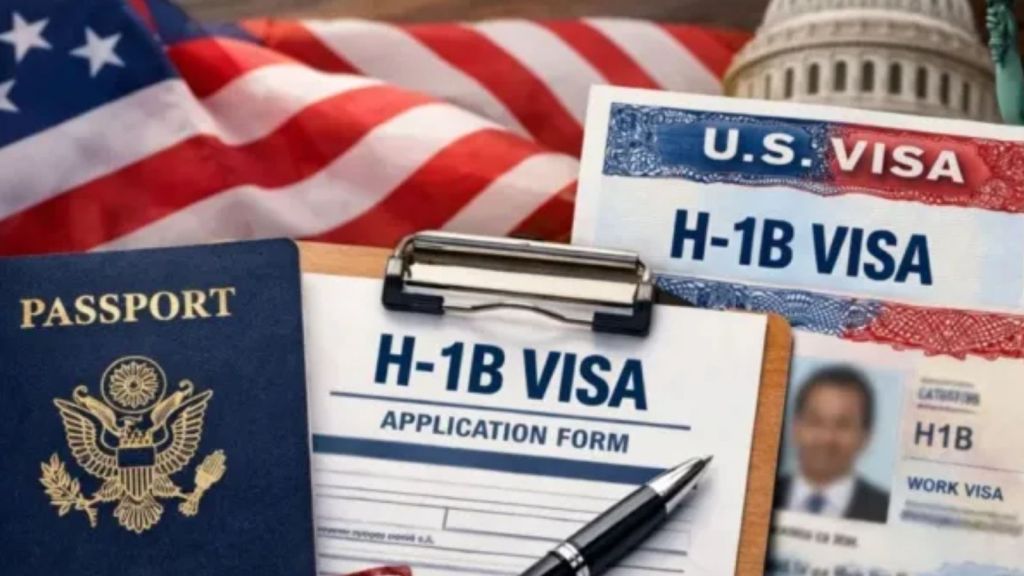 Indian H-1B families are likely to feel the brunt of this impact. (File Photo)

