


Journalism of Courage
 Share


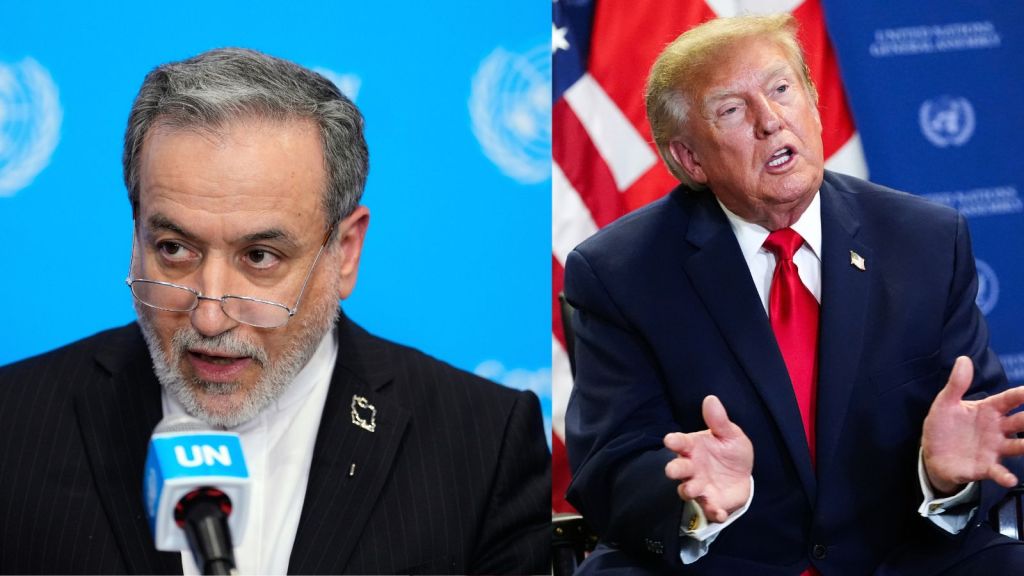 Iranian Foreign Minister Abbas Araghchi https://english.nepalnews.com/s/international/iran-fm-araghchi-says-hormuz-reopening-timeline-to-begin-after-us-accepts-seven-day-plan and US President Donald Trump. (Photo: AP)
Iran was waiting for an official response from Washington on Saturday, a day after it put forward a peace proposal that would reopen the Strait of Hormuz and end fighting across the Middle East within seven days, only for The Wall Street Journal to report that US President Donald Trump had turned the offer down.
The plan was raised by Tehran at the UN General Assembly in New York and transmitted to the Americans through Qatari mediators, with Iranian officials saying it could end a seven-month-old war that has disrupted oil flows through one of the world’s most critical shipping lanes. Reuters said it could not immediately confirm the Journal’s report of a rejection.
Iranian Foreign Minister Abbas Araghchi told reporters at the UN on Friday that the deal would start a seven-day countdown to reopening the strait alongside a pause in regional fighting. “If there is seriousness on the US side to come to a deal and reopen the Strait of Hormuz, everything is now prepared,” he said.
NEW: Iranian Foreign Minister Araghchi said Tehran has offered the U.S. a seven-day plan to reopen the Strait of Hormuz if conditions are met.
— Clash Report (@clashreport) September 25, 2026
“Iran has conveyed to the United States, through Qatar, a concrete seven-day plan. If the necessary conditions are met, the strait can… pic.twitter.com/L2kd0i9c1k
Araghchi said that if Washington agreed, both sides could move to wider talks “on mutually agreed subjects,” potentially including Iran’s nuclear programme. The plan would halt hostilities on all fronts, including Lebanon, but in exchange would require the US to lift its blockade on Iranian ports, release Iran’s frozen funds, and waive oil sanctions.
A senior Iranian official told Reuters that Tehran will show no flexibility on its nuclear programme even if Washington accepts the peace deal, and would make no concessions on uranium enrichment or shipping enriched uranium out of the country. Trump has said Iran will never be allowed to acquire a nuclear weapon.
A US official, speaking anonymously, had earlier described talks through mediators as “positive and constructive.” But according to the Journal, Trump remains privately doubtful that Iran will meet his demands and has told staff he expects a renewed bombing campaign is likely.
The proposal is the latest in a string of diplomatic attempts that have failed to end a war now in its seventh month. The conflict began on February 28 with US and Israeli strikes on Iran and has since moved between pauses and renewed fighting, killing thousands, weakening Iran’s conventional forces, and further damaging its economy.
Iran and its allies have widened the war beyond its borders. Iran, which controls the Strait of Hormuz along with Oman, has struck US allies in the Gulf with drones and missiles, while Houthi forces aligned with Tehran have targeted Saudi interests from Yemen. Iranian-backed militias in Iraq have been blamed for a pipeline attack that briefly removed Saudi oil from the market, and Hezbollah remains engaged with Israeli forces in Lebanon.
Iran’s foreign ministry said Araghchi briefed his Saudi counterpart, Prince Faisal bin Farhan, on an understanding reached between Iran and Oman on safe shipping routes through the strait.
The Saudi-led coalition said it intercepted two drones aimed at Riyadh and a ballistic missile targeting Khamis Mushait early Saturday. The Houthis, who control Yemen’s most populous areas and much of the north, have targeted Saudi cities, energy infrastructure and shipping since declaring a naval blockade against Riyadh in July, adding further strain to global oil supplies and threatening the Red Sea route used as an alternative to Hormuz.
Turkish and Pakistani defence officials, both partners with Saudi Arabia in a joint defence pact, met in Riyadh on Friday to review the security situation and discuss military coordination, a day after the three countries’ foreign ministers met under the Mecca Joint Defense Agreement. UNICEF said Friday that the violence in Yemen has driven up acute malnutrition among children.
 Share
