


Journalism of Courage
 Share


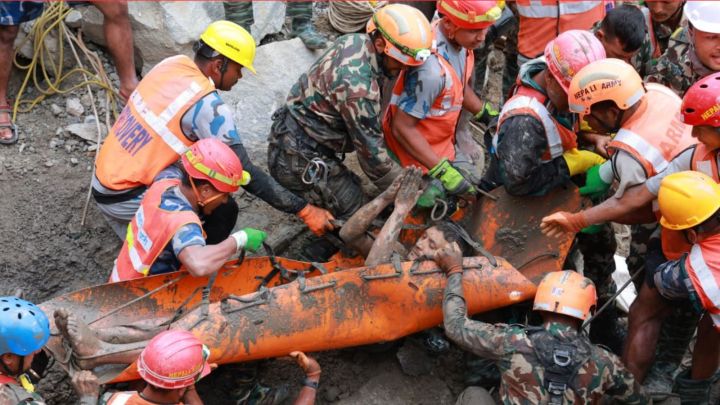
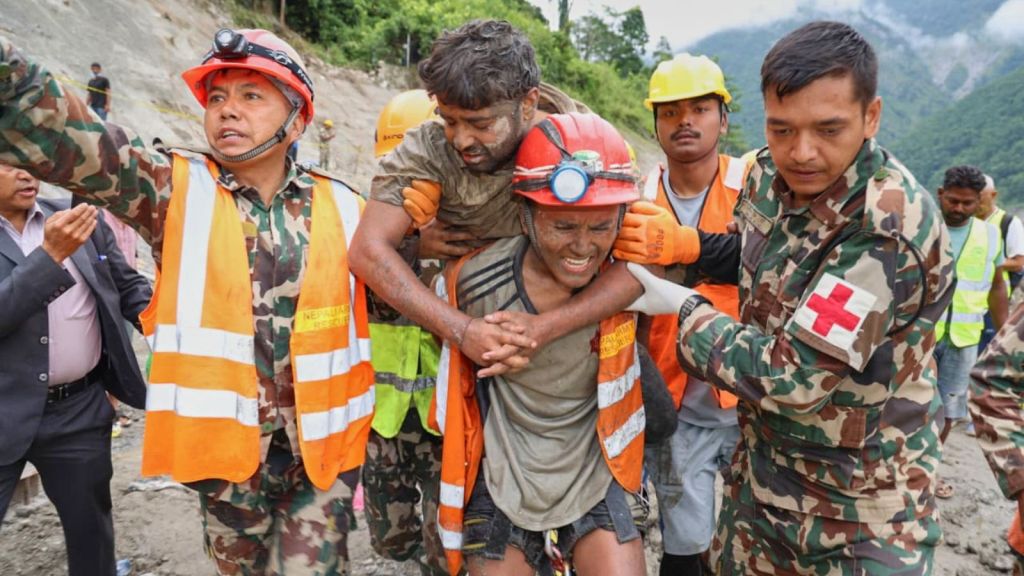 In this photo provided by the Nepal Army, soldiers rescue a worker alive from a tunnel during an ongoing operation at the Trishuli-3A hydropower project in Nepal's Rasuwa district. (Photo: AP)
Nine days after flash floods ravaged Nepal, two engineers trapped in the Trishuli 3 ‘A’ hydropower tunnel have been rescued, raising hopes that others stuck in the tunnel could also be alive.
Sanjay Saha (30) and Kabir Maharjan (45), both mechanical engineers, were rescued on Friday morning. The survivors have said more people are trapped inside the tunnel.
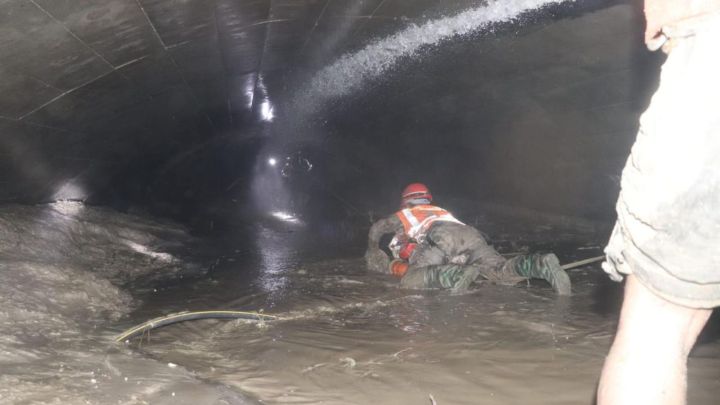
A spokesperson for the Nepal Army, which is leading the rescue operation, said the two rescued were found at a depth of 170 metres inside the tunnel.
The calamity, which struck two districts in Nepal on August 26, has claimed over 1250 lives. A dozen hydel projects have been substantially damaged, and many workers are missing.
Suresh Raut, senior official of the Nepal Electricity Authority, told the BBC that rescue teams provided oxygen to Shah after bringing him out. Suresh Chaudhari, a colleague of Shah’s, told the BBC, “I am so, so happy, I have been waiting for the news. This has given hope that others will also be rescued alive.”
Most hydropower projects in the region were destroyed when a surge of water, debris and mud swept down the river valley last week.
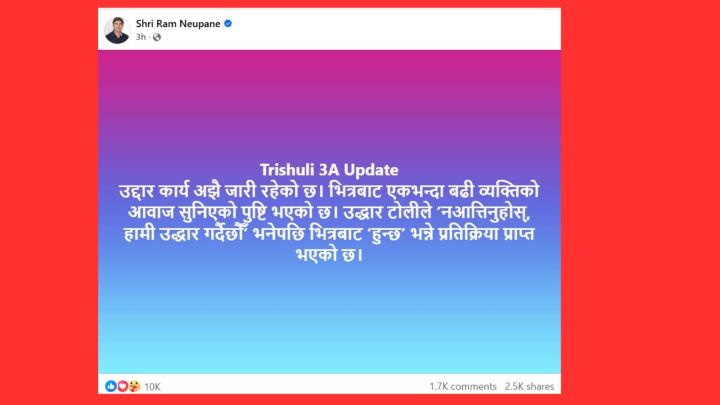
Earlier in the day, Shri Ram Neupane posted on Facebook that rescue workers had heard more than one voice coming from inside the tunnel as they moved deeper into the passage. “Information has been received from the rescue team that the voices of people have been heard from inside. When the rescue team said, ‘Don’t panic, we are rescuing you,’ a response was received from inside,” he wrote.
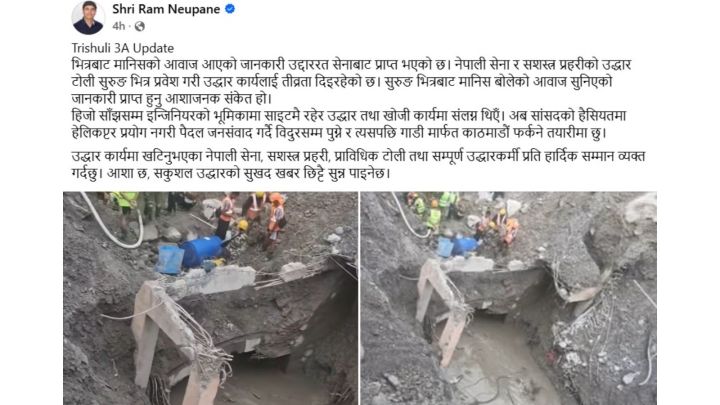
In the same post, Neupane said teams from the Nepali Army and Armed Police Force were stepping up their efforts and pushing further into the tunnel as part of the rescue operation. “Receiving information that people are speaking from inside the tunnel is a promising sign,” he wrote, adding that he hoped those trapped would be rescued safely.
Neupane also thanked the Nepali Army, Armed Police, technical teams and other rescuers involved in the operation, saying he hoped “good news of a safe rescue” would come soon.
Most of the hydropower projects in the region were destroyed when a surge of water, debris and mud swept down the river valley last week. The flood was triggered by the collapse of a melting glacier on the border between Nepal and China-controlled Tibet, according to the Guardian.
At the Upper Trishuli 3A site, rescue teams took nearly six days to locate the tunnels because of thick mud blocking the entrance. Authorities said they believe around 30 to 40 people may still be alive inside. Army units and specialist teams have been working around the clock to clear mud and boulders from the tunnel entrance, and hopes rose further early Friday morning when voices were heard deep inside the tunnel.
About 900 workers remain missing across 12 hydropower projects in Nepal, with roughly 500 believed to be trapped in tunnels, local authorities said.


 Share
