
Nepal floods: Glimmer of hope as some tourists make contact. Who is still missing?
Some tourists reported missing after the Nepal floods have been found safe, but hundreds of foreign nationals remain unaccounted for.
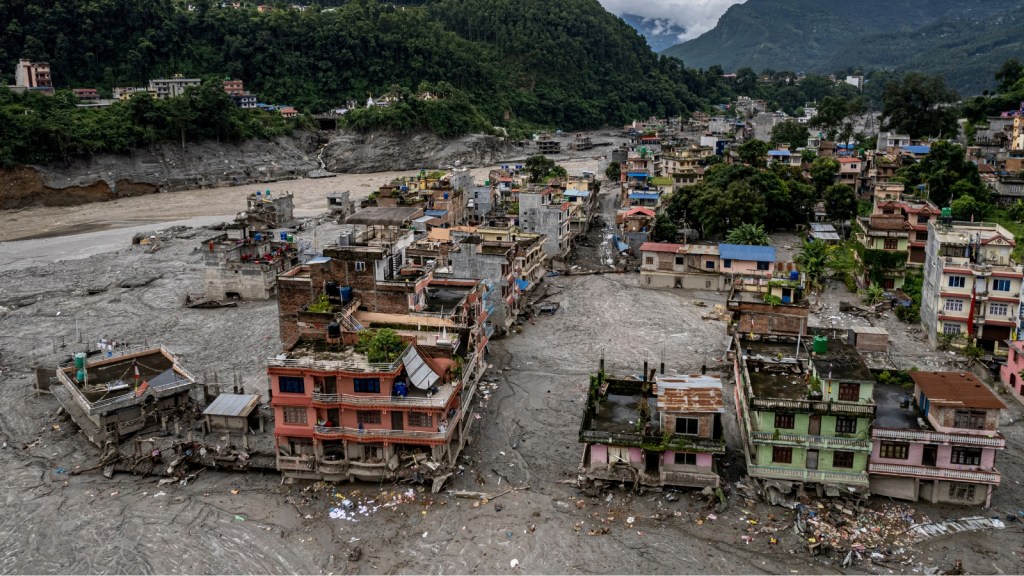 A drone view shows a damaged residential building along the swollen Trishuli River in the aftermath of flash floods in Nepals Nuwakot district, Thursday, Sept. 3, 2026. (AP Photo)

- 01
Some missing tourists make contact
At least five foreign nationals previously reported missing have made contact with authorities by phone or email and are safe, according to Nepali officials. They include three Spanish nationals, one Belgian and one American.
- 02
590 foreign nationals remain missing
Nepal has rescued 324 foreign nationals, while about 590 foreign nationals from dozens of countries remain unaccounted for, according to officials.
- 03
Five Australians confirmed safe
Five Australians previously reported missing have also been confirmed safe, bringing the number of Australians still unaccounted for down from 43 to 38. Australia has also announced that it will send drone operators to Nepal to assist search-and-rescue efforts.
- 04
More than 4,200 people remain missing
At least 1,204 people have been killed and more than 4,200 remain missing, according to Nepal’s disaster management agency. More than a week after the disaster, hopes of finding survivors are steadily fading.
- 05
Around 900 feared trapped in hydropower plants
Nepali authorities estimate that around 900 people are trapped inside six hydropower plants, according to Reuters. Rescue teams are continuing to clear mud and debris from blocked tunnels, with excavators and controlled blasting being used at some sites.
- 06
Families turn to a ‘wall of the missing’
At Kathmandu’s Tribhuvan University Teaching Hospital, a “wall of the missing” is covered with photographs of people who disappeared in the floods, alongside images of recovered bodies that have yet to be identified. Families visit the wall looking for information and post photographs and contact details of missing relatives.
- 07
Some families hold symbolic funerals
Some families have begun holding symbolic funerals for relatives who remain missing, using straw effigies in place of their bodies. In Nuwakot, relatives have performed final rites for missing family members, while families at Kathmandu’s Pashupatinath Temple have also cremated straw effigies.
- 08
Authorities preserve DNA of unidentified bodies
Nepalese authorities are temporarily burying some recovered bodies until they can be identified. Officials are preserving DNA samples, photographs and other identifying details to help match the remains with missing people and eventually return them to their families.
- 09
Glacial collapse thought to have triggered floods
The disaster began on August 26 after a glacier collapse sent a massive surge of mud, rock and water through mountain valleys along the Nepal-China border. The resulting floods and debris flows swept away homes, roads, bridges and other infrastructure along the Trishuli River valley.
- 10
Hundreds of survivors seek shelter in Kathmandu
Around 400 survivors, mostly from Timure, about 110 km west of Kathmandu, have been staying at the Yellow Gumba monastery in the capital. The shelter is being organised by locals and relatives, with relief supplies donated by individuals and charity organisations.

 Share


