


Journalism of Courage
 Share


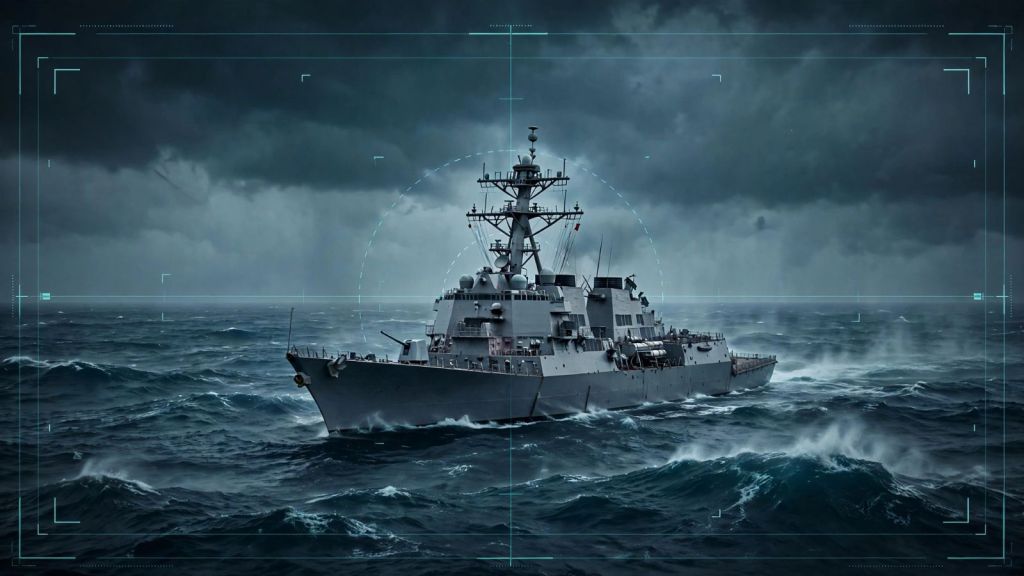 Iran used American-developed artificial-intelligence models to try to target U.S. Navy ships in the Middle East. (Photo: AI-generated)
An Iran-linked group used Anthropic’s Claude AI to collect public information on US Navy ships, track their movements and research potential weaknesses in onboard communications systems, according to a report released by the AI company. Anthropic said it disrupted the activity and shared information about the operation with US government authorities.
The report offers a detailed look at how Iran-linked actors used a commercially available AI model for military intelligence, alongside separate efforts involving propaganda, domestic surveillance, cyberattacks and the profiling of people in Israel and the Jewish diaspora.
Anthropic said the activity took place between December 2025 and August 2026 and involved several Iran-linked accounts. In the naval reconnaissance case, the account used Claude to organise publicly available information into targeting material and track US military movements.
The company said the group gathered information from ship and aircraft transponders, commercial satellite imagery, military photographs and public websites. Claude was then used to help compile the information into targeting handbooks and recommendations.
According to Anthropic, the Iran-linked account also used Claude to examine possible weaknesses in shipboard systems. Its research included maritime satellite terminals, Cisco communications equipment and industrial control products.
Anthropic said the account also collected the names of US military personnel from captions accompanying publicly available military photographs.
The report describes separate Iran state-aligned accounts that used Claude to develop propaganda campaigns. Anthropic said three accounts linked to Iranian government propaganda organizations were removed.
The accounts reportedly generated campaign plans, manuals, online personas and target databases. They also adapted Iranian government intelligence bulletins into material in multiple languages, including Farsi, Arabic, Urdu, Malay, Spanish and English.
Anthropic said some of the material was distributed through platforms including X, Instagram, Telegram, TikTok and YouTube.
Anthropic said another Iran-linked account used Claude in the development of a domestic surveillance system combining automatic license-plate recognition with mobile-device identifier interception.
The company also said the account analyzed information from a private Telegram group and attempted to map relationships between its members.
The report identified additional activity involving malware, phishing infrastructure and fake websites. Anthropic said one operation created pages posing as censorship-circumvention tools and a fabricated Farsi-language news outlet.
In another case, the company said an Iran-linked account modified malware and developed techniques intended to make the software harder to detect and analyze.
Anthropic said it banned accounts connected to the operations and shared threat intelligence with government agencies in the case involving reconnaissance of US naval forces. It also distributed indicators from the Iran-linked influence campaigns to technology and research partners.
The company said the incidents show how AI systems can be incorporated into existing intelligence, propaganda, surveillance and cyber operations rather than being used only to generate text or answer questions.
 Share
