
How does climate change affect winter storms?
There’s some evidence that the jet stream is weakening as the Arctic warms. And the Arctic is warming up nearly four times faster than the rest of the world.
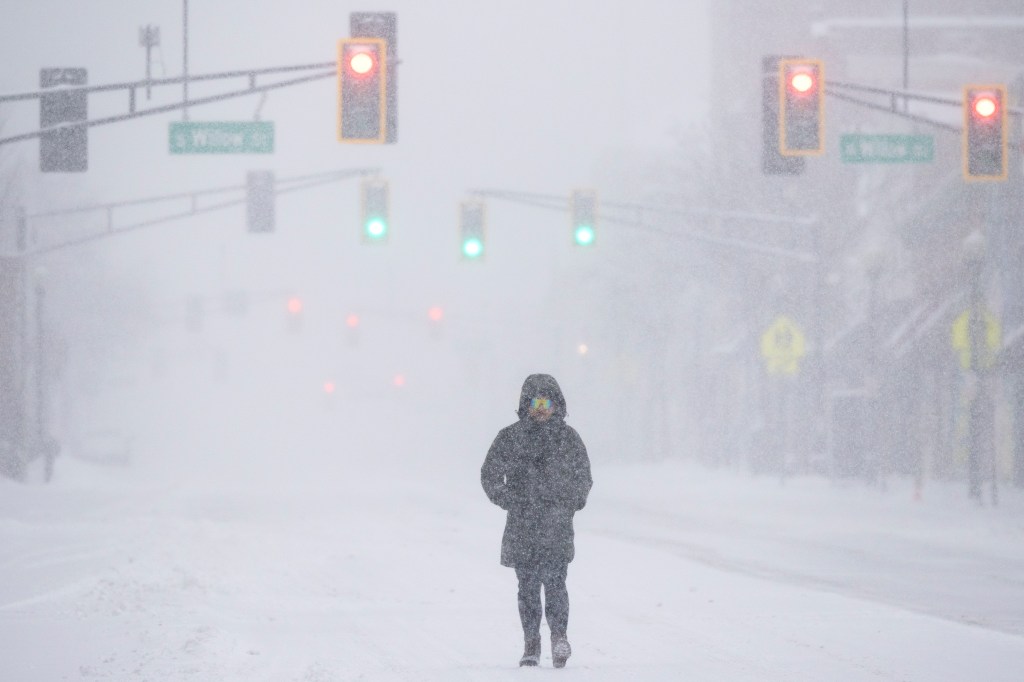 A person walks on a street during a winter storm in Montclair, N.J., on Sunday, Jan. 25, 2026. The world is warming because of the burning of fossil fuels, and that doesnÕt mean there wonÕt still be some cold days. (Aristide Economopoulos/The New York Times)
By Sachi Kitajima Mulkey
Climate misinformation tends to proliferate around major weather events. On Friday, President Donald Trump, a longtime climate skeptic, posted to social media, implying that the cold weather undermined the scientifically supported consensus that the planet is warming. (It is a claim he has made before.)

The science is clear. The world is warming because of the burning of fossil fuels, and that doesn’t mean there won’t still be some cold days.
Weather and climate are not the same thing, but they are related. In a broad sense, climate change encourages extreme weather events by altering the background conditions in the atmosphere. For example, as the atmosphere warms, it becomes capable of holding more moisture, and that moisture can then fall dramatically in the form of rain, sleet or snow.

 Share


