5 min readNew DelhiUpdated: Oct 1, 2026 10:04 AM IST
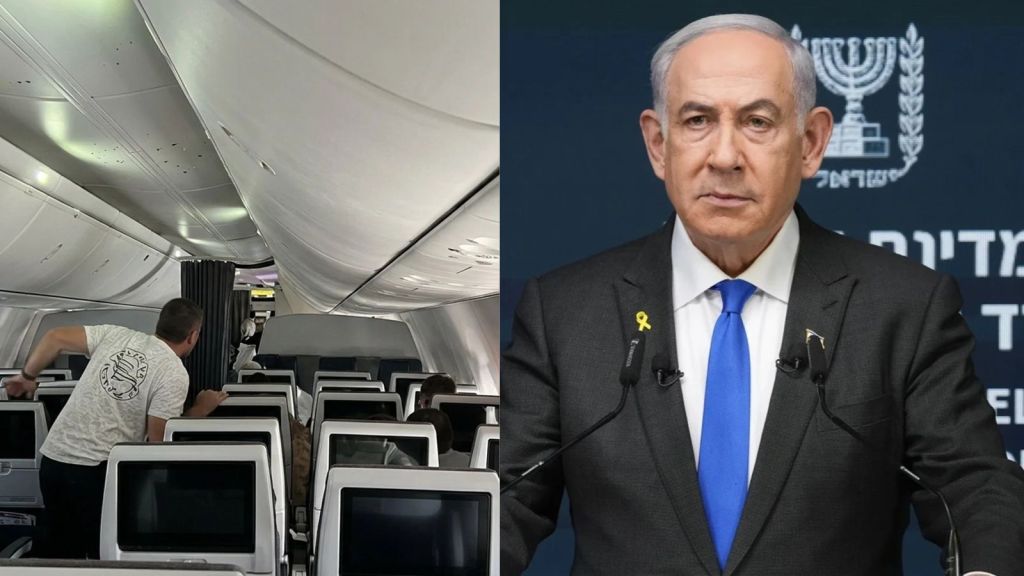
Netanyahu described the midair scare as "a highly severe security incident" and said that Saudi authorities have arrested the co-pilot of Flydubai flight FZ1073. (Photo: X/AP/ enhanced via AI)
Flydubai flight FZ1073 from Dubai to Tel Aviv made an emergency landing in Saudi Arabia on Wednesday after Israeli Prime Minister Benjamin Netanyahu said a co-pilot stabbed the captain and apparently tried to crash the aircraft. Passengers and crew intervened, and the plane landed safely at Tabuk, with both pilots later taken to hospital.
Netanyahu described the incident as a “highly severe security incident” and said Saudi authorities had arrested the alleged attacker. Israeli officials identified the co-pilot as an Omani national. Israeli officials reported the arrest and the allegations about what happened inside the cockpit; Saudi authorities have confirmed the emergency landing and that both pilots were injured.
Flydubai said an “altercation occurred in the flight deck” and that its on-duty crew secured the aircraft, diverted it and landed safely in Saudi Arabia. The airline said all passengers and crew were safe and accounted for, while the reasons and motives behind the incident remained subject to a formal investigation.
Flydubai FZ1073: From Dubai to an emergency landing in Saudi Arabia
A Tel Aviv-bound flight lost half its altitude in about a minute, sent emergency codes and diverted to Tabuk after what Israeli officials describe as an attack in the cockpit.
Investigation ongoing
Flydubai FZ1073: What happened mid-air?
The flight, step by step. Times and altitudes are from Flightradar24 data.
FZ1073, a Boeing 737 MAX 8, takes off for Tel Aviv with about 170 people on board.
About 2 hr 15 min into the flight Alleged
A confrontation breaks out in the cockpit. Israeli officials say the co-pilot stabbed the captain.
05:21 GMT · 34,000 ft → ~16,600 ft
Flight-tracking data shows the jet losing about half its altitude in roughly a minute.
05:28 and 05:35 GMT
The transponder shows 7700, a general emergency, then 7500, unlawful interference.
Israel
Fearing a possible hijacking, Israel scrambles fighter jets.
Cockpit Attributed
The injured captain opens the cockpit door so others can get in, Israeli PM Netanyahu said.
Passengers and crew Attributed
A passenger and crew members enter the cockpit and overpower the attacker, according to Netanyahu and passengers.
Towards Saudi Arabia
On-duty flydubai crew travelling on the flight secure the plane and divert it to Tabuk, the airline says.
About 07:00 GMT · Tabuk
The aircraft lands safely. Passengers are safe; both pilots are taken to hospital.
Route is approximate. Cockpit events are based on accounts from Israeli officials, flydubai and passengers; their exact timing has not been made public.
India link: the injured captain, Smit Machchhar, is an Indian national, i24NEWS and Israel Hayom report. He is in a stable condition after surgery in Saudi Arabia, according to i24NEWS.
Inside the flydubai cockpit: What we know
The least clear part of the story, in sequence
1
Cockpit confrontation
A fight breaks out between the two pilots
2
One pilot allegedly stabs the other
Israeli officials say the co-pilot stabbed the captain
3
Attempt to take control
Netanyahu says the attacker “apparently tried to crash the plane”
4
Injured pilot opens the cockpit door
The wounded captain lets others in, Netanyahu said
5
A passenger and crew member enter
A passenger says a relief pilot called for help and others followed
6
Attacker subdued
Passengers and crew overpower him
7
Other crew regain control
flydubai: on-duty crew travelling on the flight secured the plane
Based on accounts from Israeli officials and passengers; investigation ongoing. flydubai says the reasons and motives “remain unknown and are subject to a formal investigation”.
Why did Israel scramble fighter jets?
What Israeli authorities could see from the ground
Israeli officials later said the incident involved an alleged attack by one pilot on the other. Netanyahu said one pilot stabbed the other and “apparently tried to crash the plane”. The investigation is ongoing.
‘We need help’: What passengers saw aboard Flydubai FZ1073
In passengers’ own words. Their accounts have not been independently verified.
A bloodied passenger
“We are in the middle of a plane hijacking. At the moment, we have subdued the terrorists and we are preparing to land… We need help.”
Passenger video, as reported by Ynet
Passengers rush the cockpit
“A few of us just jumped in and pulled him out of the cockpit. Everything is OK now.”
Passenger, as reported by Ynet
An injured pilot
“Everyone on the plane is safe and well except for the pilot.”
Passenger, as reported by Ynet
Crew and passengers restrain the attacker
“He called for help, and two others and I entered the cockpit and subdued the terrorist. I’m covered in blood.”
Zvika Manes, passenger, to Ynet
Passengers stay on board after landing
Passengers remained on the plane after it landed in Tabuk.
Euronews
Saudi security surrounds the aircraft
A heavy Saudi security presence surrounded the plane.
Euronews
The numbers behind the flydubai emergency
Each figure with its source
~170people on boardNewsweek; i24 says 174
34,000 ftcruising altitude before the dropFlightradar24
~16,600 ftlowest point of the dropFlightradar24 data
The Boeing 737 MAX 8 took off from Dubai at about 03:05 GMT, bound for Tel Aviv. Flight-tracking data showed the aircraft began a steep descent from its cruising altitude of around 34,000 feet at about 05:21 GMT.
It subsequently transmitted the 7700 transponder code, indicating a general emergency, followed minutes later by 7500, the code used to indicate unlawful interference with an aircraft and commonly associated with a possible hijacking. The aircraft turned towards Saudi Arabia after briefly entering Jordanian airspace and landed at Tabuk.
Flightradar24 data cited by Reuters showed the aircraft descended by nearly 14,000 feet in less than 30 seconds before the first emergency signal.
flydubai FZ1073 · September 30, 2026
How the plane plunged
Flight-tracking data shows the Tel Aviv-bound jet dropping from 34,000 ft to about 16,600 ft in roughly a minute.
Time (GMT)
Altitude
10,000 ft20,000 ft30,000 ft05:1905:2105:2205:2805:3305:37One minute, enlargedEverest · 29,032 ftSharp climb, then another descent: exact altitudes not published−17,400 ftin about a minute7700 · 05:287500 · 05:35
SLOWED DOWN
~17,400 ftlost in about a minute: 34,000 ft to ~16,600 ftFlightradar24 data
~290 ft/saverage rate of the drop, about 88 metres every secondCalculated from the figures above
6.4×the height of the Burj Khalifa (2,717 ft), lost in one minute
~593 knotsspeed around the time of the dropFlightradar24 data, via Unilad Tech
What the data showsCruise at 34,000 ft; the drop starts at 05:21 GMT; a sharp climb and another descent follow; the jet settles around 15,000 ft by 05:33. The 7700 emergency code appears at 05:28 and 7500 at 05:35.
What is not yet knownThe exact altitudes of the climb and second descent have not been published. Israeli officials link the plunge to an alleged attack in the cockpit; flydubai says the investigation is ongoing.
Sources: Flightradar24; Unilad Tech (Flightradar24 data); flydubai; Israeli officials via Reuters. Chart not to scale in time: the minute of the drop is enlarged.
Israel scrambled fighter jets amid concerns that the aircraft could have been hijacked.
Story continues below this ad
What does Netanyahu say happened inside the cockpit?
Tabuk airport said the captain and first officer were injured and transferred to hospital for treatment. The captain, who was reportedly stabbed, was Indian national Smit Machchhar, according to people familiar with the matter. Machchhar had earlier worked with SpiceJet for about 11 years before joining Flydubai. His condition was not immediately known.
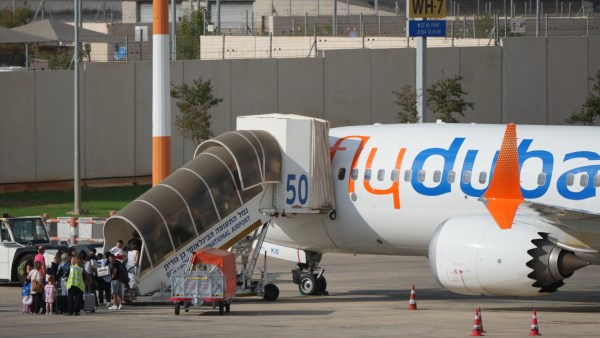
Passengers embark on a FlyDubai aircraft at Ben Gurion International Airport, near Tel Aviv, Israel. (AP Photo)
Israeli officials identified the alleged attacker as an Omani national, although Reuters reported that accounts about the pilots’ nationalities had varied in Israeli media. The motive remains unclear.
Netanyahu said, “I spoke with one of the Israeli passengers. He told me that the plane went into a spin and began to dive. He told me that somehow he managed to break into the cockpit with one of the crew members and together they neutralised the stabbing pilot while he was trying to sabotage the aircraft’s systems. Another aircrew member who was on the plane entered the cockpit and managed to stabilise the plane.”
Why did Israel scramble fighter jets?
The aircraft transmitted 7700, the international code for a general emergency, and then 7500, which indicates unlawful interference.
Story continues below this ad
The 7500 signal is commonly associated with a hijacking, which helps explain why Israel scrambled fighter jets as authorities tried to establish what was happening aboard the aircraft.
Early in the incident, Israel’s Prime Minister’s Office said the situation was not believed to be a hijacking. Later, Israeli officials said they were investigating a more serious scenario involving an alleged stabbing and an attempted takeover of the aircraft.
What is confirmed, and what remains under investigation?
It is established that FZ1073 transmitted emergency signals, diverted from its route to Tel Aviv and landed safely at Tabuk. Flydubai has confirmed that an altercation occurred in the flight deck, while Saudi authorities have confirmed that both pilots were injured.
The detailed sequence inside the cockpit, including how the confrontation began, the alleged use of a knife and the co-pilot’s alleged attempt to crash the aircraft, remains under investigation.
Story continues below this ad
Saudi Arabia’s National Transport Safety Center has launched an investigation and said its team is coordinating with relevant authorities to establish the circumstances of the incident and collect evidence.
The Express Global Desk at indianexpress.com which delivers authoritative, verified, and context-driven coverage of key international developments shaping global politics, policy, and migration trends. The desk focuses on stories with direct relevance for Indian and global audiences, combining breaking news with in-depth explainers and analysis.
A major focus area of the desk is US immigration and visa policy, including developments related to student visas, work permits, permanent residency pathways, executive actions, and court rulings. The Global Desk also closely tracks Canada’s immigration, visa, and study policies, covering changes to study permits, post-study work options, permanent residence programmes, and regulatory updates affecting migrants and international students.
All reporting from the Global Desk adheres to The Indian Express’ editorial standards, relying on official data, government notifications, court documents, and on-record sources. The desk prioritises clarity, accuracy, and accountability, ensuring readers can navigate complex global systems with confidence.
Core Team
The Express Global Desk is led by a team of experienced journalists and editors with deep expertise in international affairs and migration policy:
Aniruddha Dhar – Senior Assistant Editor with extensive experience in global affairs, international politics, and editorial leadership.
Nischai Vats – Deputy Copy Editor specialising in US politics, US visa and immigration policy, and policy-driven international coverage.
Mashkoora Khan – Sub-editor focusing on global developments, with a strong emphasis on Canada visa, immigration, and study-related policy coverage. ... Read More




 Passengers embark on a FlyDubai aircraft at Ben Gurion International Airport, near Tel Aviv, Israel. (AP Photo)